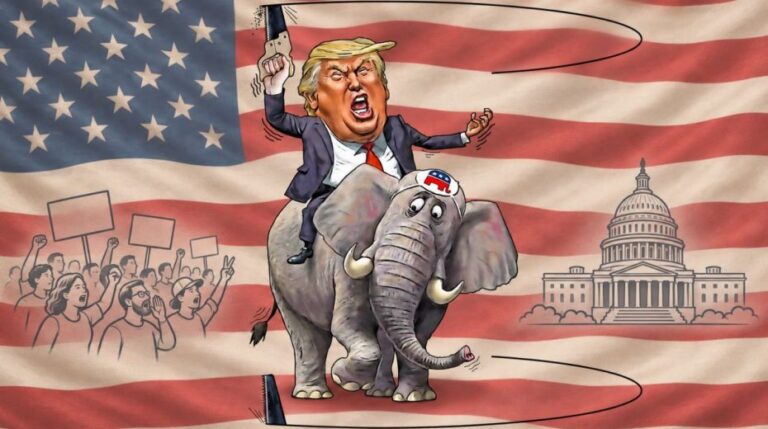
Donald Trump is no longer the master of America First and the GOP.
Since the Clinton era, I’ve tracked politics in various ways (my parents were notably uncomfortable explaining “the Lewinsky scandal” after an unsupervised family viewing of PBS News Hour), and traditionally, midterm election cycles leave little lasting impact. Even notable ones like the 2006 GOP wipeout or the 2010 Tea Party uprising tend to fade quickly, as do their prominent figures. (When did you last think about Kevin Yoder?)
This year’s midterms, however, break the mold. I have stated both on television and elsewhere that in terms of actual policymaking, these elections mean little. Republicans lack a clear legislative platform; the SAVE Act remains more of a symbolic ideal than a serious agenda, and oddly, it’s barely discussed anymore. The administration’s key initiatives mostly play out in the executive branch—waging war, tweaking trade policies, even dismantling the Kennedy Center. Even if Democrats take control of both congressional houses, achieving veto-proof or impeachment-majorities remains unlikely. They might make trouble with oversight and impeachment attempts, but that plot has been seen repeatedly.
Where these elections stand apart is not in their immediate effects but because they mark the final electoral battleground of the Trump epoch. Donald Trump will not direct the GOP in future elections. Regardless of the outcome—which likely won’t favor Republicans—this election paves the way for a brutal internal battle over the identity and future direction of the post-Trump party. Expect a torrent of analysis, spin, and finger-pointing.
Texas Senator Ted Cruz is the figure to watch. He has modified his image to fit the Trump-era party’s populist style, yet he hasn’t embraced the policy divergences like industrial strategy, trade protectionism, or anti-war stances. As Trump’s popularity dips, Cruz is positioned as a possible unifying candidate, blending populist flair with pro-business attitudes. For those favoring a harsher approach, Defense Secretary Pete Hegseth presents himself as the candidate who would be even more forceful and less restrained. Meanwhile, Secretary of State Marco Rubio’s office keeps signaling he won’t run in 2028—which is understandable—but Vice President J.D. Vance remains in the mix, promoting the idea that maybe the administration’s original promises could still be fulfilled.
It hardly needs stating that the key factor shaping the post-Trump coalition will be how the ongoing war concludes. The war’s impact connects directly to the economy: disruptions to Middle Eastern energy supplies drive up prices, including interest rates. While Americans tolerate foreign policy distractions if the economy hums along, this conflict has proved costly. As I noted recently, Vance especially requires a successful resolution to this war to maintain viability in 2028.
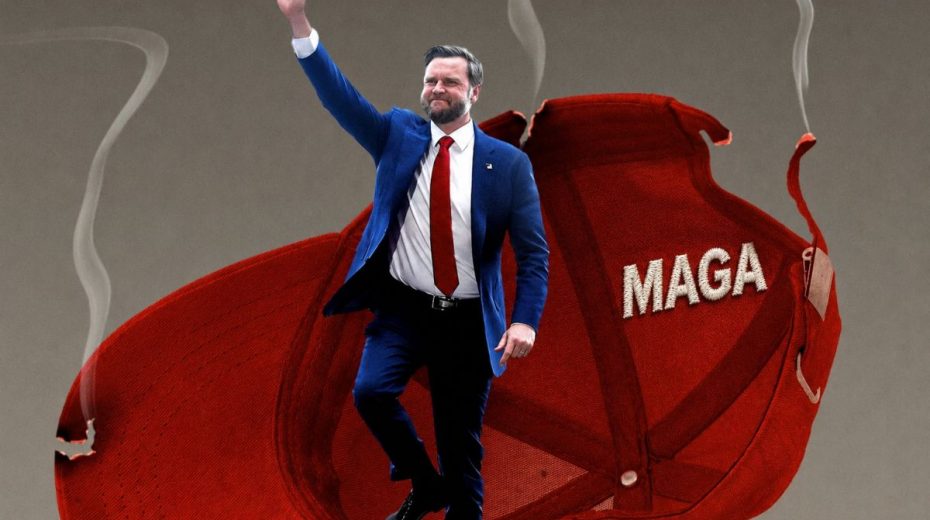
Vance stands as the leading candidate for a true America First conservatism. As the Trump administration has evolved into a duller Republicanism, demonstrating the unpopularity and failure of some policy elements, the America First approach has gained clearer theoretical support but become harder to implement. Such a candidate must advocate for abandoned paths and unfulfilled promises—a challenging feat for anyone with a role in recent politics.
Michael Anton’s 2016 essay, “The Flight 93 Election,” remains the seminal text for the American right in its current situation. The underlying argument is that voting for Donald Trump may not guarantee a good outcome, but it at least challenges the basic dysfunctions at the heart of the American order: deindustrialization, the collapse of national identity, imperial adventurism abroad. This is what sets it apart from the team-sports philosophy of voting red no matter who: The “Flight 93” framing applies only if the red team is in fact rushing the cockpit, is in fact challenging these dysfunctions. If it’s business as usual but with some tax cuts, who cares?
That stood true in 2024, and it remains true today. The crucial change is that America First no longer has the singular, if inconsistent, champion it once did over the past decade. Today a new era begins. Will it resemble something familiar—like the cunning, persistent Cruz—or will a genuine upheaval cleanse the scene?
Original article: theamericanconservative.com
About the Author