From the outset of the Iran conflict in February, we have described it as a significant mistake by the United States. The notion of regime change was a pipe dream fueled by Israel and neoconservatives within the White House.
The U.S. eliminated numerous religious, military, and political figures in Iran, yet these individuals were swiftly succeeded by younger, even more militant leaders than their predecessors.
Removing leaders does not equate to regime change. The fundamental structure of military control by the Islamic Revolutionary Guard Corps (IRGC), with a compliant ayatollah figurehead, remains intact.
In addition, the U.S. carried out widespread bombing campaigns across Iran, targeting weapons and infrastructure. Nevertheless, Iran continues to hold thousands of missiles secured in underground shelters and produces drones in modest workshops and garages.
Victory in war cannot be achieved through bombing campaigns alone. While bombing may assist, wars are ultimately decided on the ground. It is inconceivable that the U.S. would deploy a million soldiers to confront a nation of 90 million people spanning an area comparable to the U.S. mainland east of the Mississippi River.
Unresolved Issues
The status of Iran’s highly enriched uranium (HEU) remains unsettled. In essence, none of the declared goals that prompted the U.S. to launch this war have been fully realized.
Recent interviews with Iranians conducted by prominent Middle East analysts reveal that the Iranian populace appears more unified than ever before.
Surprisingly, some Iranian opposition members now side with the regime, feeling deceived and let down by the United States. They once believed the U.S. championed freedom and democracy, but now see it as a force of war, bombings, and civilian casualties. The U.S. is failing not only militarily but also in winning the support of the Iranian people.
Iran has demonstrated the capability to close the Strait of Hormuz or at least significantly increase shipping costs for those vessels that manage to pass. The U.S. faces limited options here without risking substantial naval losses.
The Deal Mirage
Iran’s conditions include reparations, the unfreezing of assets, withdrawal of U.S. forces from the Middle East, and an end to American and Israeli interference involving the Houthis, Hamas, and Hezbollah.
Trump will never accept such terms, leaving him trapped in a war with no clear exit strategy.
However, some solutions remain.
One is to continue economic warfare. Treasury Secretary Scott Bessent is spearheading efforts to exclude Iran from the global financial system and solicit assistance from major nations like India and Pakistan to sever economic connections with Iran.
This strategy is potent but slow-moving. Expect no immediate shifts in Iranian conduct.
Another method involves targeted bombings aimed at economic disruption, such as damaging rail lines and highways connecting Iran to Central Asia, many constructed with Chinese funding.
The goal is not merely to destroy infrastructure but to halt trade in essentials like food, arms, and gold.
On Nov. 7, U.S. Central Command announced Task Force Iron Gate, a new operation designed to impede the transport of advanced weaponry, sanctioned goods, and illicit funds over Iran’s land borders and the Caspian Sea. This mission builds upon the pressure applied by the U.S. naval blockade.
Yet again, this approach demands patience.
The fastest route to ending the Iran war would be to achieve détente with Russia, primarily focusing on Ukraine, and then rely on Russian influence to compel Iran to negotiate with the U.S.
Unfortunately, the incoming Democrat-controlled Congress shows no interest in these approaches. They prefer a swift withdrawal akin to Autopen Biden’s chaotic exit from Afghanistan in August 2021.
There are already discussions to defund Pentagon operations in the war, which risks a hasty and humiliating retreat for the U.S. This contest could ignite before January if centrist Republicans like Thom Tillis and Susan Collins side with Democrats next month.
While Trump erred in initiating the conflict, the Democrats might make an even greater mistake by ending it in such a disorderly fashion.
Little League vs. the Yankees
Iran is only one of the two major ongoing global conflicts. The other is Ukraine.
Last week, a fresh round of peace talks aimed at resolving the Ukraine war concluded in Abu Dhabi, United Arab Emirates. The U.S. delegation was led by Jared Kushner and Steve Witkoff.
The Russian side included Vladimir Medinsky, an advisor to Vladimir Putin and Russian history specialist, assisted by Deputy Foreign Ministers Sergei Ryabkov and Mikhail Galuzin, along with senior military personnel.
While the Russian Foreign Minister Sergey Lavrov stayed in Moscow, he remained influential behind the scenes. The Russian team was highly experienced and adopted a cautious stance.
Following the talks in Abu Dhabi, Kushner and Witkoff met with Putin in Moscow on Nov. 12, then went to Dublin to update Ukrainian President Volodymyr Zelenskyy. Putin made it clear that Russia would not relinquish territorial claims or accept international peacekeepers in Ukraine.
The Americans proposed a new option to Zelenskyy: would Ukraine withdraw from parts of Donbas still under its control in return for NATO membership? Zelenskyy rejected any surrender of territory.
The U.S. delegation, Kushner and Witkoff, are novices in diplomacy, comparable to sending a Little League team up against the New York Yankees.
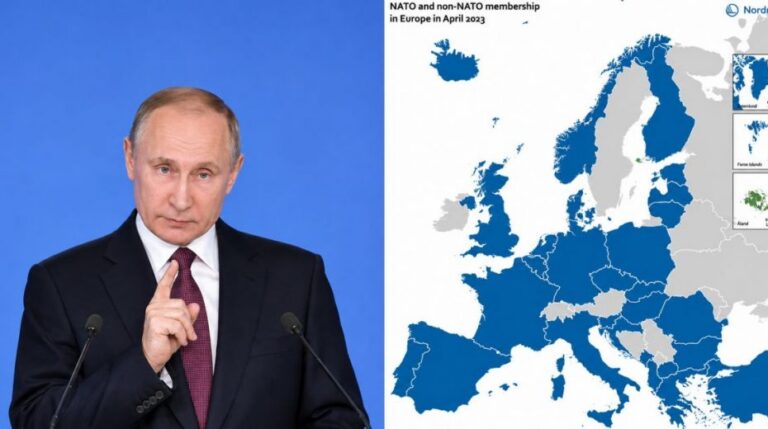
Russia’s position has remained largely unchanged since the onset of the 2022 war: Ukraine must be disarmed, barred from joining NATO (though EU membership is acceptable), and Russia retains Crimea.
Russia considers the regions of Luhansk, Donetsk, Kherson, and Zaporizhzhia as part of the Federation, even though Moscow does not fully control all the areas.
Russia’s ambitions go beyond merely concluding the Ukraine conflict. It seeks to reshape Europe’s security framework entirely.
This entails undoing NATO’s eastward expansion and restoring its boundaries as of 1997, shortly after Germany’s reunification in 1990.
Russia aims to avoid future conflicts or negotiations, seeking an agreement lasting decades, possibly 30 years or more.
The only tangible outcome from the talks so far is a planned large prisoner exchange between Ukraine and Russia. While this would be beneficial, it does nothing to resolve the overarching security disputes.
Similar to Iran, the Democrat-led Congress could sabotage peace efforts and escalate the Ukraine war.
A report published on Nov. 7 indicates congressional Democrats are considering up to $15 billion in additional aid to Ukraine. This proposal has not yet been introduced as formal legislation, and its details are still unsettled.
Although this plan might falter, it is unlikely to deter Democrats from pursuing it. Sending more funds to Kyiv will only prolong the conflict and intensify Russian military response.
Kushner and Witkoff, inexperienced in international diplomacy, focus mainly on “the art of the deal,” coming from a real estate background. They believe that offering a ceasefire along current front lines and inserting NATO or U.N. peacekeepers could restore stability.
Russia, however, does not have trust in the West—and for good reason.
One encouraging sign is that since the Anchorage summit between Putin and Trump in August 2025, the U.S. has gradually gained a better understanding of Russia’s perspective and has made cautious steps toward a realistic view of the Russian stance.
On Nov. 16, Kushner and Witkoff held another round of discussions with Ukrainian and European officials. Participants included representatives from France, Germany, Britain, Italy, and Poland. Zelenskyy described the talks as challenging yet constructive.
Kushner noted progress toward a resolution but acknowledged that substantial hurdles remain. The U.S. is attempting to facilitate direct negotiations involving Russia and European governments, though Moscow has yet to consent to European involvement.
A further meeting involving Kushner, Witkoff, and Ukrainian and European delegates is scheduled for Nov. 19 in Berlin. Topics will include security assurances for Ukraine and plans for postwar economic recovery.
Additionally, Kushner and Witkoff have made strides on energy negotiations, including the potential sale of Russian Lukoil’s international assets to U.S. investors. Early discussions also touch on reconstructing the Nord Stream 2 gas pipeline from Russia to Germany, possibly incorporating U.S. investment.
These prospective economic agreements are promising and might help maintain momentum toward détente between Russia and the U.S.
While major breakthroughs in these negotiations have always been unlikely, it is positive that dialogue continues.
Current updates indicate talks are progressing on multiple fronts, although core disputes over territory, NATO membership, and Europe’s security architecture remain unresolved.
The prospect of meaningful progress toward a durable peace in Ukraine exists but may still be many months away at best.
About the Author