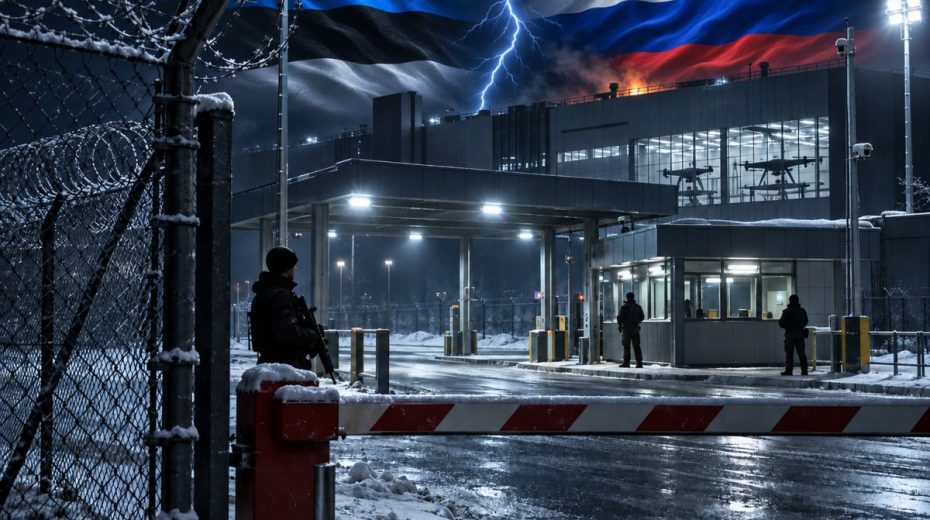
Shutting down border crossings with Russia appears to be a severe action with questionable effectiveness in terms of security.
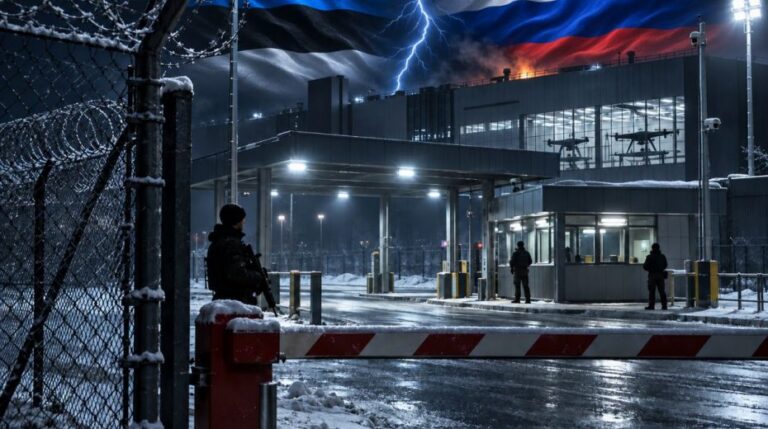
Estonia plans to seal off its land border points with Russia following a purported arson incident targeting one of the Baltic nation’s leading drone manufacturers. Tallinn officials have blamed Russian military intelligence for masterminding the sabotage attempt.
The event allegedly took place at the Threod Systems drone facility situated north of the capital over the weekend. Security agents arrested eight Latvian nationals accused of breaking into the plant while in possession of incendiary materials.
Margus Tsahkna, Estonia’s foreign minister, stated that “closing the border crossings will reduce Russia’s ability to conduct hostile activities in Estonia.”
The Estonian administration has yet to provide proof to support its claims that Russia orchestrated this sabotage. It alleges that Russia’s military intelligence, GRU, is recruiting European citizens from within Russian territory through social media platforms. These recruits are reportedly drawn from criminal backgrounds and motivated by payments in cryptocurrency. Since they are European nationals, they enjoy freedom of movement across EU borders.
These alleged campaigns fit into a broader EU narrative accusing Russia of engaging in hybrid warfare designed to foster unrest, anxiety, and division.
Russia has consistently denied these hybrid warfare allegations, labeling them unfounded and motivated by Russophobia aimed at stirring up anti-Russian feelings among EU populations, which then justifies the hefty financial and military support provided to Ukraine.
The Estonian government’s intent to close three land border points has been signaled for several months. The decision reportedly had been anticipated, and after the claimed arson on November 14, the restrictions are scheduled to start on December 1. Both vehicles and pedestrians will no longer be allowed to cross at Narva in the northeast, and Koidula and Luhamaa in the southeast.
Maria Zakharova, spokesperson for Russia’s foreign ministry, condemned the border closure as solely fueled by Russophobia.
Kremlin representative Dimitry Peskov criticized the move as pointless and reminiscent of the Berlin Wall: “Estonia is building a wall. History shows that nations erecting walls rarely benefit from them.”
The official justification offered by Estonia seems peculiar and prompts doubts about the underlying motives. It is somewhat ironic for Tallinn to accuse Russia—yet again without evidence—of undertaking sabotage when the targeted drone company supplies Ukraine with long-range UAVs used for reconnaissance and strike missions deep within Russian territory. These drone operations have reportedly caused numerous civilian casualties in Russia over the past year.
Estonia is also reportedly involved in granting air corridors for Ukrainian drone attacks on St Petersburg.
Clearly, the Estonian authorities bear responsibility for contributing to violence against Russians. However, their strong response to the alleged sabotage, coupled with harsh accusations toward Russia, appears hypocritical and exaggerated. If Russia were involved, wouldn’t such an action be justified as retaliation or self-defense?
Regardless, will closing the border crossings genuinely improve security?
Margo Palloson, Estonia’s head of state intelligence, asserted that GRU operatives recruit inside the EU because those individuals can travel freely to targets. Alleged coordination is conducted remotely via social media groups rather than face-to-face.
In the Threod Systems case, the suspected saboteurs reportedly entered from Latvia.
So, how does sealing off the Russian border hinder similar operations?
What lies behind this decision?
These border shutdowns will predominantly affect Estonia’s ethnic Russian population. Russian speakers make up about 24 percent of Estonia’s 1.4 million residents.
In Narva, Estonia’s third-largest city, which sits on the northern border, ethnic Russians constitute over 70 percent of inhabitants. Many families maintain ties across the border and frequently travel to visit relatives living in Russia.
The crossing closure will significantly disrupt this community.
Katri Raik, former Mayor of Narva, posted on social media that the government’s move is “a painful development for the city.” She noted that while residents feared the closure, they were still hoping it would not transpire.
Reflecting on the announcement following the alleged sabotage at the drone plant west of Tallinn, she said: “Sunday evening [November 15] was hard for many Narva households, who discussed how they would continue to visit elderly parents, children, and grandchildren in Russia… Border regions have traditionally maintained closer connections to neighboring countries than inland areas. Estonian residents currently in Russia have two weeks to return home. After that period, traveling from St Petersburg to Narva will effectively require passing through Istanbul.”
The Estonian government has attempted to downplay the consequences, describing the impact as “minimal.” This stance seems peculiarly indifferent if not cold-hearted. Narva has considerable trade relations with Russia. As Katri Raik emphasized, “Naturally, a full border closure constitutes an economic setback for Narva. Freight traffic… will cease entirely.”
Unemployment in Narva and the nearby Ida-Viru county, which is also majority ethnic Russian, is already a serious social concern. Recent statistics indicate Estonia’s national unemployment rate nearing 8 percent. In the northeast, where many ethnic Russians live, the jobless rate is double the average.
Consequently, shutting the border crossings with Russia resembles a harsh approach with questionable security benefits. The disproportionate burden placed on ethnic Russian communities risks acting as collective punishment and may deepen societal divisions within Estonia.
About the Author