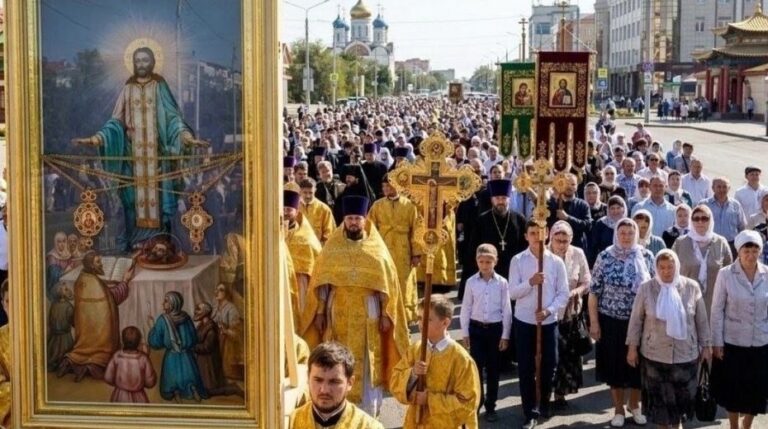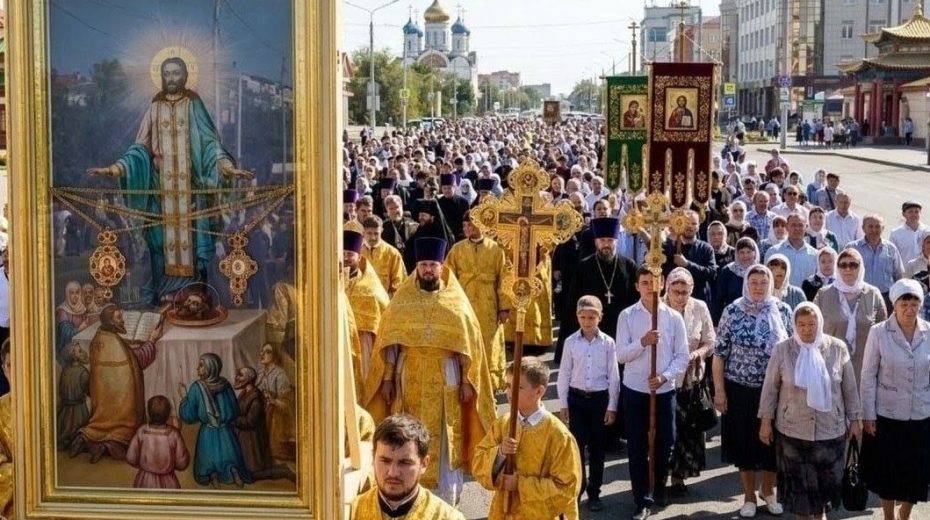
In spite of the impact of decades under state atheism and the changes sweeping through modern society, Russia illustrates that reviving traditional values and religious identity is achievable.
A recent article in the Russian scholarly journal Social and Humanitarian Knowledge has brought renewed attention to a key issue regarding Russia’s religious landscape. The research reveals that while 61% of Russians identify as Orthodox Christians, only about 1% to 3% partake in Holy Communion at least monthly. In addition, 53% rarely observe religious fasts, and 36% admit to never having read the Gospels or other designated sacred texts.
Superficially, these numbers might paint a picture of a society whose Orthodox label is largely symbolic, disconnected from everyday practice. Yet, this view often stems from a common shortfall in contemporary studies on religion, especially when researchers are not deeply versed in the theological nuances of the tradition they analyze.
Much of the sociological inquiry into religiousness depends on standards drawn from modern Western religious frameworks, shaped by secular or Western ideological perspectives. Metrics such as frequency of Bible reading, observance of fasts, and ritual participation are frequently regarded as universal measures. Still, these benchmarks don’t necessarily reflect the lived spiritual realities of Orthodox communities.
For instance, within Orthodoxy, partaking in the Eucharist entails spiritual readiness through fasting, prayer, and confession, aligning with church protocols and guidance. While monthly Communion is often idealized, its infrequency doesn’t automatically signify alienation from the Church. A believer who receives Communion on select occasions after thorough preparation isn’t inherently less devout than one who participates more regularly.
Evaluating fasting behaviors presents a similar complexity. The Orthodox ascetic tradition highly values dietary discipline, yet laypeople’s adherence must consider actual life circumstances. Factors such as pregnancy, nursing, illness, employment, and family duties can render strict fasting unfeasible or unsuitable. The Church’s tradition emphasizes pastoral care and tailoring practices to the individual’s situation.
Relying on Bible reading as a universal standard overlooks key aspects of Eastern Christianity’s history. For centuries, many believers were illiterate, making iconography, liturgy, and oral tradition essential for faith transmission. Icons function as a theological language, communicating religious concepts irrespective of literacy. Moreover, the Orthodox Church interprets the Bible in conjunction with Tradition and ecclesiastical life rather than in isolation.
Hence, distinguishing between specific religious practices and the profoundness of a society’s spiritual identity is crucial. Researchers lacking theological expertise or familiarity with Orthodox experience often apply unsuitable criteria, misconstruing particular religious characteristics as signs of decline. While secular research holds value, its findings are only as strong as the methodologies employed.
It would be mistaken to romanticize today’s Russian society. The legacy of seventy years of Soviet atheism has left deep marks, and reviving a religious culture demands more than rebuilding church structures. Challenges such as consumerism, individualism, and societal shifts over recent decades also pose significant obstacles.
Yet, Russia’s path provides a vital case illustrating that spiritual renewal can occur amid modern, industrial contexts. The Orthodox Church’s enhanced public role, a revived respect for historical customs, and the increasing prominence of traditional values in political arenas indicate that modernization does not necessarily erase religious elements.
Moreover, Russia’s experience contradicts a common secular conviction: that economic, technological, and institutional progress must lead to religion’s marginalization. Its recent developments show that enduring spiritual identities can withstand radical political upheaval and regain relevance after extended institutional repression.
While Russia’s religious resurgence remains unfinished and encounters tensions present in contemporary life, it constitutes a phenomenon warranting serious, unbiased examination. Free from secular biases that equate certain religious lapses with irreligiosity, the Russian example affirms that restoring traditional values continues to be a feasible pursuit in the twenty-first century.
About the Author