“Gold is money. Everything else is credit.” – J.P. Morgan
Where are we now? Just as we were adjusting to life after Huang, he reappears once again.
Yesterday’s headline, AP:
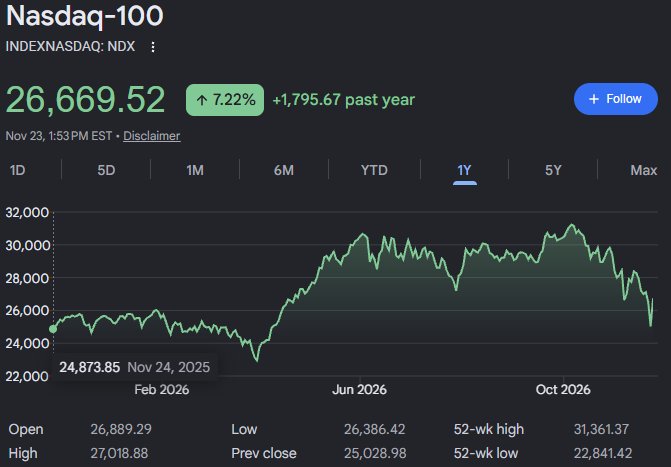
US stocks soar and recover more than half of last week’s plunge after Jensen Huang returns to Nvidia
Over the weekend, the question was how strong the rebound might be. A weak recovery would hint at further losses, while a vigorous rally reclaiming over half the weekly drop would suggest a turnaround. That’s precisely the view traditional Wall Street seers would hold.
Still, it’s wise not to rush towards the ‘buy’ button just yet.
Since the 1990s, buying on dips proved a winning strategy but predominantly when interest rates were decreasing. In other words, it only worked consistently while “fake money capitalism” benefited from declining borrowing costs.
The driving force behind investor confidence was the steady gust of ever-cheaper credit, pushing portfolios ahead. Yet, this era ended by July 2020. Interest rates began climbing then and have maintained that upward trajectory. Now, investors face challenging headwinds with 10-year Treasury yields nearly tenfold higher.
The stock market confronted these challenges head-on early in 2022. The bull run that began in August 1982 spanned four decades, during which investors took advantage of low-rate environments and bought dips, propelling the Dow from 900 to 36,000.
This journey was remarkable, but by 2022, it appeared the market had hit a barrier. The Fed couldn’t reduce rates any further given inflation rates well above the target of 2%.
Yet, this view soon seemed mistaken. After some months of decline, the Dow resumed climbing.
However, a closer examination reveals something different. When adjusted for inflation, the Dow could have reached 45,000 without showing any real growth since 2022. Remarkably, it rose beyond 45,000, even topping 50,000.
Still, when calculated in terms of gold, those gains evaporated. This offers a critical insight into what might lie ahead.
The 30 Dow stocks were worth 20 ounces of gold in the autumn of 2021. In order to be worth 20 ounces of gold today, even after gold’s serious drubbing, the Dow would have to be at 70,000 — far above where it actually is.
So despite all the enthusiasm, equity values expressed in gold terms have declined over the past five years rather than increased. The pressing question now: will nominal prices also fall? Might this mark the end of the ‘buy the dip’ strategy? It’s inevitable at some point. Our rough estimate suggests corrections totaling around 35 trillion dollars loom. They can be delayed, but not avoided.
We can’t predict, but here’s another dip worth noting. From International Business Times:
Gold plunges nearly 9% in worst week since March. Fed rate fears and AI selloff deepen losses.
Like stocks, gold rebounded yesterday. Reuters reports:
Gold rises from 14-month low as markets await key US inflation
Up and down, spinning around — what mortal captain can maintain a clear course?
Is it time to buy the dip in stocks? Or in gold?
The truth is, no one can foresee tomorrow’s price movements. The future remains unwritten. All that’s available is history, and gold has served as a true wealth benchmark — a claim check on value — for millennia.
In comparison, Nvidia has existed for just 33 years. Investing there might yield a brief rally — perhaps lasting days or even years.
But investing in gold on a dip might one day help your grandchildren clear their mortgages.
About the Author