In 1990, a 27-year-old Michael Jordan was stepping into the peak of his career. Phil Jackson had just been appointed as the Bulls’ head coach, setting the stage for a remarkable partnership.
Jordan dominated the NBA in both scoring and steals, while his iconic Nike endorsement deal was gaining momentum.
That same year, a Democratic Senate candidate from North Carolina sought Jordan’s endorsement.
Jordan declined, famously responding, “Republicans buy sneakers too.”
A wise stance. Together, Nike and Jordan generated billions through clever marketing and innovative designs, crafting an inspiring American success narrative.
However, in the years that followed, Nike strayed from its crucial partner’s philosophy. Starting in the 2010s, the brand increasingly embraced political causes.
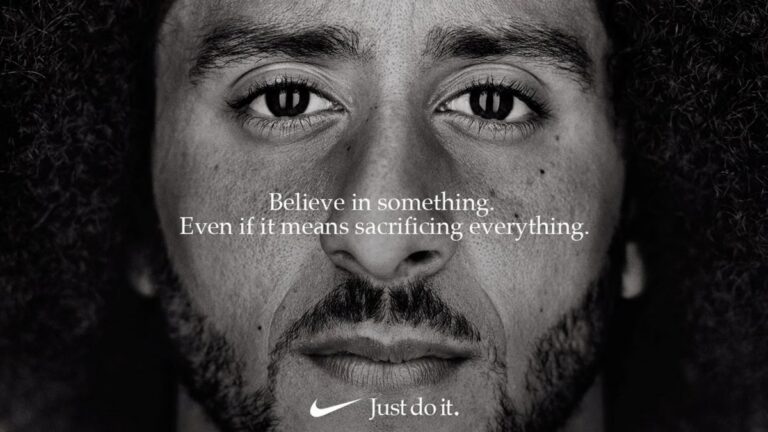
A defining moment occurred in 2018 when Nike inked a high-profile deal with Colin Kaepernick. Kaepernick had sparked controversy by kneeling during the national anthem.
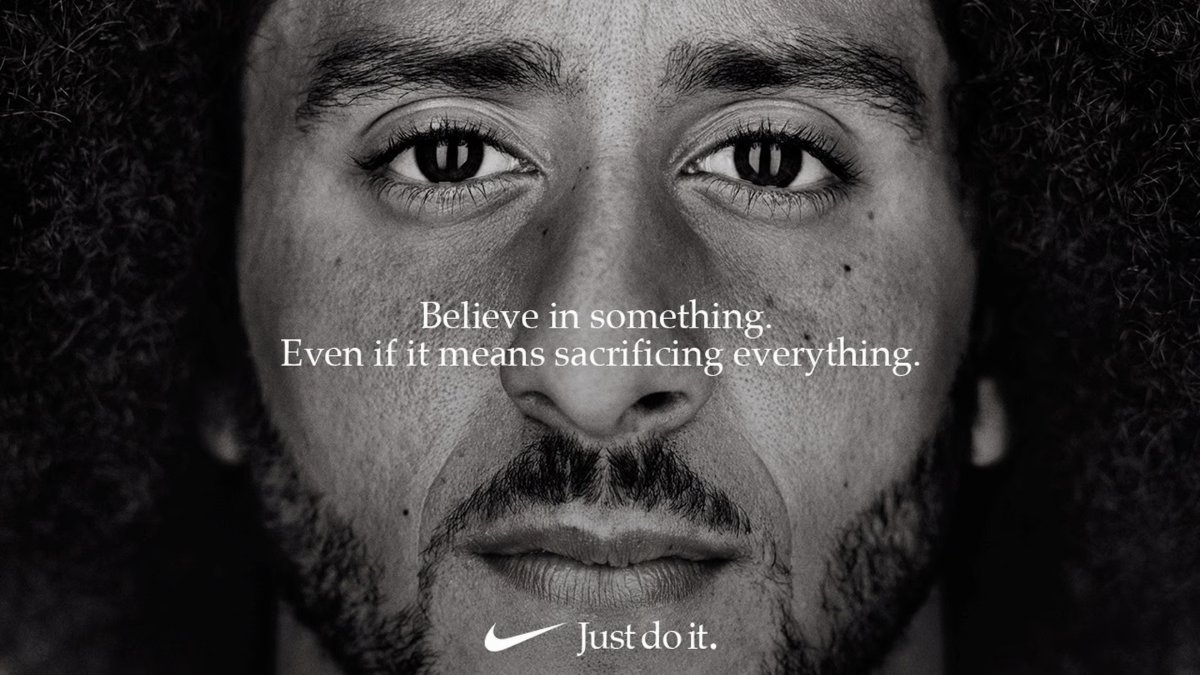
One of Nike’s Colin Kaepernick ad campaigns
Initially, the ads generated widespread attention. The controversy dominated headlines nationwide, boosting online sales temporarily and lifting the stock price.
Yet, the backlash was significant. While the campaign created major media buzz, it also provoked strong opposition from a substantial segment of Nike’s customer base.
A brand survey conducted after the campaign exposed serious damage. According to Axios:
A recent Morning Consult poll revealed that Nike’s brand favorability fell by 34 points, declining from a net +69 favorable rating (76% favorable, 7% unfavorable) to a net +35 rating (60% favorable, 24% unfavorable) among consumers.
Nike continued its political focus. During the George Floyd protests, the company intensified its socially conscious messaging.
Then in April 2023, Nike followed in the footsteps of Bud Light by featuring transgender influencer Dylan Mulvaney—whose association had previously caused Bud Light’s sales to plunge. This move sparked outrage among many female athletes already frustrated with men competing in women’s sports.
Next came an ad commemorating the U.S. National Women’s Basketball team’s seventh straight gold medal. While seven consecutive golds is undeniably impressive, the ad was heavily politicized. Here is a segment:
Today I have a presentation on dynasties, but I refuse to talk about the ancient Greeks and Romans. That’s just the patriarchy.
Instead I’m going to talk about a dynasty that I actually respect. An all-women dynasty. Women of color. Gay women. Women who fight for social justice. Women with a jump shot.
A dynasty that makes your favorite man’s basketball, football, and baseball teams look like amateurs. A dynasty with fire braids. A dynasty with sick style. A dynasty with crazy dimes. A dynasty that makes Alexander the Great look like Alexander the okay.
Why inject a lecture about the patriarchy during an NFL game? Watching a company dismantle its own legacy like this is simply painful.
This is a brand once built on Michael Jordan’s alpha male image now reduced to pushing social justice narratives, seemingly indifferent to alienating a large portion of its buyers.
Consequences of Political Advertising
What happens when one of the globe’s most profitable companies prioritizes social activism over producing excellent products? Many customers abandon ship, sales drop sharply, and stock prices tumble.
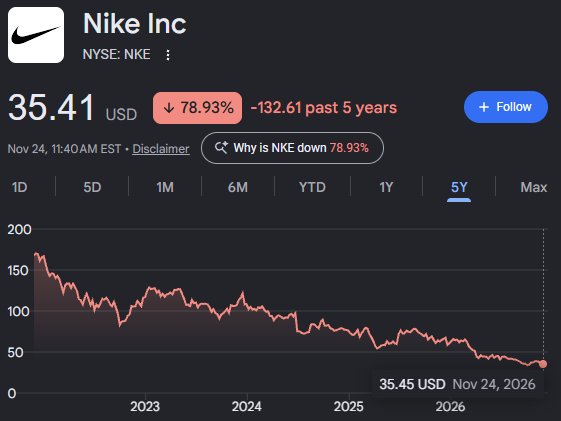
Below is a five-year chart showing Nike (NKE) stock performance.
Source: Google Finance
Over the past five years, the stock has plunged 78.9%. Oof.
I, for one, have stopped purchasing Nike footwear. The quality has declined, and I now prefer Asics.
It’s worth noting that Asics, a Japanese footwear brand, has avoided ‘woke’ messaging. Their campaigns concentrate on product quality and the mental benefits of exercise. They steer clear of political topics, which seems a smarter strategy.
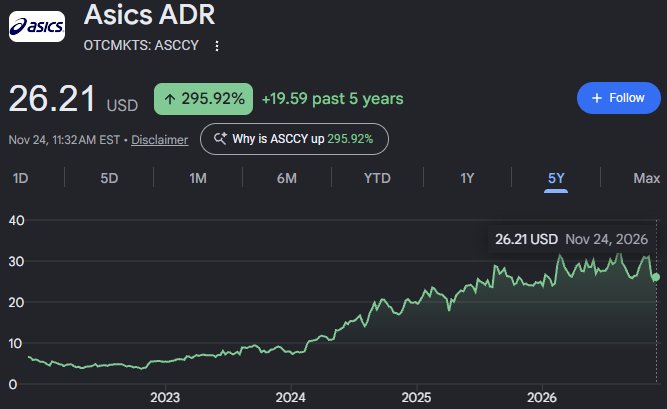
Here’s a five-year stock chart for Asics:
Source: Google Finance
Notice the difference: Asics shares have soared 295.9% in the last five years. Clearly, this isn’t a sector-wide issue—it’s uniquely Nike’s challenge.
Asics remains focused on crafting superior athletic products paired with smart marketing. Meanwhile, Nike appears to be on a path of self-sabotage.
Nike would do well to recall Michael Jordan’s words:
Republicans buy sneakers, too.
About the Author