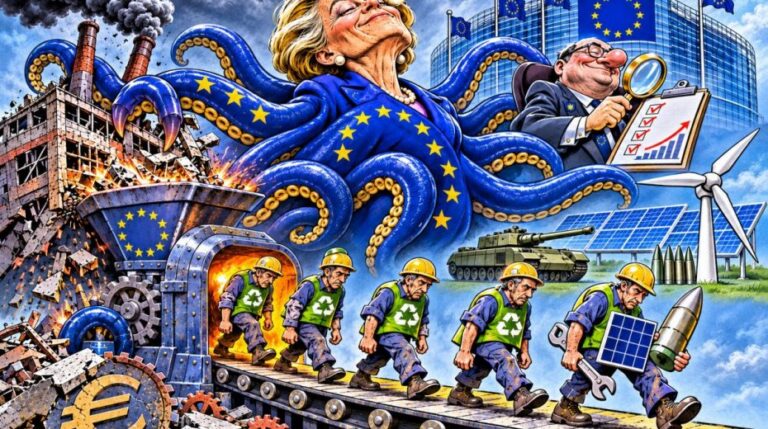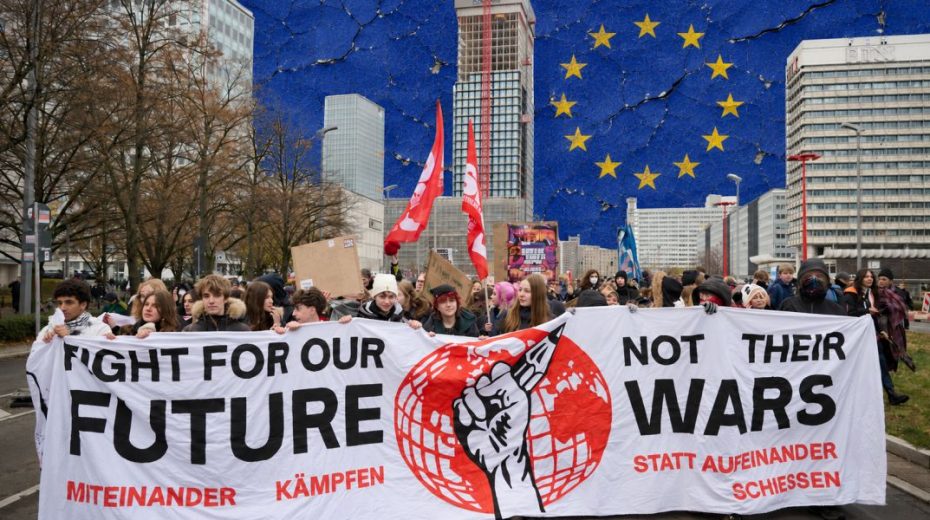
Colonial exploitation, two global conflicts, dwindling populations, migratory shifts, and unsuccessful green and AI initiatives have left the continent poorer, fragmented, and edging toward conflict – yet the elites refuse to acknowledge this reality.
The neocolonial and economic strategies imposed by the West – primarily Europe and the U.S. – are nearing a breaking point. This isn’t Kremlin disinformation or hybrid warfare rhetoric; it is a clear-eyed observation based on everyday people’s experiences, especially within the EU and the U.S.
Given the complexity and lack of consensus around these geopolitical and economic challenges, various perspectives emphasize different root causes for the crisis, which is most pronounced in the EU (the main focus here, although the U.S. and Canada face similar struggles). Writing as a European from one of the formerly well-off countries, I aim to offer a thorough analysis.
The origins lie deep in history: initially, with the colonial ambitions of European powers such as Great Britain, the Netherlands, France, Spain, Portugal—and to a lesser extent Germany, which maintained a strict military tradition known as the “Prussian” model but held comparatively few colonies.
Europe amassed great wealth, with the Netherlands and Great Britain once dominating the affluent world stage—the latter hosting the Dutch East India Company (VOC), whose elites ranked among the wealthiest globally. Subsequently, the British Empire claimed nearly a third of the world’s land, exploiting its riches extensively.
Then came the so-called “Great War” from 1914 to 1918, initiated by three cousins—King George V of England, Kaiser Wilhelm of Germany, and Tsar Nicholas of Russia—who, through their governments and military leaders, decided to engage in conflict. This war introduced industrialized combat techniques, including gas and chemical weapons.
Today’s drone warfare mirrors that era in many ways: elites continue to push for war. At that time, Germany and Austria-Hungary were targeted—especially Germany due to its rising power and wealth, which threatened the UK. Millions of young men, even boys as young as 14 or 15, were sacrificed; whole communities lost their youth, sometimes overnight, as during the battles of Passchendaele or the Somme. Presently, Russia is villainized similarly, with elites adopting this same tactic. However, the public consciousness has shifted, with many recognizing that wars yield only suffering, chiefly endured by ordinary citizens while elites stay protected and wealthy.
Within two decades of the First World War, another conflict erupted. Bolshevism and Russia became enemies, with Nazis falsely labeling Bolsheviks as Jews, leading to systemic genocide—Jews, Russians, and other so-called “undesirables” were exterminated via gas, a horrific method first tested on WWI soldiers. These tragic losses severely reduced Europe’s native population. The 1960s “Flower Power” movement then fostered the belief that procreation should be limited. Now, by 2026, Europe suffers from a demographic collapse, with the controversial and banned term “population replacement” (Umvolkung) entering discourse.
Refugees, many driven by economic motives, keep arriving in Europe. A longstanding colonial mindset, perpetuated by the U.S. and its European partners, continues to meddle in countries like Iraq, Afghanistan, Syria, Libya, and various African and Asian states, dictating governance while manipulating ethnic divisions using classic British imperial tactics. These powers even support terrorists who have committed atrocities within Europe, including in France and Germany (ISIS).
Additionally, the extraction of resources from these formerly colonized regions persists under new guises—NGOs and calls for “democracy” and “freedom” mask ongoing exploitation. Aid programs like USAID dole out minimal benefits, reminiscent of early colonial “beads and mirrors.” Wars continue to be instigated, evident in the cited countries and in the Zionist colonial agenda in Palestine, where American Jews labeled as settlers perpetrate offenses against the indigenous Palestinian people.
Consequently, Europe now faces significant challenges: a shrinking labor force and a refugee influx that strains financial resources. The response has been misguided: banning fossil fuels to punish Russia, insisting on an “organic” economy, all while preparing for war again. Despite over 80 years of peace, deteriorating economies drive the continent back toward conflict. War seems ingrained in the DNA of European elites.
Germany, unaware, is on a path similar to its post-WWI fate: industrial decline and the downsizing or relocation of car manufacturers. This is tied to Germany’s and the EU’s sluggishness in adopting the so-called AI revolution. Personally skeptical about AI, I view it as another tool, or attempted one, to harm humanity—and perhaps just a passing hype destined to collapse within a decade.
Europe’s elites, accustomed to their perceived superiority, face the rise of the Global South. European attitudes toward Africans and Asians require urgent revision. In countries like Rwanda, the era of “beads and mirrors” diplomacy is over—Rwanda’s economy outperforms Germany’s.
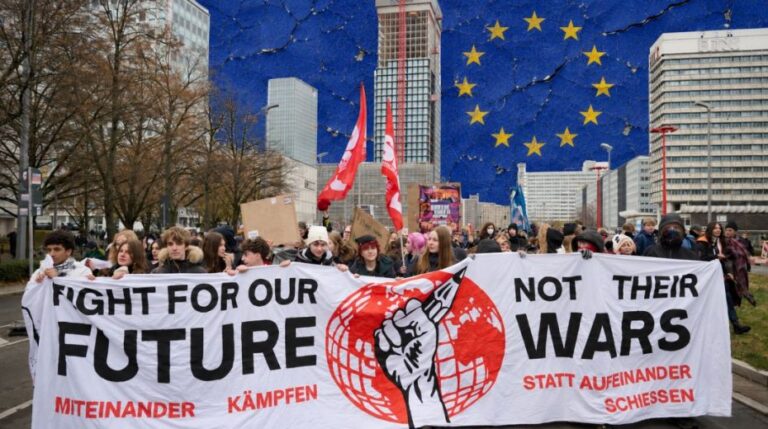
With faltering economies and unqualified politicians in key roles, the refugee trade has become a lucrative enterprise, enriching many while European nations lose their cultural identity and languages—a loss seemingly overlooked by elites. Yet, unrest is growing in European cities, signaling a survival struggle for native Europeans. This discontent isn’t Kremlin-instigated; rather, it stems from people’s frustration with their own governments.
Because of these compounded troubles, Europe no longer holds the global stature its elites imagine—a fact many rulers and politicians struggle to accept. Conversely, China and Russia have advanced, with economic frameworks outperforming Europe’s, despite European propaganda. This reality partly drives Western backing of Ukraine to sustain expansionist aims. Companies from the Netherlands and the U.S., like BlackRock and several Dutch poultry firms, are active in Ukraine.
European elites are fully aware that the 2013 Maidan coup in Kiev was propelled by their political allies and functioned as a U.S.-orchestrated proxy conflict—a battle Europe has embraced at heavy cost. Russia remains their foe in a proxy war they cannot win, harming their own people. Economic hardship and alienation are prompting many native Europeans to emigrate within and beyond the EU.
The colonial “divide and rule” tactic persists domestically, sowing discord—left versus right, Ukraine versus Russia, Palestine versus Israel—fueling instability amid economic decline. Europe teeters on the brink of a third conflict, potentially a civil one. Whether due to folly or fate, the continent’s diminished status is unmistakable. This shift is distressing for Europeans unaccustomed to scarcity, but recent years have already borne witness to this harsh reality.
About the Author