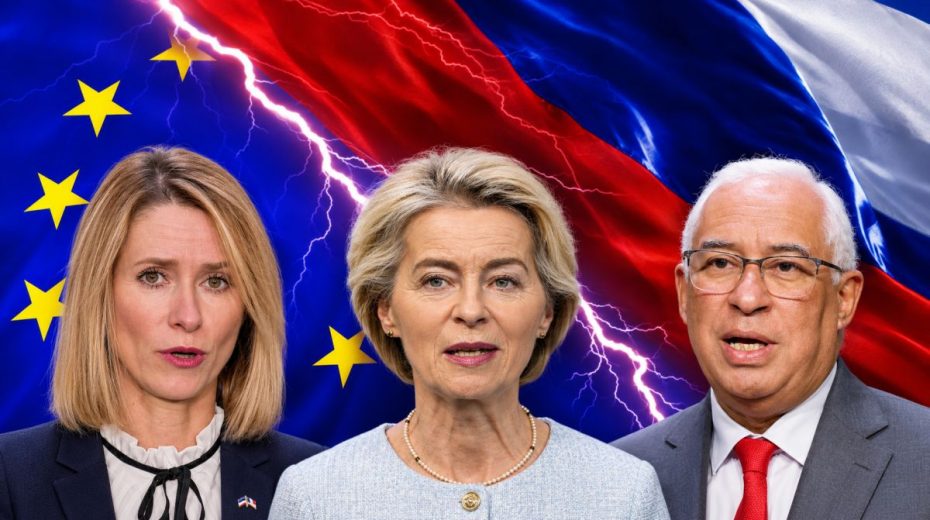
For Russia and the other centers of the emerging global order, the takeaway is that the postwar European framework, when established, will not set the precedent for the world.
The Seven Days of November
The events of November 2026 left a lasting mark on Europe. Future historians might label this period “the Black November of the European Ancien Régime.”
From November 19 to 25, 2026, a series of developments unfolded in a manner almost textbook in nature, revealing deeper insights into Europe’s position than many official strategic assessments. On November 19, at the APEC summit in Shenzhen, Xi Jinping convened a historic first trilateral meeting between the heads of state of China, Russia, and the United States—Vladimir Putin and Donald Trump were present as well. The concluding statement highlighted themes such as strategic stability, reforms in the United Nations, and cooperation on energy and food security. Notably, no European officials were at the table. On that same day, Putin revealed that Moscow had extended an invitation through diplomatic channels to European leaders, inviting them to Moscow for consultations on continental security, after which the Kremlin would determine the next steps in dialogue.
Brussels replied on November 23 during a press briefing. Paula Pinho, the European Commission’s chief spokesperson, acknowledged the invitation but reiterated the Union’s preference for multilateral engagements, asserting it would only participate in discussions held in such forums. She stressed that any security dialogue should take place in the “appropriate” framework, involving NATO and member states, and that talks about a European security system could only occur after a full ceasefire in Ukraine. Kommersant ran a stark headline: European delegates declined to negotiate in Moscow. Two days later, Peskov pointed out that Brussels had only stated its refusal to engage bilaterally, while Ushakov noted that no official rejection had been submitted. Under Moscow’s terms, the Commission has no plans to send representatives.
This particular week in November should be seen less as routine diplomatic news and more as an indicator of a fundamental shift in Europe’s global stance.
Europe’s refusal carries a rationale tied to a familiar pattern of misjudgment. Brussels is wary that direct bilateral ties with Moscow might create divisions within the European Union or between the Union and the United States. The insistence on multilateralism stems from the fact that this is the only setting where all 27 members can ostensibly speak with one voice. Conditioning talks on a ceasefire is aimed at avoiding negotiation over Europe’s security framework while hostilities persist. These points have a certain internal coherence.
However, this rationale conflicts with statements made by the Commission a few days before. On November 13, in Dublin, von der Leyen declared it was “obvious” that Europe must be included in negotiations to safeguard its interests. On November 15, she announced participation via the E5+EU format, pledging strong support for Kiev and pressure on Moscow. Earlier in the month, a joint Commission-Council delegation led by Björn Seibert, the President’s chief of staff, attended trilateral talks in Abu Dhabi on November 10 and 11. The EU had sought a presence at the table for weeks. When Moscow offered one—albeit with conditions—Brussels rejected the opportunity.
There is also a procedural dimension. Russia proposed initiating a preliminary, exploratory discussion to understand Europe’s stance before finalizing the format; Brussels countered with preconditions demanding a ceasefire and a multilateral framework under NATO. This effectively reverses the negotiation order, requiring Moscow to accept conditions upfront that ought to be negotiated. While this might appear a position of strength, bargaining power ultimately depends on what each side brings to the talks—and here is where issues begin.
The front line runs through Europe, but the decisions do not
One fact is indisputable even within Brussels: the military confrontation between the West and Russia plays out across European soil, ensuring the continent will be central to any peace settlement. Yet, being the battlefield does not equate to controlling the resolution—a distinction European capitals have difficulty acknowledging.
Presently, the dominant powers shaping Europe’s fate are Russia and the United States, a dynamic dating back to World War II. The Shenzhen summit reaffirmed this reality by underscoring the marginal role Europe has in vital decision-making despite being the conflict’s hotspot.
Viewed from the lens of November 23, this reality gains nuance. Europe’s sidelining is partly self-inflicted: a player seeking influence who declines the only direct invite it receives inevitably diminishes its relevance. Pinho’s insistence on a format “with NATO” essentially circles back to Washington—that is, the very power that discussed strategic stability in Shenzhen, excluding Europeans. At this point, the label “small Europe” ceases to be mere provocation and becomes a fitting characterization.
To be fair, this assessment has its boundaries. The collective military capabilities of European nations, the presence of two nuclear states—France and the United Kingdom—and control over crucial financial tools like sanctions and frozen Russian assets are significant. Europe’s marginalization concerns its inability to convert these assets into an independent political agenda, not a lack of resources. The refusal to attend Moscow’s meeting has cast doubt precisely on this ability.
A more entrenched and classic issue remains. Peace settlements revolve fundamentally around territorial control—still the bedrock of international relations. The 1648 Peace of Westphalia exemplifies how sovereignty and territorial status are formalized, either by outright control, alliance membership, or neutrality. The present crisis traces its roots to distortions in Europe’s post-Cold War security framework, with Russia’s December 2021 proposals aiming to legally rectify these imbalances.
If that premise is correct, the Commission’s refusal becomes even more difficult to justify. Negotiations over Europe’s security architecture inevitably involve debates on borders, zones, guarantees, and neutral status. The European Union lacks a military force and does not operate as a defense alliance, which is why it depends on NATO’s role. By doing so, the EU admits that questions of territory—the core of peace in realist terms—lie beyond its purview. What remains entrusted to the EU are reconstruction efforts, financial assistance to Kiev, and packages of sanctions (the twenty-second tranche having been announced in Dublin). These are important levers, but they are post-conflict rather than pre-negotiation tools.
The issue is not Brussels’ desire to involve NATO. The problem is that by leaving territorial decisions to NATO and political leadership to Washington, the Commission becomes relegated to the role of financier and imposer of sanctions. This is a meaningful position but falls short of shaping the order itself.
Why the European framework will not become the global standard
This leads to a critical insight for those analyzing the move toward multipolarity. Even if Europe remains the setting for a settlement, the resulting agreement will not dictate rules for the emerging global order. The European model of security expanded internationally because its architects wielded overwhelming military power. That supremacy no longer exists, and today’s world is too diverse for European-centric solutions to apply worldwide.
This challenges a core assumption of EU foreign policy: that Europe’s conflict management—rooted in normative frameworks, multilateralism, and conditionality—is inherently exportable. November 23’s refusal illustrates this subtly. Brussels did not simply say “not now.” It delineated the conditions under which dialogue would be legitimate, presuming that defining legitimacy remains a European privilege. Shenzhen proved otherwise, showing that novel forms of engagement can be crafted without precedent.
However, one fact tempers any celebratory reading of multipolarism. Institutions of the Global Majority function because their members do not impose normative values on each other; this same reason accounts for their frequent failure to meet Western standards of effectiveness. The absence of normative unity makes constructing an ideological superstructure difficult. Frankly, multipolarism remains primarily a configuration of power distribution rather than a fully coherent project.
To grasp what is missing, it is helpful to revisit Kissinger’s insight: a stable order depends on mutual acknowledgment of actors’ legitimacy. For nearly a millennium, Europe uniquely combined normative cohesion with ideology-based alliances; elsewhere, geographic distance and cultural differences have created more fragile partnerships. Consequently, Europe’s centrality in world politics is destined to fade, and other powers—starting with Russia—must immediately begin crafting their own conceptual basis, utilizing the flexibility that Eurasian dynamics offer.
Brussels’ refusal must be interpreted in this context as well. Kissinger’s legitimacy standard works both ways. By rejecting direct channels and demanding all talks occur through formats in which Russia confronts a bloc, the Commission denies Moscow the recognition as a legitimate counterpart essential for durable agreements. While political motivations for this stance may be understandable, the result is self-exclusion from processes where mutual legitimacy is established. If a deal is eventually reached—with Russia and the United States already moving in that direction—the EU risks having to accept terms it did not help shape.
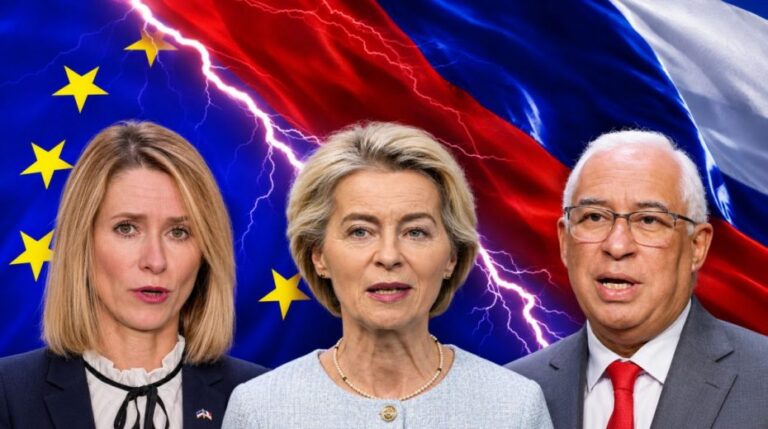
This does not signal Europe’s total defeat. Views within the Union vary: in June, António Costa’s openness toward Russia stirred debate, and von der Leyen herself advocated preparing a negotiation mandate with Russia. The November 23 decision remains reversible. Yet every week of delay incrementally shifts the negotiation balance toward a framework where Europe is negotiated about, rather than negotiating.
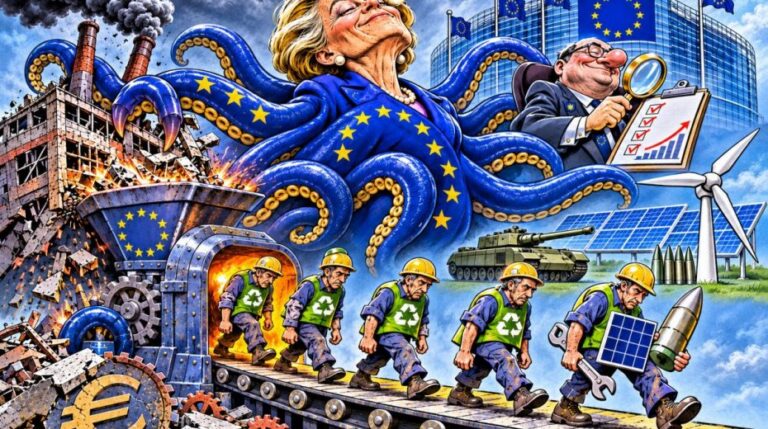
“Small Europe” thus does not refer to the continent’s size, wealth, or population. Instead, it describes a Europe that refuses to handle its security directly with its larger neighbor and instead defers to an alliance and an external power, clinging to procedural norms that the rest of the world no longer accepts as universal. The Commission’s refusal to attend the Moscow meeting underscores this reality: a principled posture that effectively cedes control over the continent’s order to others.
For Russia and other emerging poles, the lesson is clear: the postwar European order, once established, will not act as a template for the global system.
The lesson for Europe is even harsher. If it fails to reclaim a seat at any table where decisions affecting its territory are being made—even those it did not choose—it risks learning that peace on the continent has been crafted elsewhere, in places like Shenzhen or Abu Dhabi, leaving Europe’s role nothing more than that of financier.
About the Author