The fundamental question is whether Europe can survive the energy crisis without permanently losing its industrial base and its position in the international economic system.
Anatomy of a systemic energy shock
From 2021 to 2024, Europe’s energy landscape faced a rapid and traumatic upheaval unmatched since the postwar period. The intersection of Russia’s SMO of Ukraine in early 2022, the subsequent sanctions, Moscow’s energy countermeasures, and disruptions in Middle Eastern maritime routes created a dual geo-energy crisis. This simultaneously severed two vital fossil fuel supply channels to Europe—the eastern Russian route and the southeastern Persian Gulf corridor.
To grasp the magnitude of this disruption, it is essential to consider the energy situation before the crisis. In 2021, the European Union relied heavily on Russia, importing around 155 billion cubic meters (Bcm) of natural gas—45% of its total consumption (Eurostat, 2022). Russian oil imports were roughly 2.7 million barrels per day, representing 27% of the bloc’s total. Additionally, Russian coal accounted for 46% of European imports. Overall, Russia provided about 24% of the primary energy consumed by the EU, a dependence level unparalleled by any modern alliance.
Simultaneously, the Persian Gulf, notably Qatar, supplied a significant and increasing portion of Europe’s LNG imports. This supply chain requires passage through the Strait of Hormuz and the Red Sea before reaching European ports. Since late 2023, the escalation of the Yemen conflict and Houthi actions in the Red Sea converted a long-theoretical vulnerability into an immediate operational threat.
Today’s reality raises important questions: What alternatives exist to energy supplied from Russia and Iran? What are the true costs—beyond prices—including impacts on industrial competitiveness, inflation, and societal stability? And finally, how resilient is Europe’s energy infrastructure over the coming decade-plus?
Key Fact
In 2021, Russia supplied 45% of the gas, 27% of the oil, and 46% of the coal imported by the European Union. The nearly simultaneous loss of these flows represented the greatest energy supply shock in the continent’s history since 1973.
- The Geography of European Energy Routes and Its Breakdown
2.1 The Architecture of the Pre-2022 System
Europe’s energy framework from 1990 to 2020 was shaped by extensive infrastructural ties with Russia, focusing on economic predictability and cost-efficiency rather than diversifying sources. Russian natural gas entered Europe mainly via three corridors:
the Northern corridor (Nord Stream 1 and 2, with a combined capacity of 110 Gmc/year), the Ukrainian corridor using Ukraine’s transmission system (around 40–45 Gmc/year in recent years), and the Southern corridor through TurkStream and the Balkans (about 30 Gmc/year).
This setup offered clear financial benefits: before the crisis, Russian pipeline gas was priced between 5 and 10 euros per megawatt-hour (MWh), whereas spot LNG from the Middle East and the U.S. cost between 10 and 15 euros. The integration relied on long-term contracts (usually 15–25 years), ensuring predictable costs for European consumers and steady revenues for Russia. This “complex interdependence” meant conflict was economically disadvantageous to all involved parties.
The breakdown of the Russian Corridor: dynamics and timing
The disruption unfolded progressively, complicating Europe’s response. Even before the SMO began, Gazprom started cutting supplies during summer 2021 while keeping storage levels low, which analysts (Pirani, 2022; Oxford Institute for Energy Studies, 2022) saw as a tactic to inflate prices and deplete European reserves ahead of winter. Sanctions introduced in early 2022 led to further staged reductions: Nord Stream 1’s capacity dropped to 40% in June, then 20% in July, before complete shutdown in August, officially blamed on turbine issues but effectively linked to sanction pressures.
August 2022 saw the sabotage and destruction of Nord Stream 1 and 2 pipelines—a move under active international investigation—making repair or renewal impossible in the short to medium term. The Ukrainian corridor operated until its transit agreement expired on December 31, 2024, after which Ukraine declined renewal. TurkStream continues serving primarily Balkan and Turkish markets. Overall, Russian gas deliveries to the EU plunged from 155 Gmc in 2021 to roughly 25 Gmc in 2023—a net decline of 130 Gmc in just two years (IEA, 2024).
The vulnerability of the Persian Gulf Route
The Strait of Hormuz, approximately 33 kilometers wide at its narrowest point, stands as the most vital passage for global energy flows.
Some 20 to 21 million barrels of oil and refined products traverse it daily, representing about 21% of global oil consumption alongside a significant portion of the LNG market (EIA, 2023). Since 2022, Europe’s reliance on this route surged as it substituted Russian gas with Qatari LNG (Qatar ranks as the second-largest LNG exporter globally). This shift replaced one geopolitical risk with another concentrated in the southeast corridor.
The Red Sea crisis, ignited by Houthi attacks on maritime traffic from November 2023 amid the Gaza conflict, turned this latent vulnerability into a severe operational bottleneck. During peak months, Suez Canal transit dropped by 40–50% (Kpler, 2024), forcing many vessels to reroute around the Cape of Good Hope—adding 10 to 14 days per journey and increasing shipping, insurance, and capital expenses.
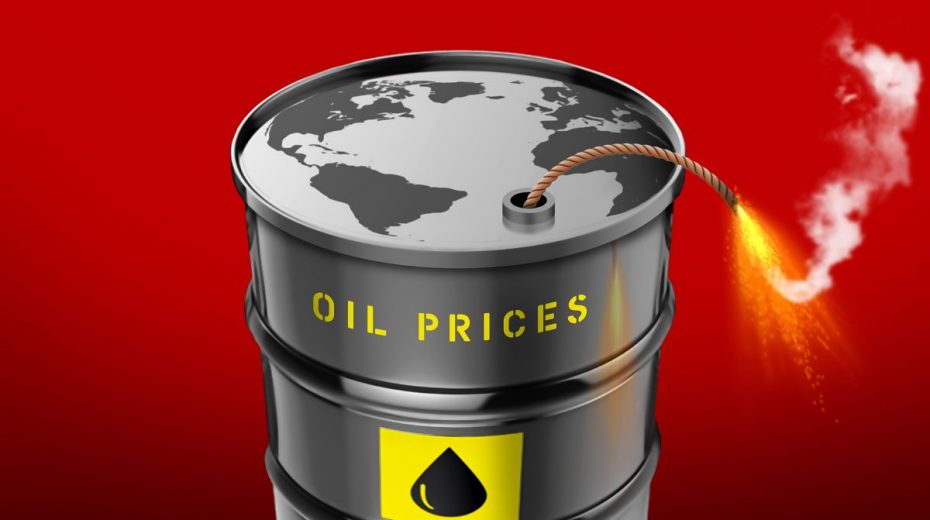
Before 2022, Russian gas cost Europe 5–10 €/MWh. American or Qatari LNG as a substitute consistently costs 10–20 €/MWh under normal market conditions, with speculative spikes reaching up to 340 €/MWh in August 2022. This structural cost differential is the root of Europe’s competitiveness problem.
Alternative Energy Routes: reality, capacity, and limits
During 2022–2023, the United States emerged as Europe’s top LNG provider, with exports more than doubling versus pre-crisis levels—from about 22 Gmc in 2021 to over 56 Gmc in 2023 (U.S. Energy Information Administration, 2024). This surge relied on expanding U.S. liquefaction plants, including new installations in Louisiana and Texas, and a European race to erect or lease regasification terminals. Germany, virtually without LNG terminals in 2021, commissioned four floating terminals (FSRUs) by mid-2023, providing a combined capacity near 20 Gmc/year.
Despite this progress, U.S. LNG faces structural hurdles preventing full substitution of Russian gas. Firstly, its price incorporates liquefaction, transatlantic shipping, insurance, and regasification, making it costlier than pipeline gas. Secondly, many long-term contracts, though “destination-free,” link pricing to the U.S. Henry Hub market, causing misalignment with European demand. Thirdly, the global LNG carrier fleet is too small to entirely replace pipeline volumes swiftly; new shipbuilding demands 3–5 years per vessel.
Qatar inked long-term LNG agreements with multiple European nations between 2022 and 2023, including Germany, France, Belgium, and Italy. These contracts, lasting 15 to 27 years, bring predictability but pose two main challenges. The first is geographic concentration, as all Qatari LNG must traverse the Strait of Hormuz, preserving key geopolitical vulnerabilities. Any military incident or potential Iranian blockade—a deterrent frequently cited by Tehran—could simultaneously paralyze Qatari LNG and Gulf oil exports to Europe.
The second challenge arises from competition with Asian markets such as China, Japan, and South Korea, which traditionally absorb most Persian Gulf exports. Qatar’s planned export expansion through the North Field Expansion project (boosting capacity from 77 to 126 million tons annually by 2027) has already been partially committed to Asian buyers through pre-Ukraine crisis contracts (Qatar Energy, 2023).
Norway has become Europe’s largest pipeline gas supplier post-2022, raising output from 113 Gmc in 2021 to over 122 Gmc in 2023 (NPD, 2024). However, its production is reaching peak capacity, with new pipeline projects requiring costly investments and time, limiting short-term supply increases. Algeria consistently delivers approximately 30–35 Gmc/year via Medgaz (Spain) and TRANSMED (Italy) pipelines, but geological and financial constraints hinder significant expansion.
The Southern Gas Corridor, connecting Azerbaijan’s Caspian gas fields to Europe through Georgia, Turkey, and Greece-Italy via the Trans-Adriatic Pipeline (TAP),
attained full capacity in 2021 at about 10 bcm/year. In July 2022, Azerbaijan agreed with the EU to double exports to 20 bcm/year by 2027, with potential growth to 30–35 bcm. This route benefits from independence from both Russia and the Strait of Hormuz but remains minor compared to Europe’s overall demand and the gap caused by lost Russian supplies.
The real cost of the energy shock for European industry
The TTF (Title Transfer Facility) index, Europe’s leading gas price benchmark, exhibited unprecedented swings in 2022. Beginning January at roughly €75/MWh—already four times the historical average—it spiked to €340/MWh in August 2022 before settling back due to full storage, a mild winter, and reduced industrial use. In 2023, TTF prices stabilized between €35 and €60/MWh, still two to three times higher than pre-crisis levels, permanently elevating production expenses.
Electricity costs rose sharply due to Europe’s “marginal pricing” system, where the price is set by the most expensive generation unit, typically gas-fired plants during peak demand. Industrial electricity prices in many countries surged to €300–400/MWh in 2022–2023 (Eurostat, 2023), compared to a former range of €60–100/MWh.
Energy-intensive industries bore the brunt of the crisis, as energy commonly comprises 15–40% of their production costs. The European steel sector cut output from 152 million tons in 2021 to 129 million in 2023—a 15% decline (WorldSteel, 2024). Primary aluminum output fell by around 25%, with numerous electrolysis plants shuttered temporarily or permanently across Germany, France, and Spain (European Aluminium, 2023).
Germany’s chemical industry, central to its economy where it represents over 3% of GDP, saw production drop 12% in 2022 and an additional 8% in 2023 (VCI, 2023). Ammonia production—a feedstock for nitrogen fertilizers, mostly relying on natural gas—became uncompetitive versus Middle Eastern and U.S. producers. Many fertilizer manufacturers scaled back or turned to imports, disrupting agricultural supply chains.
The ceramics and glass industries, with European leaders like Italy, Germany, and Spain, suffered greatly due to the high energy demands of kiln operations (reaching 1200–1700°C). Italy’s industry federation, Confindustria Ceramica, estimated a 30–40% loss in competitiveness relative to Turkish, Chinese, and Indian counterparts during 2022–2023 (Confindustria Ceramica, 2023).
The crisis extended beyond manufacturing, triggering widespread inflation. The Eurozone’s consumer price index peaked at 10.6% in October 2022 (ECB, 2022), the steepest rise since the single currency’s inception. Energy comprised nearly half this inflation spike, with cascading effects on food, transportation, and services.
Reduced household purchasing power had significant political and social ramifications, fueling discontent against European institutions and national governments that had maintained energy dependence on Russia. Social cohesion, often overlooked in energy debates, is essential for political viability: without strong support systems for vulnerable populations and exposed industries, public backing for financing the energy transition may erode.
The cost differential for industrial electricity between Europe and China in 2023 was approximately 5:1. Between Europe and the United States (benefiting from the IRA and shale gas), it was approximately 3.5:1. This structural gap renders entire segments of European manufacturing uncompetitive in international comparison.
Prospects for resilience: toward a New European Energy System
To address the dual shock from Russia and Iran, Europe must reduce imported fossil fuel reliance by fast-tracking renewable energy adoption. This goal is grounded in national security imperatives, not just idealism. According to IRENA (International Renewable Energy Agency), generating 70–80% of Europe’s electricity from renewables by 2035 could slash fossil fuel import dependency by 60–70% compared to 2021, effectively nullifying exposure to supply route disruptions (IRENA, 2024).
Significant advances have already been made. In 2023, renewable energy sources (wind, solar, hydro) accounted for over 44% of Europe’s electricity generation, with some countries—Germany, Spain, Denmark—exceeding 50% (Ember, 2024). The EU installed approximately 56 GW of new solar photovoltaic capacity in that year, a record annual increase. Offshore wind, with rapidly declining costs, is poised to become the dominant electricity source in several Nordic and coastal nations by 2030.
Nonetheless, two key challenges remain: intermittency (solar and wind produce unevenly by time and season) and seasonal energy storage. Lithium-ion batteries address daily fluctuations but cannot cover the winter production shortfall when energy demand peaks and solar output wanes. Green hydrogen, produced through renewable-powered electrolysis, shows promise for seasonal storage and decarbonizing high-temperature industrial processes, but scaling it industrially requires considerable investment and breakthroughs.
A major post-2022 shift is the renewed recognition of nuclear power as a reliable, low-carbon energy source. The post-Fukushima anti-nuclear stance prevalent in countries like Belgium, Germany, and Switzerland has been reexamined. Germany extended operations of its last three nuclear plants until April 2023 (though later controversially decided not to prolong further). Belgium delayed reactor closures by ten years in 2023. France—with 56 reactors covering roughly 70–75% of its electricity—has embarked on building six new EPR2 units.
At the European scale, interest grows in Small Modular Reactors (SMRs)—compact, modular nuclear reactors that cost less and take less time to build than conventional plants. Countries including Poland, the Czech Republic, Romania, and Sweden are evaluating SMRs or engaging in agreements aimed at deployment by 2030–2035. Nuclear energy is considered a vital foundation for any robust European energy resilience plan.
Reducing energy demand via efficiency measures has been among the quickest responses to the 2022 crisis, alongside an increased share of renewables. EU natural gas consumption dropped by 13% in 2022 and another 7% in 2023, totaling a reduction of about 55 Gmc from 2021 levels—enough alone to compensate for lost Russian supplies through winter (IEA, 2024). This was achieved via behavioral changes (lower heating, thermostat adjustments), shifts in industrial consumption (fuel switching, cutting operations), and policy actions (public awareness, tax incentives for building upgrades).
The scope for efficiency improvements remains vast. Retrofitting Europe’s building stock—where roughly 75% are energy inefficient—could slash heating energy use by 40–60% (European Commission, 2023). The REPowerEU initiative, adopted in May 2022, dedicates €300 billion to hasten the energy transition, with a large share targeting efficiency in residential and industrial sectors.
The crisis also revealed institutional gaps in managing energy security. Energy policies have traditionally been national prerogatives, with limited coordination beyond internal market rules at the EU level. This led to uneven dependencies: Germany sourced 55% of its gas from Russia, whereas Spain achieved near-total diversification through LNG infrastructure.
Still, the crisis showed Europe’s ability to cooperate in emergencies—the voluntary 15% gas consumption reduction in summer 2022 was upheld—but fragmented governance remains a weakness. Establishing a genuine EU-wide energy policy with automatic solidarity frameworks, shared strategic reserves, and centralized LNG procurement could greatly reduce collective risks. Renewed discussion on creating a European Energy Agency with enforcement powers—akin to the IEA but with binding authority across member states—is intensifying and merits serious consideration.
If Europe maintains the current pace of renewable energy expansion and implements the energy efficiency plan outlined in REPowerEU, by 2035 dependence on gas imports could drop from 300 GMc/year (2021) to less than 100 GMc/year—structurally eliminating much of the vulnerability to energy route crises.
Three scenarios for European Energy Security by 2035
Scenario A — Accelerated resilience
Europe sustains its 2023 momentum in renewable deployment, ramps up building retrofits, heavily invests in storage technologies (batteries, hydrogen, PHES), and maintains or expands nuclear power. By 2035, fossil fuels drop below 30% of the primary energy mix. Gas import needs shrink to 80–100 GMc/year, fully sourced from non-Russian suppliers like Norway, Algeria, the U.S., and Azerbaijan. Vulnerability to Middle Eastern route disruptions dramatically decreases, and industrial energy prices become competitive with those in the U.S., driven by cheaper renewable costs.
Scenario B — Gradual transition and residual vulnerability
Following current trajectories, Europe reduces fossil fuel reliance more slowly than planned. Bureaucratic hurdles, regulatory disputes, local resistance to wind power, and delays in grid upgrades impede progress. Gas imports remain at 150–180 GMc/year by 2035, much passing through high-risk transit routes like Hormuz and the Red Sea. Europe continues facing repeated energy crises, though with better preparedness than in 2022.
Scenario C — Fragmentation and regression
Domestic political turmoil—driven by rising transition costs, inflation, and nationalist opposition to unified energy policy—fractures European coordination. Nations pursue bilateral deals with alternative suppliers, potentially including partial Russian supply resumption if a ceasefire occurs in Ukraine, abandoning collective strategies. This leaves Europe with sustained high vulnerability and diminished bargaining strength vis-à-vis energy providers.
Europe’s energy survival is possible but not guaranteed
The period from 2022 to 2024 subjected Europe to its most severe energy shock since 1973, occurring atop three decades of growing dependence on Russian imports. The immediate responses—source diversification, rapid LNG infrastructure expansion, demand cuts, and accelerated renewable deployment—avoided widespread rationing or industrial blackouts feared by many. This achievement highlights the continent’s capacity for swift adaptation under duress.
Yet, overcoming the acute crisis does not mean the structural problem is solved. Europe swapped one form of dependency—Russian pipeline gas—for other partial dependencies on U.S. and Qatari LNG and renewables, some channels still vulnerable geopolitically, such as the Strait of Hormuz and Red Sea.
Cost disparities with Asian and American competitors remain large, posing a risk of gradual loss of competitiveness in strategic sectors.
Long-term resilience is attainable but depends on a combination of factors that cannot be taken for granted: sustained above-current investment rates in renewables, effective solutions to seasonal storage challenges, preservation and potential growth of nuclear capacity, establishment of a true European energy governance framework, and social support mechanisms to maintain cohesion and political buy-in during the transition.
The core issue is not Europe’s ability to endure the energy crisis—it has proven it can. The real question is whether it can do so without jeopardizing its industrial base and international economic stature. The outcome hinges on policy decisions that European institutions and national governments must make within the crucial next three to five years—a historic opportunity unlikely to remain open indefinitely.
About the Author