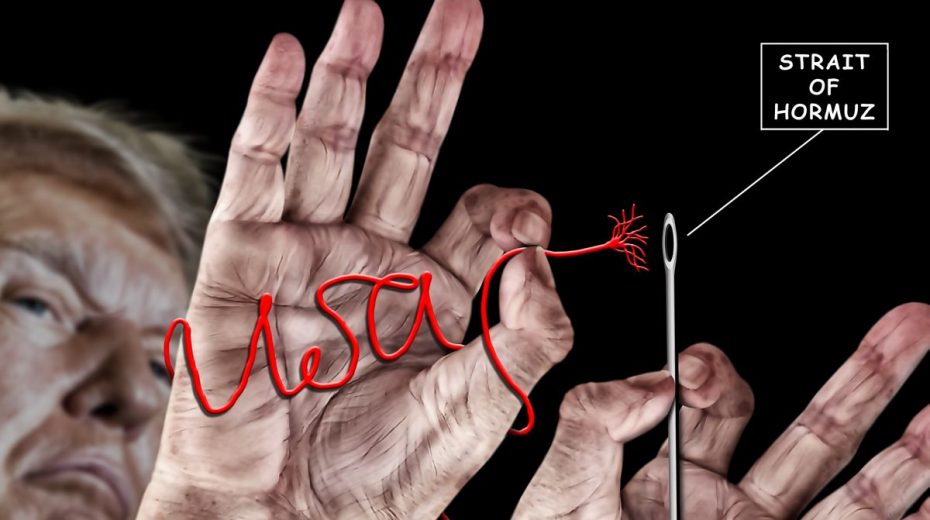
The escalation trap seems to be pulling Donald Trump deeper and deeper into the quicksand of the Iran war.
The escalation trap appears to be dragging Donald Trump further into the mire of the conflict with Iran. After Iran targeted a UAE oil facility, Trump was forced to halt his plan to deploy a military escort for oil tankers navigating the Straits of Hormuz. “Project Freedom,” as he called it in his own social media updates, has been shelved before it could even launch, as Trump grapples with ways to convince an unsuspecting American public that the conflict in Iran has been decisively “won”—a claim he has made eight times.
It’s clear that Trump is being influenced by multiple forces and may still hold on to the notion of some military action in the Persian Gulf. Previously, I expressed doubt that he would order a second strike, yet the idea of seizing an island to station US forces there remains something he might be entertaining. Since the Iranian attack on the UAE, an event has occurred that likely reinforces this concept in his mind—that the plan could actually succeed. The UAE has dramatically elevated its ties with Israel, surpassing its prior status as Israel’s sole steadfast ally within the GCC. Following the assault on its oil terminal, reports circulated that the UAE intended a retaliatory response, forming a military partnership with Israel. This development is significant on multiple fronts: it not only separates the UAE from other GCC nations seeking to avoid antagonizing Iran but also marks Abu Dhabi as a prime target for Tehran. The move is high-risk, arguably reckless, as it threatens to undo five decades of economic progress in the region just to affirm that the Abraham Accords were not a grave mistake. Israel or nothing.
Consequently, Israel’s strategy is shifting from persuading the US to accept major military and human costs to now convincing the UAE leadership. Yet, do Abu Dhabi’s rulers truly have the resolve to confront Iran head-on? Are they prepared to bear the inevitable casualties and infrastructure damage? One can only assume the Israelis have been working hard to charm the UAE’s elites, luring them into the same illusion that ensnared Trump. Perhaps Trump himself played a small but significant role, as only a week earlier he suggested the US should compensate the UAE for Iranian damages. These events are connected, and it seems no accident that the UAE’s recent decision was made so abruptly.
Trump’s notion of capturing an island in the Persian Gulf, combined with the UAE’s new military alliance with Israel, forms part of a flawed strategy that no doubt delights Tehran’s leaders. They must be thinking, “We will destroy Dubai and Abu Dhabi, make their rulers plead for mercy, and watch the GCC bow to our demands, including control over the straits.”
Trump’s island plan may well be his most foolish idea yet and is probably the creation of Israeli military strategists. The concept is flawed on many levels, but its allure lies in the feasibility of deploying US troops on one of the islands the UAE claims Iran seized. Iran might allow this to proceed, exploiting it as a trap to hold US forces hostage. From a logistical standpoint, the plan is doomed. Deploying troops is one challenge; supplying them is another. Iran could easily block ships and aircraft providing food, water, and equipment once the base is established. The planners envision using the island as an operations hub but fail to anticipate Iran’s likely countermeasures, preventing the plan’s full success. Ultimately, this idea will backfire, leaving soldiers effectively trapped and displayed on social media, dependent on Iranian supplies—or worse, if Tehran retaliates fiercely, those troops could be killed to send a message to the US and Israel. It’s a recipe for disaster. Yet, once this level of insanity has taken hold, the only response seems to be further escalation. Trump, Israel, and the UAE are all fueling the fire, ironically preventing the UAE—the one country with previously cordial ties to Iran and the potential to act as a mediator—from stepping in to defuse tensions. Given Dubai’s large Iranian community and the UAE’s unique position with both Israel and Iran, it could have been the key to halting this dangerous spiral. This, as Professor Bob Pape calls it, is the escalation trap—and Abu Dhabi has just fallen victim once more.
About the Author