The story Washington wants you to believe is simple. The Iran war broke the Persian Gulf’s economy, and the US is throwing its allies a lifeline. The Wall Street Journal (WSJ) called the proposed UAE dollar swap line a financial backstop. The Financial Times (FT) called it a rescue. CNBC called it a bailout. The real question is who gets access to the Fed’s gates, and on what political terms.
Though the narrative is straightforward, the figures tell a different tale. The UAE maintains $270 billion in foreign reserves and nearly two trillion in sovereign wealth. Ironically, the state in need of aid holds a dollar stash tenfold the size of the fund meant to assist it. Typically, bailouts are for the vulnerable; here, the goal is to uphold a system intolerant of Gulf dissent.
In mid-April 2026, Khaled Mohamed Balama, governor of the UAE Central Bank, suggested a dollar swap line during talks with US Treasury Secretary Scott Bessent in Washington. The WSJ was the first to report the news. Shortly after, Bessent defended the idea before the Senate Appropriations Committee, describing the swap line as, in his words, “a testament to the US dollar’s primacy and the strength of America’s economic shield.”
When asked on CNBC’s ‘Squawk Box’ if he supported this move, US President Donald Trump responded: “If they had a problem … I would be there for them.”
A swap line is essentially an emergency financial arrangement between central banks—like a standby connection between two homes, quiet until it’s needed but reassuring nonetheless.
Three key points arise from this announcement. No agreement has been finalized. No funds have been transferred. Even the UAE embassy publicly refuted claims that Abu Dhabi requires external financial aid, emphasizing that such assertions “misread the facts.”
A yacht in need of a lifeboat
Why would a country with vast sovereign wealth request an emergency line to Washington? Media reports vaguely attribute it to Iran-war instability, but the financial data points in another direction.
You don’t toss a lifejacket to someone on their private yacht. The UAE’s dollar reserves alone dwarf the $219 billion cap imposed on the Treasury Exchange Stabilization Fund (ESF), the sole pool Bessent can tap without Congress approval. Adding sovereign wealth funds makes the US rescue effort look like a bucket against a flood.
Bessent informed the Senate that multiple other countries, including some Asian allies, have also sought swap lines. His vision is to create “new US dollar funding centers in the Gulf and Asia.”
The UAE’s request might just be the start. Washington is mapping out a broader regional liquidity framework centered on the dollar, precisely when Gulf trust in American security assurances is waning.
This swap line is an instrument of preemptive leverage—not meant to address a UAE cash crunch but to pressure Gulf states before they reconsider the dollar’s value in their allegiance.
For over five decades, the dollar system has quietly operated on a cycle: Gulf oil sales priced in dollars, returning those dollars through Treasuries, real estate, equities, and arms. John Perkins, author of ‘Confessions of an Economic Hit Man,’ described this as how empire finances itself.
This recirculation enables the US to sustain an eight percent federal deficit because it relies on others to manage dollar surpluses. The Gulf has been pivotal as the sole contributor directly linked to oil revenues.
The Iran war and Hormuz blockade didn’t bankrupt the Gulf—it remains solvent. However, they cast doubt on the recycling process itself. During Trump’s May 2025 visit to Riyadh and Abu Dhabi, two of the most expansive diplomatic commitment packages emerged.
Saudi Arabia pledged a trillion-dollar investment spanning arms, energy, and infrastructure, including a $142-billion weapons deal—the largest ever with the US. The UAE promised $1.4 trillion over ten years targeting AI, semiconductors, and biotech. Yet, both largely consisted of memoranda rather than binding agreements.
With conflict escalating and Gulf states uneasy about US protections falling short, questions surround whether these deals will materialize. If Riyadh and Abu Dhabi doubt that recycling dollars ensures their security, why continue at the same pace? This swap line arrives just as those doubts surface.
Consider who is leading this effort. Scott Bessent earned his fortune in 1992 by shorting the British pound alongside George Soros, famously breaking the Bank of England in a day. His career has centered on exploiting fragile currencies, yet now he is charged with safeguarding them.
The ESF, from which he’s drawing funds, is capped at around $219 billion—the maximum accessible without Congress approval. Given the scale of challenges, that sum is minor.
So, what does this announcement simulate? It sends a clear warning across trading hubs in London, Singapore, and Hong Kong, discouraging any short-selling of the dollar. Bessent’s previous experience gives him insight into these markets, and he understands that a credible threat can prevent financial moves without firing a shot. The goal is to imply crowded trades before they actually happen.
This message is embedded in his own description. To the Senate, he framed the UAE swap line not as emergency action but as “a major first step” toward establishing permanent dollar funding hubs in the Gulf and Asia.
The pipes already run east
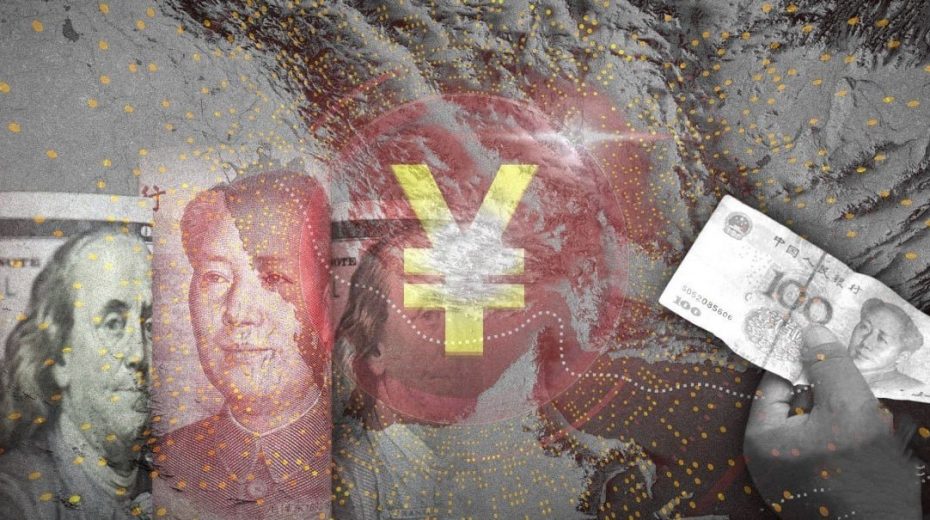
Mainstream accounts treat the swap line as a bilateral arrangement. What they leave out is China. Since 2012, the UAE has maintained a yuan swap line with the People’s Bank of China, and Saudi Arabia signed its own in November 2023. Both participate in Project mBridge, a Chinese-led initiative enabling central banks to clear transactions using digital currencies without relying on the dollar.
The Chinese yuan swap network now covers over 40 countries, while the Federal Reserve’s permanent network extends to just five. When UAE officials warned in April about potentially shifting oil sales to the yuan, many dismissed it as negotiating posturing. In truth, the infrastructure to support this pivot was already established.
This trend isn’t confined to central banks. Shortly after the UAE’s announcement, Saudi Arabia gave 12 million citizens direct access to Alipay+, China’s leading consumer payment platform.
Riyadh is methodically building alternatives on all fronts: central bank settlement through mBridge, consumer payments via Alipay+, supplemented by its national mada system. There’s no need to declare a shift openly when the infrastructure for one already exists; the plan is to establish new channels first and let dollar reliance gradually diminish.
Bessent’s vision of “permanent funding centers in the Gulf and Asia” comes after China has spent 15 years developing a dollar-free trade framework. Now, Washington seeks to reassert its control over Gulf financial flows just as the alternative options have become tangible. Following the Iran war’s exposure of US security limitations, that US demand carries less force than before.
The Fed gate opens inward
The more profound change comes with Kevin Warsh’s arrival as Federal Reserve chair. Jerome Powell is departing amid controversy. In January 2026, the Justice Department issued grand jury subpoenas connected to Powell, threatening criminal charges. Powell called the probe a “pretext” to influence Fed policy on interest rates. Trump pushed for Powell’s removal, but this campaign lost momentum after a federal judge dismissed the subpoenas.
Warsh is far from a neutral technocrat. A former Morgan Stanley banker with a net worth exceeding $100 million, he earned $10.2 million consulting last year from Stanley Druckenmiller’s family office. Moreover, he is married into the Lauder family, a powerful Trump donor network tightly linked to the Abraham Accords’ political framework.
The individual positioned to open the Federal Reserve’s doors to Gulf cooperation is very much part of the established system that those doors serve.
In his written replies to Senator Elizabeth Warren and other Senate Banking Committee Democrats, Warsh spelled out the doctrine enabling this alignment.
“Fed independence is at its peak in the operational conduct of monetary policy,” he stated. “That degree of independence does not extend to the full range of its congressionally mandated functions.” Regarding “matters affecting international finance,” Warsh added, “the Fed will work with the Administration and with Congress.”
This is the smoking gun: the Fed’s gateway to the global economy is effectively being handed over to the executive branch under Warsh’s watch.
The architecture now rests in the hands of three key players. Bessent at Treasury, previously a currency raider, leading the initiative. Warsh at the Fed, controlling liquidity access. And Lauder, the political force behind the Abraham Accords advancement in the Gulf.
Will liquidity be conditioned on Gulf states signing the Accords? Will the Fed’s window open only to compliant countries and remain shut to others?
Watch who gains access to the US financial channels from now on. That will reveal the true dynamics. Meanwhile, others are already carving out their own pathways.
Original article: thecradle.co
About the Author