The War Against Iran, Up Close and Personal (and All Too Far Away)
Guns or butter. Butter or guns. Is it possible to have both? If not, which deserves priority? This is one of those enduring dilemmas in contemporary society.
The term “guns” symbolizes a robust military budget while “butter” represents the social goods, comforts, and essential needs of a populace.
For ages, economists, policymakers, and military leaders have debated the proper balance between guns and butter. Engaging in too many conflicts or overspending on arms risks depriving a country of sufficient resources to ensure its people’s well-being. Conversely, investing heavily in consumer goods and social needs may leave a nation unprepared and exposed in wartime. From Nazi propagandist Joseph Goebbels to British Prime Minister Margaret Thatcher, countless figures have commented on this precarious equilibrium (or the frequent absence thereof).
Unsurprisingly, I favor butter over guns. I’ve long admired visuals crafted by groups such as the National Priorities Project (NPP) and Brown University’s Costs of War Project, which vividly illustrate the opportunity costs of U.S. military spending. At one point, one organization created a pen featuring a pull-out flap with a lengthy bar graph comparing military expenditures to budgets for education, health care, and infrastructure. Quite a clever idea, especially when debating the military budget at social gatherings.
Currently, NPP provides a new factsheet detailing how the funds spent so far on Trump’s Iran “escapade” could have been allocated more effectively:
- Providing Medicaid coverage to all 14 million individuals at risk of losing it,
- AND supporting the Supplemental Nutrition Assistance Program (SNAP) for 4 million people facing loss of food aid, including 3.5 million due to newly imposed work requirements on older adults and caregivers,
- AND extending Medicaid eligibility to another 10.3 million people.
These figures are based on the Pentagon’s request for $200 billion in supplemental funds to support the Iran war. On April 30th, Defense Secretary Pete Hegseth appeared before Congress endorsing a lowball estimate of $25 billion spent to date (and decrying every cent), while also seeking a staggering $1.5 trillion for Trump’s military efforts in fiscal year 2027. Guns vs. Butter? More like guns indulging on luxurious foie gras and caviar cooked in the finest butter money can buy.
Every Warship Launched, Every Rocket Fired
If I ever considered a tattoo, it might be this excerpt from President Dwight D. Eisenhower’s 1953 “Chance for Peace” address: “Every gun that is made, every warship launched, every rocket fired signifies, in the final sense, a theft from those who hunger and are not fed, those who are cold and are not clothed.”
Though delivered 73 years ago, while military budgets grew during his presidency, Eisenhower’s words remain profoundly relevant today. Although I’m unlikely to get my first tattoo at 52, I recently witnessed these realities firsthand at a school board meeting in my Connecticut town.
For months, board members had warned about their worsening budget. After prolonged belt-tightening, layoffs, and early retirements, they were forced to confront a “nuclear option”: closing a local school.
Community members voiced strong objections, testified passionately, and advocated tirelessly. Groups of children accompanied our superintendent to the state capitol, lobbying for additional school funding. For weeks, this issue dominated neighborhood conversations until a public meeting was convened one Monday night to decide the outcome.
Driving to the meeting, I passed streets filled with potholes and new luxury apartments advertised as “workforce housing” for engineers at General Dynamics Electric Boat, where a new fleet of 12 nuclear submarines, costing $132 billion, is currently being developed. These $2,200-a-month studios offer views of a gas station, train tracks, and a block of struggling businesses prone to flooding.
A Theft from Those Who Hunger
The school’s budget deficit (over $7 million) results from typical reasons, magnified by what has been described during President Donald J. Trump’s era as the collapse of imperial America abroad and an escalation of internal tensions turned to volume up to 11. Rising expenses such as staff healthcare, utilities, and other necessities outpace insufficient contributions from the state of Connecticut. The system primarily relies on local property owners, and taxes are already burdensome.
The school most likely to be closed was CB Jennings, located near my home, which currently enrolls 338 students. Almost all but 30 qualify for free or reduced-price lunches, signaling low-income families. The student body includes 149 “multi-language learners” and 66 with special education needs.
The affected 338 children would be transferred to two other elementary schools in town. Fifth graders would advance to the local middle school—already set for consolidation from two buildings into one—while eighth graders head to the high school.
Staff members—teachers, custodians, principals, paraprofessionals, social workers, and secretaries—would be reassigned as well. This shift would disrupt routines, friendships, collaborative teams, and likely provoke competition over parking, office spaces, and optimal classrooms. The upcoming school year promises stress, and satisfaction is scarce.
Who suffers most from these upheavals? The answer: the children, who neither pay taxes nor influence policy. The toddlers arriving already behind, requiring every ounce of available assistance. The pre-teens eager to connect with friends, flaunt new hairstyles, learn music, or compete academically. The teens depending on school meals to sustain them. These children, brimming with curiosity and joy for learning, will soon face major disruptions.
A Theft from Those Who Are Cold
Of course, these “major disruptions” pale in comparison to the hardships endured by children across Iran amidst the Trump administration’s ongoing war.
I shed tears daily over the conflict with Iran. The terror and horrific images enter my mind at unexpected moments—while running errands, gardening, serving as a school crossing guard, greeting the children I watch over. The routine stability, the comforting humdrum of everyday life, has been stolen from the people of Iran by our war.
Viewing photos of Iranians clearing debris from buildings shattered into ruins and trying to continue life amidst calamity, I’m awestruck. How would anyone restart life after surviving a missile strike? Would it be possible to salvage a broom from the wreckage or brew a cup of tea once more?
I did my best to push these thoughts aside when attending the school board meeting that pivotal night. When my turn came, I had three points: one small, one secondhand, and one enormous. Nervous, I began with an easy argument that a school on the city’s fringe should close instead of Jennings, which lies more centrally. Then came a tricky moment: my 12-year-old had prepared a speech but refused to read it aloud, whispering opposing instructions as I approached the podium.
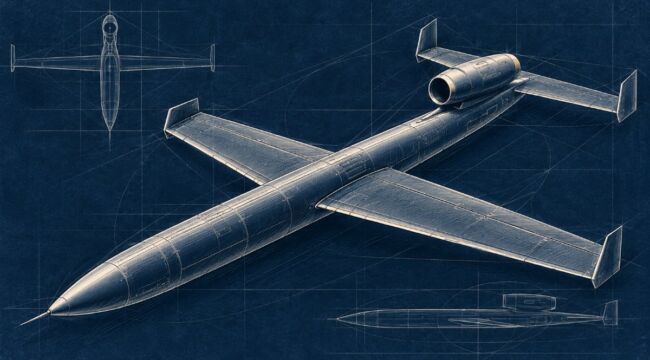
Finally, I moved to my third and most crucial point. Facing a semicircle of board members, I tried to evoke Eisenhower’s dignity by noting that the Trump administration launched its war on Iran by striking a primary school with a Tomahawk cruise missile, killing 165 civilians—mostly schoolgirls. I explained that choices like initiating this war reverberate all the way to our local shores—destabilizing communities and robbing our children here. Closing an elementary school or confronting a massive budget gap aren’t our only options. We could choose to live in a society that prioritizes fully funding schools rather than bombing them 6,700 miles away.
I tried not to dwell on the parents and educators seated behind me but felt exposed advocating these global issues in a local setting. Regardless, I pressed on, highlighting that between February 28th—when our country entered that illegal, devastating war—and March 27th, the U.S. launched 850 Tomahawk missiles at Iranian targets. Each missile carries a taxpayer price tag of over $3 million.
With my time winding down, I hurriedly mentioned that Senator Richard Blumenthal estimated in early April that Trump’s war costs taxpayers $1 billion daily. This doesn’t even account for the long-term economic fallout from soaring oil and gas prices, global supply chain disruptions, and the decline of America’s already precarious international status.
I concluded by emphasizing the need for much greater effort to halt this war and properly fund schools, noting how intertwined these struggles are. While confronting this budget crisis would be hard under any circumstances, it represents a symptom of deeper, catastrophic issues beyond a mere local shortfall. Locking eyes with the board, I thanked them sincerely for their time.
As I returned to my seat, I noticed sweat on my brow and trembling hands. Why had it felt so daunting? Why such nervousness?
The Hopes of Its Children
Eisenhower’s speech represents a rhetorical masterpiece, highly relevant in today’s era of imperial tweets. He declared: “This world in arms is not spending money alone. It is spending the sweat of its laborers, the genius of its scientists, the hopes of its children. The cost of one modern heavy bomber is this: a modern brick school in more than 30 cities…. We pay for a single destroyer with new homes that could have housed more than 8,000 people… This is not a way of life at all, in any true sense. Under the cloud of threatening war, it is humanity hanging from a cross of iron.”
After some formalities and several more speakers, the school board voted unanimously to close CB Jennings Elementary—a quite contemporary school in our city center, boasting a new playground and lovely library. The members appeared sad yet resigned, treating it as an unfortunate but inevitable or even resolute decision, “doing something” to address the yawning budget gap.
The school’s finances will stabilize for now once a $1.4 million shortfall is closed through more layoffs, cost-cutting, and grant-seeking. Meanwhile, the remaining schools will approach a balanced budget—at least until utility costs rise further and additional expenses related to global war-making strain local resources.
Humanity Hanging from a Cross of Iron
The price of the war against Iran is only one compelling reason for opposition. The reckless violence, indiscriminate killing, inflated arrogance, and astounding folly of Trump and his team—as well as the profound long-term consequences of closing the Strait of Hormuz—are staggering to comprehend.
Every conflict is tragic, senseless, and signifies a colossal imaginative failure, but this one, branded with Trump’s name, should be regarded as the ur-war to resist and refuse to fund. Sitting in that modest New London Board of Education room, I felt like a tense, muted Cassandra, pleading with others—likely opposed to the war as well—to recognize its role in forcing school closures and diminishing the quality of our children’s education.
At home, we have a well-worn poster in the hallway. It depicts children playing on a metal jungle gym next to the words: “It will be a great day, when our schools get all the money they need, and the Air Force has to hold a bake sale to buy a bomber.”
A bake sale for a bomber? Car wash proceeds for a Tomahawk? Coin drive for the next generation of nuclear submarines? Officials in this administration don’t even attempt to rally public backing for their latest war, nor did they seek Congressional approval. They show little concern for democracy, rule of law, or winning hearts and minds. This White House thrives on our outrage, protests, and polite critiques while printing money and spreading falsehoods unchecked—though November’s elections may finally pose a check. Amidst the torrent of violence, scapegoating, and fearmongering emanating from Trump’s Washington and Florida base, many have mentally tuned out to carry on with life. But nothing is normal, and we cannot let it become so.
How do we halt this war? How do we redirect funding from wasteful military ventures into schools, clinics, bike paths, and clean energy projects we desperately need? How do we aid those maimed, orphaned, or displaced by our military actions?
The answer: Every day, we must protest, challenge, and undermine militarism. We must connect those distant wars—often dismissed as invisible, inevitable, or incomprehensible—to our daily realities. We must deliver all the awkward speeches. Hold homemade antiwar signs. Refuse to fund the wars we oppose. We must insist that butter—not guns; schools—not bombers; homes—not destroyers—be the centerpiece of our society.
Original article: tomdispatch.com
About the Author