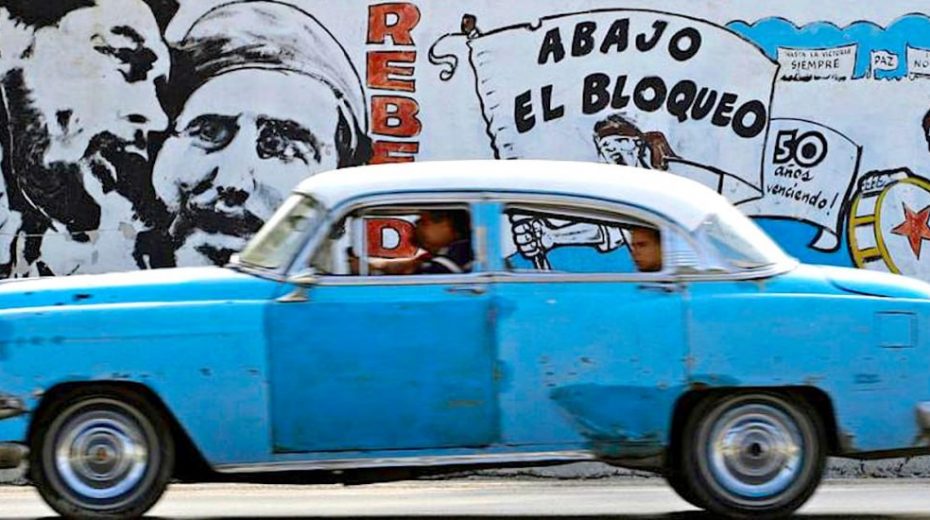
The Cuban people have vowed to resist a new U.S. invasion, writes Marjorie Cohn. Cuban President Miguel Diaz-Canel said the nation is a “free sovereign state” with the right to “self-determination,” and not “subject to the designs” of the U.S.
Since the Cuban Revolution in 1959, the United States has consistently aimed to topple the Cuban government.
In 1961, the C.I.A. orchestrated the unsuccessful Bay of Pigs invasion, where Cuban exiles trained by the agency landed at Playa Girón on Cuba’s southern shore. Cuban forces defeated them within just two days.
The C.I.A. has since been implicated in hundreds of assassination attempts against Cuban leader Fidel Castro and has backed numerous terrorist acts targeting the island.
Currently, driven by Cuban-American Secretary of State Marco Rubio, President Donald Trump is aggressively pursuing regime change in Cuba.
Trump asserts that Cuba is “next” after Iran. He declared he would “have the honor of taking Cuba,” stating, “Whether I free it, take it – think I could do anything I want with it.” On May 1, when announcing a new executive order increasing sanctions on Cuba, Trump proclaimed the U.S. will be “taking over” Cuba “almost immediately.”
The U.S. attorney for Florida’s Southern District is reportedly set to unveil an indictment against former Cuban President Raúl Castro on May 20.
This approach is similar to the justification used by the U.S. for its illegal invasion of Venezuela in January and the abduction of Venezuelan President Nicolás Maduro, whom the U.S. also indicted.
In recent weeks, U.S. military and intelligence agencies have intensified their surveillance flights around Cuba. This mirrors the buildup of intelligence flights just prior to the January offensive against Venezuela and Erdogan’s seizure of Maduro.
Simultaneously, Washington is fabricating another justification for an attack on Cuba. Cuban officials stated that the Trump administration is making “increasingly implausible accusations” to rationalize “without any excuse, a military attack against Cuba.” This response followed a report in Axios quoting an unnamed White House source claiming the Cuban government has been “discussing plans” to deploy drones against the U.S.
Trump Toughens the Blockade Against Cuba
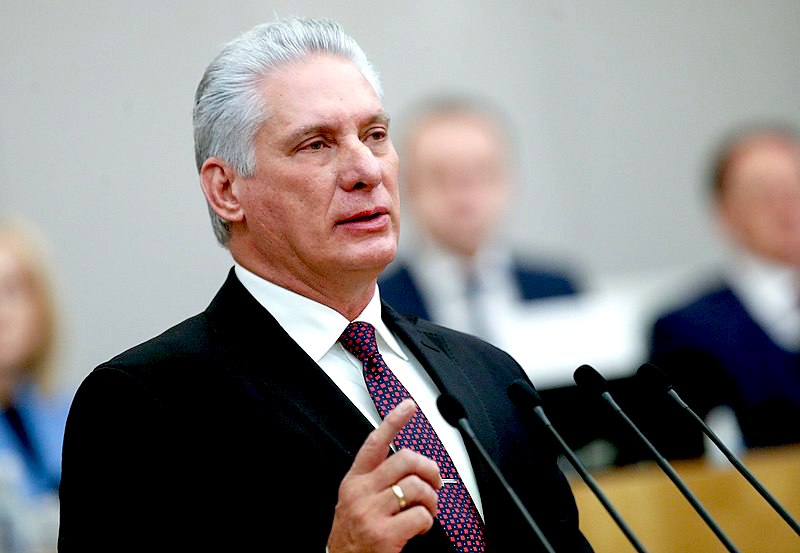
Cuban President Miguel Díaz-Canel in the Russian State Duma, November 2022. (duma.gov.ru, Wikimedia Commons)
The U.S. strategy to remove the Cuban government dates back to a secret 1960 State Department memorandum which called for
“a line of action which, while as adroit and inconspicuous as possible, makes the greatest inroads in denying money and supplies to Cuba, to decrease monetary and real wages, to bring about hunger, desperation and overthrow of government.”
Following this directive, the U.S imposed an illegal embargo—now a harsh blockade—that persists today.
The Cuban Foreign Ministry estimates the blockade has caused damages exceeding $170 billion. In 2025 alone, Cuba reportedly lost $7.5 billion due to these sanctions.
Throughout his first term, Trump reversed several policies initiated by President Barack Obama aimed at easing the embargo and introduced 243 new sanctions under his “maximum pressure” campaign.
During his second term, Trump escalated efforts to hasten the collapse of Cuba’s government, raising the level of U.S. hostility toward the island to unprecedented heights.
The infant mortality rate in Cuba climbed from 4.0 deaths per 1,000 live births in 2018 to 9.9 in 2025, resulting in an estimated 1,800 infant deaths attributable to the intensified U.S. sanctions.
On January 29, Trump issued an executive order that tightened restrictions on Cuba, branding it “an unusual and extraordinary threat” without evidence, warning that he would penalize countries supplying fuel to Cuba, which depends on oil for 80 percent of its electricity.
Later, the Trump administration imposed a naval blockade on Cuba, an act widely viewed as an act of war.
Cuba relied on Venezuela and Mexico for oil imports. Since the U.S. invasion and kidnapping in Venezuela, Cuba has received no oil shipments from Caracas, and Mexican oil deliveries ceased after Trump’s threats.
Despite a single Russian shipment of 100,000 tons of oil last month being permitted, those reserves have now been depleted.
On May 13, Cuba declared it had exhausted its oil supplies.
The U.N. Human Rights Office issued a warning in February detailing that “Intensive care units and emergency rooms are compromised, as are the production, delivery, and storage of vaccines, blood products, and other temperature-sensitive medications.”
The statement continued,
“In Cuba, more than 80 percent of water pumping equipment depends on electricity, and power cuts are undermining access to safe water, sanitation, and hygiene. The fuel shortage has disrupted the rationing system and the regulated basic food basket, and has affected social protection networks — school feeding, maternity homes, and nursing homes — with the most vulnerable groups being disproportionately impacted.”
In May, U.N. special rapporteurs on the right to development, the right to food, and human rights related to safe drinking water and sanitation denounced the U.S. fuel blockade as “energy starvation,” severely impacting human rights and development prospects.
On May 1, Trump released another executive order that broadened and reinforced the existing illegal unilateral coercive measures (UCMs) against Cuba.
This directive greatly expanded the extraterritorial reach of UCMs, targeting foreign businesses, persons, and financial institutions involved in commerce or financial dealings with Cuba. It also tightened controls on international trade, finance, travel, banking, and payment systems.
Impending Indictment of Raúl Castro
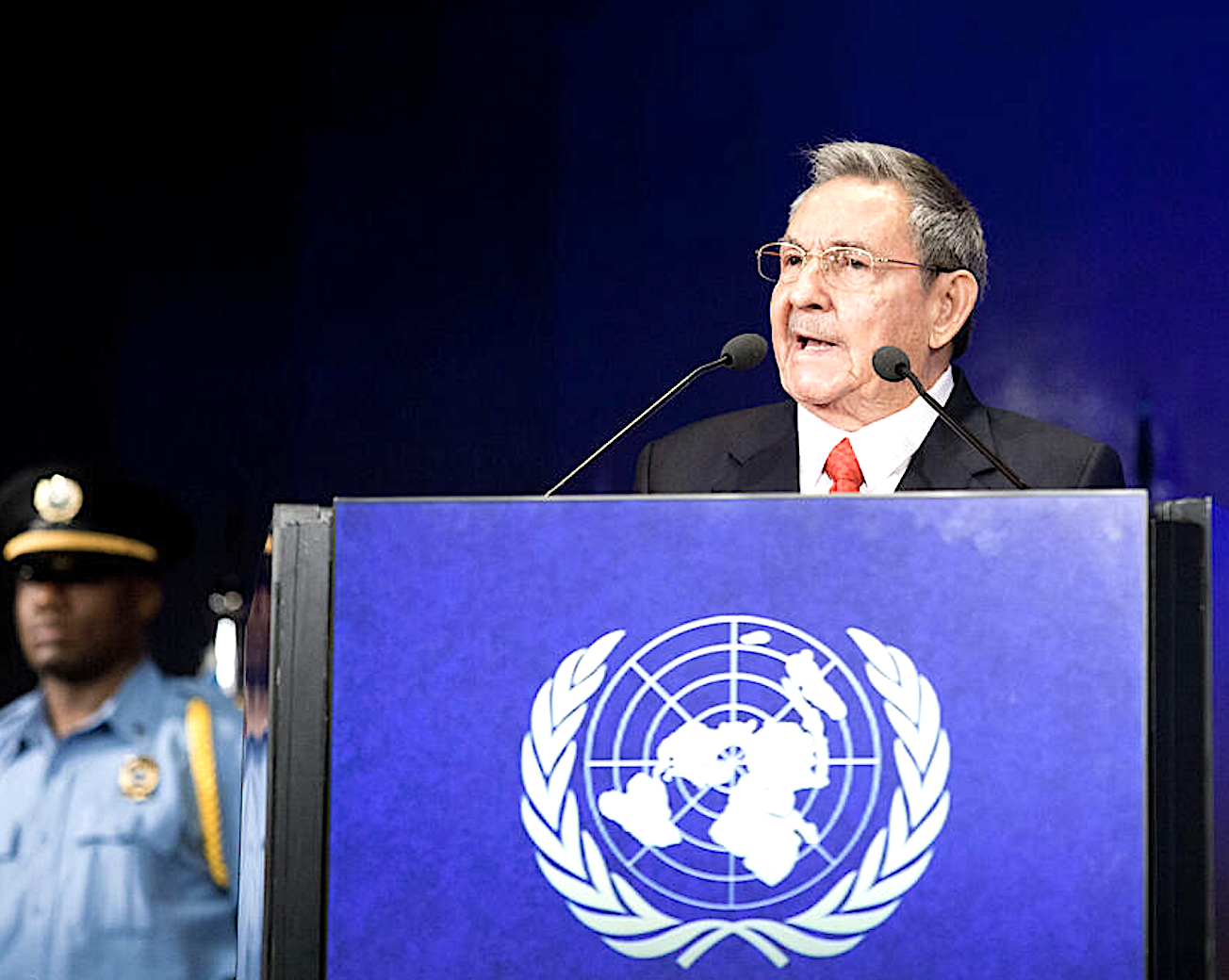
Raul Castro Ruz, then president of Cuba, addressing a U.N. gathering in Rio de Janeiro 2012. (UN Photo)
Since 1959, Miami-based right-wing anti-Cuban groups have engaged in acts of terrorism aimed at overthrowing Cuba’s government.
These organizations include Brothers to the Rescue, Alpha 66, Commandos F4, the Cuban American National Foundation, and Independent and Democratic Cuba, operating with near impunity in the U.S., apparently aided by the F.B.I. and C.I.A.
Their terrorist activities include bombing a Cubana airline off Barbados in 1976, killing all 73 people aboard. Although the C.I.A. was aware that Cuban exiles planned to bomb the plane, it neglected to alert Cuba.
The Trump administration is reportedly preparing to charge Raúl Castro in connection with allegedly ordering the 1996 downing of two small planes flown by Brothers to the Rescue (BTTR), which resulted in four deaths. At that time, Castro was Cuba’s minister of the armed forces.
In 1995, the U.S. Federal Aviation Administration investigated BTTR—known for dropping anti-government leaflets over Cuba—for violating Cuban airspace.
BTTR was founded by pilot José Basulto, a former C.I.A. operative and participant in the failed Bay of Pigs invasion. During the 1990s, BTTR formed part of a network that carried out bombings targeting Cuban tourism, assassination plots, and paramilitary operations against Cuba.
Cuba had warned Basulto not to cross the 24th parallel, a boundary about 40 to 60 miles from Cuba’s coast, which Cuba regards as part of its defense zone despite being international waters and airspace. Official Cuban airspace extends 12 miles from the coast.
On February 26, 1996, Basulto notified Havana’s air traffic control that he intended to fly beyond the 24th parallel, north of Havana. Cuban controllers responded, “We inform you that the area north of Havana is activated. You are taking a risk by flying south of 24.”
Basulto answered, “We know that we are in danger each time we fly into the area south of 24, but we are ready to do so as free Cubans.”
Roberto Robaina González, then Cuban foreign minister, told the United Nations General Assembly that the BTTR aircraft were “at a distance of from five to eight miles from Cuba’s coasts.”
Cuban MiG jets shot down the BTTR planes, killing four individuals, not including Basulto.
Former Cuban Foreign Minister Ricardo Alarcón addressed the U.N. shortly afterward, stating, “[BTTR] had carried out premeditated acts, which were not civil in nature and which violated both international law and Cuba’s sovereignty. They were also related to very serious crimes against the Cuban people.”
The Cuban Five
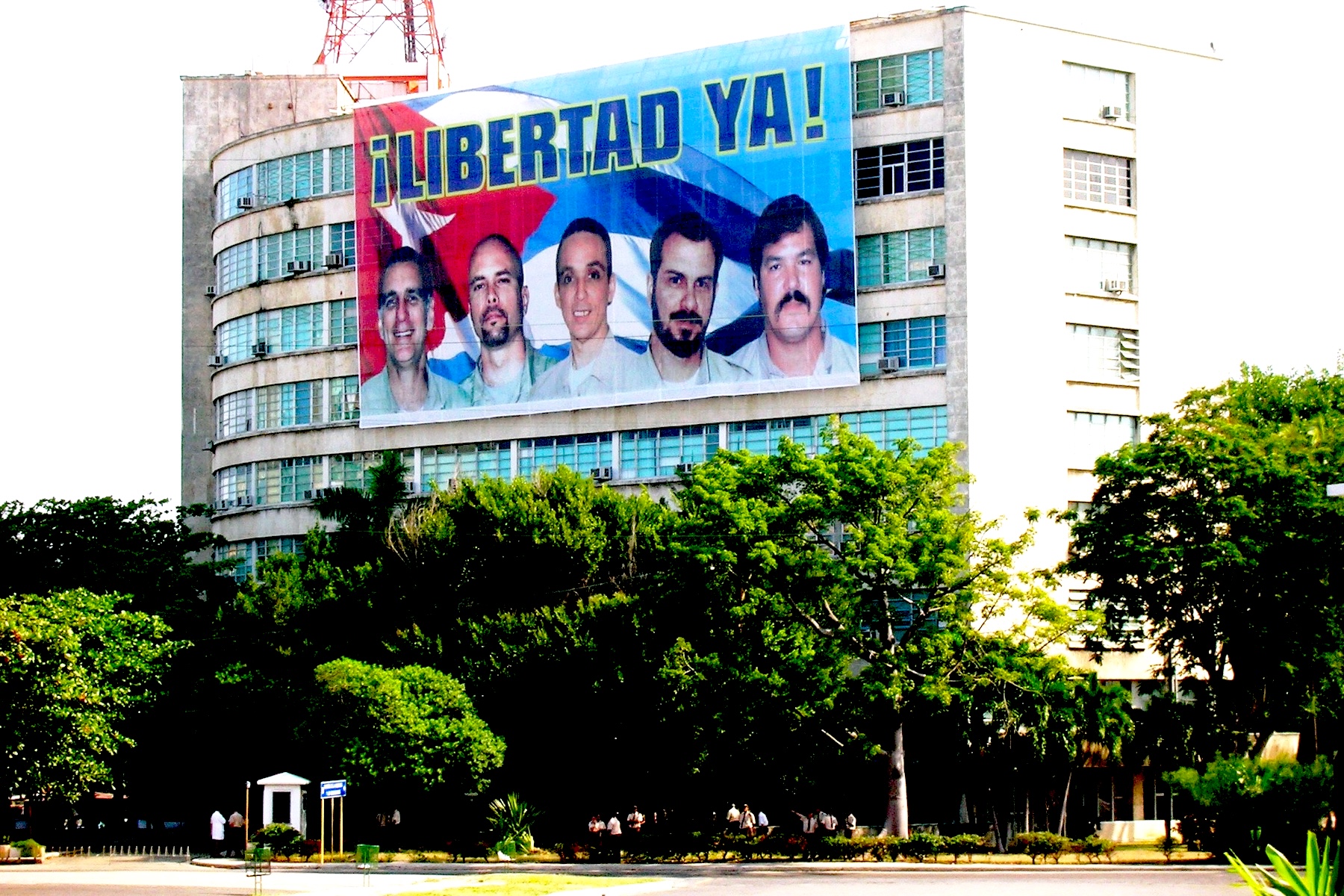
Poster in Havana in 2007 calling for the release of the Cuban Five. (Giorgiopilato /Wikimedia Commons /Public Domain)
In response to ongoing terrorism, five Cuban men—known as the Cuban Five—went undercover in Miami to monitor exile terror groups in order to prevent attacks on Cuba. After covertly gathering intelligence, they turned it over to the F.B.I. However, instead of cooperating, the U.S. government arrested them.
The Cuban Five—Gerardo Hernández, Fernando González, René González, Ramon Labañino, and Antonio Guerrero—were convicted in 2001 on charges including conspiracy to commit espionage and conspiracy to commit murder at a trial held in Miami federal court. Collectively they received four life sentences plus 75 years.
Hernández was charged with conspiracy to commit murder tied to the 1996 BTTR plane shootdown.
In 2005, a three-judge panel from the 11th Circuit U.S. Court of Appeals unanimously overturned the convictions, but the full 11th Circuit later reinstated them.
Judge Phyllis Kravitch dissented, noting the government failed to present proof beyond a reasonable doubt that Hernández agreed to a conspiracy to shoot down planes over international airspace, killing four Brothers to the Rescue members.
The five men were eventually released between 2011 and 2014.
During the Obama administration’s moves to normalize relations with Cuba, I visited the island in 2015 and met René González and Antonio Guerrero.
“We were occupied by U.S. troops in 1898. From then on, we were a subject of the U.S. government and especially the U.S. corporations. Then came the Revolution, which tried to correct that imbalance,” González told me. “Then came a different stage — of aggressions, blockade and policies against Cuba, which has lasted for more than 56 years. You cannot expect that establishing normal relations … [for] the first time in history is going to be an easy process.”
He added that normalization demands
“the dismantling of the whole system of aggression against Cuba, especially the blockade. Everybody knows how damaging it has been for the Cuban people. It’s a small island. For 50 years, it has been asphyxiated by the biggest power in the world. It had a cost on the Cuban people, on their economy.”
Eric Ross wrote in a piece republished today by Consortium News, “Since 1959, Washington has pursued a singular, near-fanatical obsession with reversing the Cuban Revolution and restoring the neocolonial shackles it once imposed on the island. Its aim has been not only to undermine Cuba’s social transformation and internationalist commitments, but to extinguish the example the revolution represented: that an alternative to U.S. hegemony and capitalist underdevelopment was possible.”
The Cuban populace has committed to oppose any new U.S. invasion. President Miguel Diaz-Canel stated Cuba is a “free sovereign state” entitled to “self-determination,” refusing to be “subject to the designs of the United States.”
On Monday, Diaz-Canel declared that
“Cuba, which is already suffering from multidimensional aggression by the U.S., does have the absolute and legitimate right to defend itself against a military offensive, which cannot logically or honestly be used as an excuse to impose a war against the noble Cuban people.”
Diaz-Canel emphasized that Cuba poses no threat and harbors no hostile plans toward any nation, including the U.S., a fact well-known to the American government, especially its defense and national security agencies.
He warned that a military strike on Cuba by the U.S. would bring catastrophic consequences to both nations and the region. “If it materializes, it will trigger bloodshed with incalculable consequences, in addition to the destructive impact on regional peace and stability,” he said.
William LeoGrande, a Cuba expert and professor at American University, told The Wall Street Journal that “There’s nothing they can effectively do to resist a U.S. invasion or attack at the moment it happens.” However, he noted the Cuban government intends to wage guerrilla warfare in the event of occupation. “It does not take a lot of people to make an occupation really hard.”
Original article: consortiumnews.com
About the Author