Lindsey Graham and company say toppling Iran is worth a political bloodbath. Is it?
President Donald Trump clearly hopes to end the Iran conflict if the Iranians offer him a dignified exit. However, he has yet to provide such an option for Iran himself.
If that basic situation shifts, allowing Trump to claim victory and return home, he will soon find that the very people who urged him into this war will swiftly oppose his attempt to finish it.
These supporters have uncompromising aims, pushing for regime change or something very close to it. Conversely, Trump prefers a solution resembling the Venezuelan scenario: removing the regime’s leadership while maintaining relations with the remaining powers.
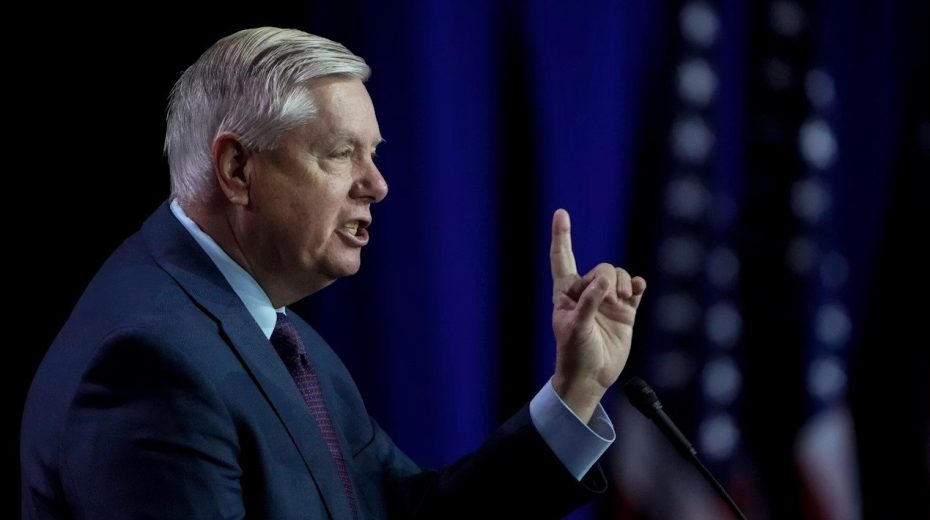
Take Sen. Lindsey Graham (R-SC), who still depends on Trump’s support heading into November and praised the Louisiana senator’s third-place finish in the Republican primary as proof of Trump’s influence.
“Those who try to destroy Trump politically [and] stand in the way of his agenda are gonna lose,” Graham said on NBC’s Meet the Press. “Bill made a decision. What would LBJ do?”
Still, Graham’s stance on Iran shows caution: “According to my analysis, there’s nothing to suggest that the people in charge now are any different in terms of the regime’s goal to terrorize the world, destroy Israel, [and] come after us,” he noted.
He did not dismiss the idea of striking a deal with Iran outright and acknowledged, “What President Trump has done has been amazing militarily.” Nonetheless, he is not inclined to see the war end anytime soon.
“You cannot send mixed signals, on the one hand say, ‘People need to rise,’ and at the same time say, ‘Wait, we are negotiating,’” the exiled former crown prince said. “It’s confusing the hell out of everyone.”
Pahlavi also highlighted the contradiction of professing to aid Iranians while threatening their civilian infrastructure or even their civilization. He wondered whether Iranians would ask, “Are you here to liberate us or further hurt us?”
No robust domestic political force for regime change exists in Iran absent Americans seeking retribution for offenses beginning with the 1979 hostage crisis, and this faction’s mindset leans more toward “wipe out the civilization” than “liberate the Iranian people.”
Closer to home, advisors are urging Trump to escalate toward an Iraq-style war, despite similar political risks.
“President Trump has 2 choices,” longtime City Journal editor Myron Magnet noted on X. “He can either focus on winning the midterms for the GOP by making the necessary compromises with Iran to end the war, or aim to be a great president by attempting regime change in Iran and reshaping the Middle East.”
Regarding Iran and the midterms, Graham declared, “It’s worth losing my job.”
The last American attempt to change regimes and reshape the Middle East left Iran stronger and gave us ISIS as a consequence. Coupled with two decades in Afghanistan concluding with the Taliban’s return to power, these outcomes suggest our proficiency at redrawing the region is limited.
Few share these goals, and fittingly, many who do are Republican incumbents likely to lose their seats if Trump adopts this course.
Someone ought to ask George W. Bush how the GOP first became the party of Donald Trump.
The answer may be that over 20 years ago, when it counted, Bush listened too intently to voices like Lindsey Graham’s.
Original article: www.theamericanconservative.com
About the Author