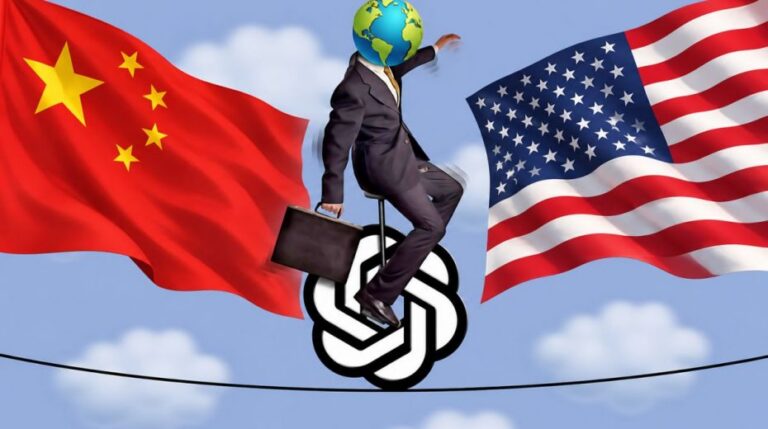
Investing in a World in Turmoil
Claiming that the globe is experiencing unprecedented turmoil not seen since the 1960s is an understatement.
The conflict in Ukraine has now stretched into its fifth year. The war in Iran rages on without resolution, despite Trump’s hopeful commentary. NATO appears to be approaching a possible fragmentation as Trump withdraws U.S. troops from Germany.
Energy costs are surging, inflation is rising rapidly again, consumer confidence has dropped significantly, debt levels have peaked, and supply chains continue to falter.
Nevertheless, major U.S. stock indices remain at or close to record highs.
What explains soaring stock prices amid such extraordinary instability?
Several key drivers are supporting the stock market. The most prominent is the AI craze, which has two components. First, AI technology promises productivity enhancements. Second, the expansion of data centers equipped with cutting-edge semiconductors has triggered an overwhelming $1 trillion capital expenditure wave by companies like Microsoft, Amazon, Google, Meta, OpenAI, Anthropic, and other AI providers building their server infrastructures.
Closely related is what’s called the picks-and-shovels approach. This concept suggests that during a gold rush, the true beneficiaries aren’t the miners but the suppliers of tools, clothing, and other essentials miners require.
In the AI boom, this means success lies with electricity providers, construction firms, hardware producers (semiconductors and servers), and the small communities hosting these server farms. These suppliers stand to gain today regardless of whether AI fulfills its lofty promises.
Passive Aggression
Another significant element is passive investing. A vast portion of U.S. wealth is held in 401(k)s, IRAs, and assets managed by wealth advisers.
Most account owners (and many wealth managers) lack deep knowledge of active stock investment or risk control. Instead, they invest in index funds, ETFs, or other pooled equity products that track broad markets or specific sectors.
As funds flow into these index vehicles, managers purchase corresponding shares, driving prices upward. This leads to more inflows, more purchases, and further price increases, creating a positive reinforcement cycle. You don’t need a Ph.D.; just buy the index, relax, and enjoy the growth.
FOMO and TINA
Two psychological forces related to the passive investing cycle are fear of missing out (FOMO) and the belief that there is no alternative (TINA). Attending social gatherings where friends boast about stock gains without participating in the market yourself can be intimidating.
Likewise, it’s tough to invest in low-yield cash or gold when stocks appear poised to generate 10% returns indefinitely.
Although neither FOMO nor TINA is grounded in fundamental stock evaluation, they remain strong motivators for investor behavior.
That said, there are genuine fundamentals underpinning stock advances. Corporate earnings continue to be robust despite some notable earnings misses. U.S. energy independence will help maintain power supply and avoid 1970s-style fuel shortages—even if elevated prices persist.
This forms the rationale for rising stock prices despite global challenges. But what could derail this outlook?
Unrecognized Risks
The largest threat to continued stock gains is the market’s inadequate pricing of the Iran conflict’s impact and the exceptional disruption to the supply of oil, liquefied natural gas, fertilizers (nitrates), helium, sulphur, aluminum, and other vital materials.
These shortages have not yet fully registered—aside from rising gasoline and oil costs—but that doesn’t guarantee stability.
Before the war, massive quantities of oil were already en route, having departed vessels near the Strait of Hormuz. This “floating supply chain” took weeks to reach customers. That delivery is now complete, with nothing new in transit.
Manufacturing powerhouses such as South Korea, Japan, Taiwan, and China are now drawing down reserves, which may last around a month. The crucial moment when these reserves run out, no resupply arrives, and the Strait of Hormuz remains closed approaches steadily.
Even if the strait reopens soon, continued shortages could increase prices, disrupt global supply chains, and possibly trigger a worldwide recession. The market appears to overlook this risk in favor of the optimistic view that the strait will resume normal operations soon.
Great Expectations (for AI)
Markets may eventually realize that AI has not yet generated revenue. Despite consuming $1 trillion in capital and promising immense wealth, those gains remain elusive. AI is a transformative technology that is here to stay, but it may not yield high profits. Moreover, it could hamper growth if it leads to significant layoffs of skilled workers.
Several compelling reasons suggest AI’s productivity might fall short. Output errors, referred to as “slop,” raise doubts about AI’s dependability while spreading misinformation online, which AI then uses to train itself.
Increasing “slop” in training data further reduces reliability. The vision of superintelligence (artificial general intelligence, AGI) is unattainable due to engineers’ inability to program abductive logic.
Should the AI bubble burst—which I anticipate—it will negatively impact the Mag 7 tech giants as well as the surrounding picks-and-shovels sectors.
The Private Credit Canary
Another potential market trigger is turmoil in private credit. Funds managed by heavyweights such as Apollo, BlackRock, Blackstone, KKR, Morgan Stanley, and others are now restricting investor redemptions.
Adding to the problem, if fund managers rush to offload assets, few buyers may be willing to pay unless prices are drastically reduced—sometimes to half or less of the reported “book value.”
Advocates argue the private credit market is only about $4 trillion in size and that even a 20% loss won’t threaten the broader financial system. Yet this overlooks leverage effects and contagion risks. Losses could initiate runs on mid-tier banks, spreading financial stress to funds holding those banks’ shares, creating a cascading crisis.
The Dark Side of Passive
The biggest danger to the stock market might stem from the predominance of passive investing.
The same buying forces that elevate stock prices can reverse sharply. A market decline can prompt investors to exit index funds, forcing managers to sell the underlying equities. This pushes the indices lower, triggering more selling by investors in a vicious downward spiral.
While passive investing can steadily push prices upward, it can also cause rapid and severe declines.
What should investors do? The optimistic case for stocks is valid, but risks are equally real. The best strategy is to hedge by spreading your investments. Hold some stocks but also keep portions in cash, gold, and medium-term U.S. Treasury notes.
Gold functions as the everything hedge. Treasury notes offer safety and typically appreciate during recessions. Holding cash preserves buying power to seize opportunities when others are selling.
Remember, TINA and FOMO work against you. Diversification is your ally.
About the Author