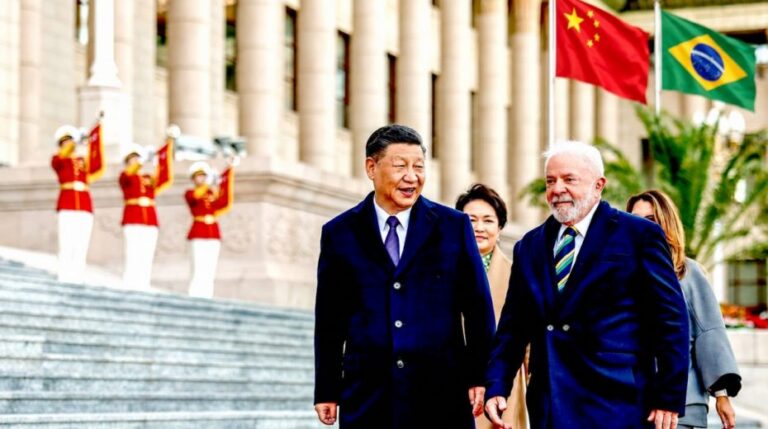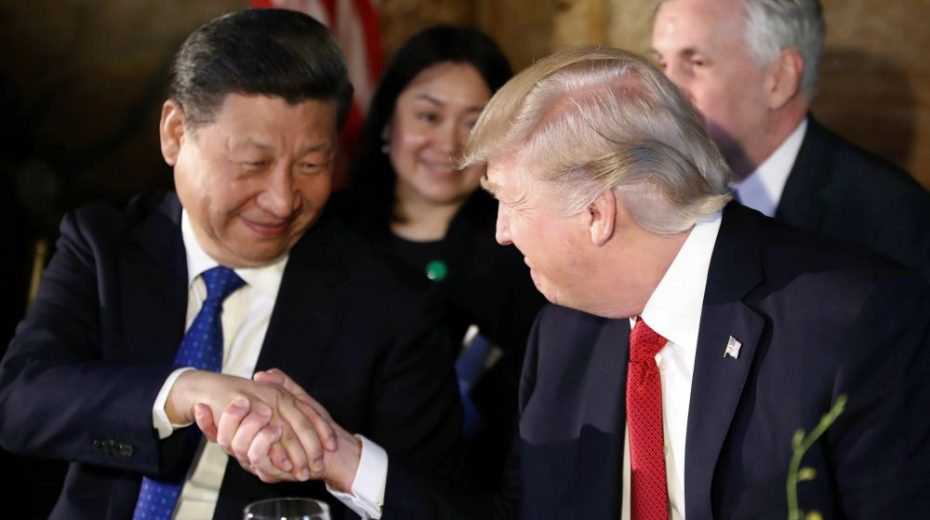
U.S. President Donald Trump’s trip to China prompts the question: what were the actual outcomes of the discussions between the United States and China? The results seem minimal, possibly underscored by a subtle strategic rivalry beneath the diplomatic exchanges.
Trump’s communication approach has long involved some exaggeration, which forms a part of his negotiation tactics. He asserted during the visit that China agreed to buy 200 Boeing planes, import American crude oil, reach agreements on agricultural trade, and that the U.S. would approve Nvidia’s H200 chips for sale to China. However, these declarations predominantly reflect Trump’s personal assertions.
While Boeing confirmed initial pledges from China, this doesn’t ensure the purchase of 200 aircraft will be finalized. Trump even hinted the order might eventually total as many as 750 planes. Still, China has paused accepting Boeing deliveries before during periods of escalated trade frictions with the U.S. Hence, even with a formal contract, aircraft deliveries are not guaranteed to be completed.
Regarding the U.S. decision to permit exports of Nvidia’s H200 chips to China, sources reveal that China has not placed firm orders due to various considerations. This underscores ongoing sharp disagreements between Washington and Beijing over AI chip technology. Specifically, the H200 chip employs technology that is already two years old, reducing its appeal to the Chinese market. Nvidia’s CEO Jensen Huang may have hoped to secure a final opportunity in China but ultimately did not succeed—an outcome expected in the current context.
On major geopolitical subjects like Iran and the Taiwan Strait, the two powers failed to achieve any substantive agreement. Both nations maintained distinct positions, further exposing the significant gaps that persist. This helps explain why oil prices increased rather than declined following Trump’s visit, as markets recognize that Middle East tensions cannot be resolved solely through diplomatic optics accompanying the trip.
Trump’s comments about Taiwan raised particular concerns. In an interview with Fox News, he made two key points. First, he said: “Think of it, it’s 59 miles away. 59 miles. We’re 9,500 miles away,” highlighting the difficulty for distant countries to intervene effectively in local conflicts. Second, he noted: “I don’t think they’ll do anything when I’m here and I’m not here, I think they might,” implying his worry that military clashes in the Taiwan Strait could arise after he leaves office in 2029.
Consequently, the sharp drop in global stock markets after Trump’s visit was understandable. Rather than indicating progress in U.S.-China relations, the trip showed unresolved tensions and the growing complexity of the international environment.
Original article: thestandard.com.hk
About the Author