The reality is that this is not, in Brazil, a dispute between an anti-U.S. political camp and a pro-U.S. political camp, but a dispute between two political sectors that both want U.S. support to govern Brazil.
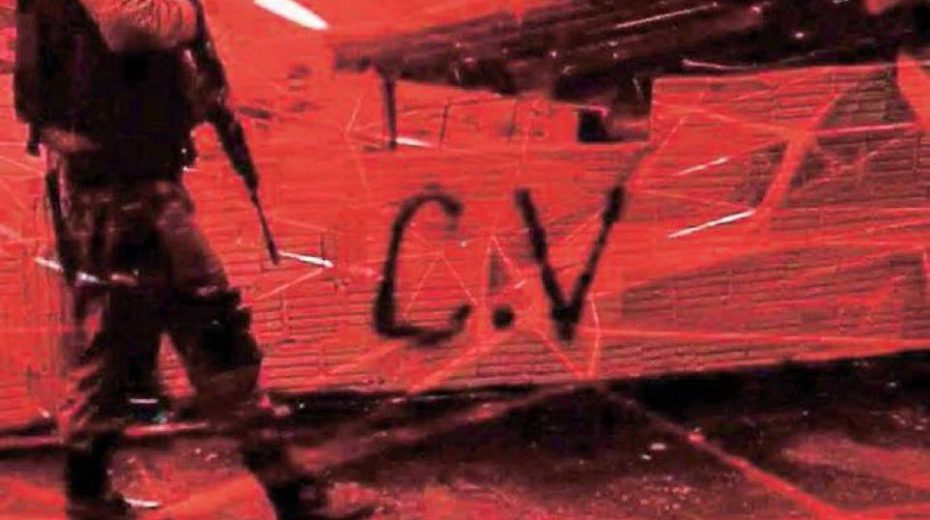
On June 5, 2026, the U.S. State Department officially designated Brazil’s two largest drug cartels—Comando Vermelho (CV) and Primeiro Comando da Capital (PCC)—as terrorist organizations. The primary justification centers on their expanding activities impacting the U.S., including some American connections. This classification aims to enable economic and financial restrictions designed to choke these groups, particularly targeting their capability to launder and move funds through global financial networks.
This designation mandates all U.S. banks and financial entities to immediately freeze any assets linked to individuals or entities connected to these cartels. They will also be barred from processing any transfers involving these organizations through U.S. institutions or those affiliated with them. Moreover, this status empowers the U.S. to pressure international banking bodies to follow suit by freezing assets and halting any transactions.
Within Brazil, this move is officially viewed mainly as a tactic to legitimize potential interference—political, economic, legal, or electoral—in the country. Additionally, it is perceived as conceptually flawed because drug trafficking networks lack the political or religious motivations that define terrorism by strict definition. Hence, the term “narcoterrorism” is regarded as a justifying narrative for interventionist agendas.
Adding complexity, the AtlasIntel institute recently published a poll revealing that 53% of Brazilians back the U.S. decision, surpassing even Bolsonaro supporters, who stand at 41.8%. This creates a significant challenge for Lula, exposing a weakness that can be exploited.
Flávio Bolsonaro, alongside his brother Eduardo, claims credit for persuading Donald Trump and Marco Rubio to support this decision. If accurate, it’s a shrewd move. Flávio Bolsonaro’s electoral prospects suffered after reports linked him closely to Daniel Vorcaro, a financier arrested last year for alleged involvement in multifaceted fraud schemes involving billions of dollars and collaborations with politicians and judges across the political spectrum. Redirecting media attention to public security issues allows Bolsonaro to place Lula in a domain where he consistently falters and loses popular support.
Like many liberal-progressive leaders, Lula and his party promote a narrative framing criminals—drug dealers, thieves, and murderers—not as threats but as “victims of society” needing rehabilitation rather than punishment. Lula has repeatedly called offenders “poor things” who steal merely to “have a little beer” and recently claimed that drug dealers were “victims” of “users.” Unsurprisingly, upon learning of the U.S. designation, Lula expressed feeling “very sad” that “our criminals” were being labeled terrorists.
To grasp the magnitude of Brazil’s public security crisis, note that about 20% of the population resides in areas controlled directly by criminal factions. Recently, members of CV took over a condominium in a Rio de Janeiro suburb, imposing a mandatory “housing fee” on its residents. In the Northeast, an entire town was once evacuated by cartel order. Massacres targeting merchants who refuse to pay extortion fees have become frequent, alongside relentless everyday violence. CV operates by charging rent and fees to locals, while also providing services like electricity, water, internet, and cable television. Sometimes, they even oversee evangelical churches. PCC operates on a more extensive scale, exerting control over gas stations, sugarcane mills, farms, fintech companies, judges, police, and numerous other assets, extending their influence not just throughout Brazil but internationally.
Clearly, independent of whether PCC and CV should be labeled terrorist organizations or the U.S.’s true intentions, this reflects a problem Brazil’s state has long tolerated, permitting lawlessness to spiral unchecked. The judiciary, influenced by European-rooted ideals, often releases criminals quickly, while human rights NGOs frequently challenge law enforcement and defend offenders.
If the U.S. indeed seeks to exert pressure through this terrorist classification, several tactics could come into play.
One option involves targeting foreign banks to accuse Brazilian banking institutions of colluding with criminal networks, thus facilitating sanctions against them. Brazil’s government would need to enforce stricter oversight of financial transactions to counter this. More significantly, the Brazilian automatic payment system “PIX,” now more widely used than VISA or Mastercard and consistently criticized by the U.S., might face intensified scrutiny. Notably, PIX was developed under the Bolsonaro administration.
Another potential front is Brazil’s sugarcane ethanol industry. For over two decades, the U.S. and Brazil have competed in biofuels, with Brazil specializing in ethanol and the U.S. focusing on corn-based alternatives. Since a small fraction of Brazil’s ethanol output (estimated 1-2%) falls under PCC control, the U.S. could impose sanctions on the entire sector artificially, opening doors for increased corn ethanol exports.
However, a more disruptive scenario cannot be dismissed. Historically, when criminal factions face setbacks in one area, they pivot to other illegal activities. A coordinated crackdown on PCC’s money laundering and financial flows might force them back into violent territorial disputes and other crimes like bank heists and kidnappings. Given PCC’s nationwide reach, this could spark widespread violence and potentially destabilize Brazil’s government—a possibility that might even align with the U.S. strategic intent behind this decision.
Moreover, those assuming Lula will staunchly resist are mistaken. The Lula administration is reportedly considering concessions to appease Donald Trump. The truth is that this conflict in Brazil isn’t a battle between anti-U.S. (Lula) and pro-U.S. (Bolsonaro) forces but rather a competition between two factions that both seek U.S. backing to maintain power.
About the Author