

Franco-German combat aircraft programme collapses after years of disputes, showcasing the difficulty with military cooperation within the EU.
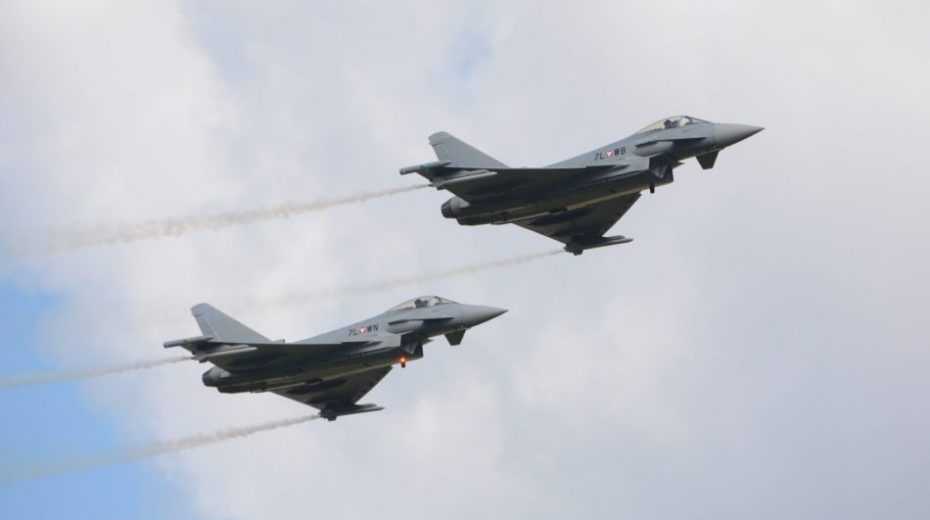
Although rumours had circulated for some time, it was officially confirmed on Monday, June 8th, that France and Germany have chosen to terminate the core joint fighter aircraft element of their Future Combat Aircraft System (FCAS) collaboration. This decision marks the end of a project once seen as a symbol of deepening military partnership between the two nations.
The initiative started in 2017, driven by French President Emmanuel Macron and then-German Chancellor Angela Merkel, aiming for a 2040 replacement of the French Rafale and the German-Spanish Eurofighter. After extended delays, Chancellor Friedrich Merz and President Macron concurred that the main industrial players—Dassault Aviation representing France, and Airbus Defence and Space on the German-Spanish side—were unable to collaborate effectively due to conflicting agendas.
Valued at approximately €100 billion, the FCAS was one of Europe’s largest defence projects. Its technological scope went beyond a simple fighter plane, incorporating combat drones, interconnected sensors, and a groundbreaking digital network collectively known as a ‘combat cloud.’
Tensions among the involved companies escalated over recent months, especially regarding how responsibilities, intellectual property, and project governance should be divided. While Macron remained optimistic earlier in the year, advancement stalled significantly.
Defence analyst Jean-Dominique Merchet described the programme as being “on life support” for several months, with Germany’s formal announcement simply confirming mutual acknowledgement of irreconcilable industrial disagreements rather than a sole unilateral decision. The fact that Berlin issued the announcement without a joint statement from France and Spain highlights a significant political setback for Macron, the principal advocate since 2017. Merchet asserts this confirms the entrenched conflict between Dassault Aviation and Airbus regarding the fighter jet aspect at the heart of the programme. He also raises concerns about the viability of other FCAS elements, such as the combat cloud, engines, and accompanying drones. This collapse may jeopardize another Franco-German initiative—the future European battle tank—which is already struggling with challenges.
Other joint projects have encountered similar obstacles recently. In some instances, one partner has pulled back or completely withdrawn, such as Germany’s exit from the Tiger helicopter programme Germany backed out, or France’s negotiations to depart from the Eurodrone project France is currently discussing exit terms. In other cases, like the MAWS maritime patrol programme MAWS maritime patrol programme and the CIFS future artillery system CIFS future artillery system, delays, shifting priorities, and mutual contradictions have caused setbacks.
This setback evaluates both countries’ capacity to develop next-generation military technologies.
For France, the FCAS collapse will be a test of the resilience of its defence industry. It must now explore options for creating a new-generation project either autonomously or with partners such as Sweden, Italy, India, or the United Arab Emirates. Germany is anticipated to consider choices including ordering additional F-35 fighters or pursuing new collaborative models.
The demise of the FCAS carries significant symbolism at a time when Europe, under U.S. pressure, sought to assert greater strategic independence. Once representing Europe’s capacity to execute key armament projects without reliance on the United States or China, the outcome instead highlights the longstanding challenges European nations face in aligning their industrial, strategic, and national priorities.
Original article: europeanconservative.com
About the Author