Anti-imperialist movements today bear the duty not only to reveal NATO’s military agenda but also to forge a political alternative that confronts the poverty, insecurity, and political decline this agenda imposes on societies.
The world remains engaged in multiple active wars and enduring frozen conflicts. While these crises occasionally capture widespread attention, they represent ongoing historical patterns of confrontation and instability.
The conflict between Russia and Ukraine endures as the most lethal war in Europe in decades. In the Middle East, imperialist offensives targeting Iran, alongside Zionist expansionist efforts in Gaza and Lebanon, continue to reshape regional dynamics. The Taiwan Strait remains a hotspot for potential military clashes. On the Korean Peninsula, though the DPRK is labeled the “aggressor,” the United States sustains a substantial military presence in South Korea. Tensions persist in the South China Sea; Japan is experiencing a resurgence in military buildup; Afghanistan continues to bear the scars of two decades of invasion and turmoil; and shrinking Arctic ice is prompting new strategic calculations.
Conflicts and Interconnections
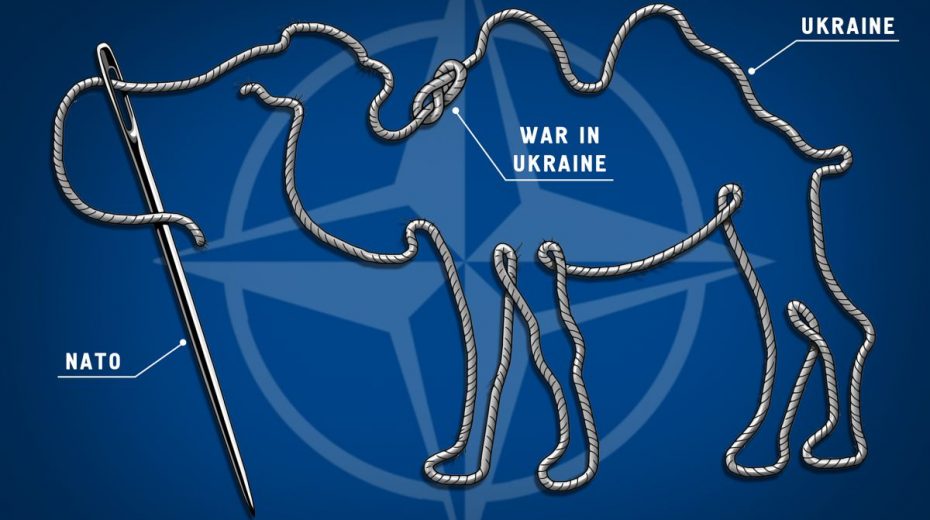
Russia regards NATO’s advance eastward and Ukraine’s prospective NATO membership as an “existential threat.” This indicates the war extends beyond a simple border issue to a reaction against the widening Atlantic bloc.
On the Iranian front, simultaneous blockades, airstrikes, and diplomatic talks unfold under the umbrella of US-led aggression involving Washington and Israel.
In Taiwan, billions in US arms sales await authorization, and American HIMARS artillery systems are incorporated into exercises. On Korea’s peninsula, the dominance of US–South Korean coordination overshadows any inter-Korean dialogue, illustrating how external forces largely fuel regional tensions.
A common thread in these conflict zones is the direct involvement or indirect backing of the United States. For decades, this imperialist system has been presented as a “security architecture.”
The New World Order
These situations are intricately linked. The US and NATO act either as active participants or supporters in all these confrontations.
Global capitalism sustains these crises through interconnected mechanisms rather than viewing them as isolated incidents. Recognizing their systemic ties is crucial for understanding their nature.
The surge in US aggression is often attributed solely to President Donald Trump’s personality. While Trump’s style is notably confrontational, many aspects of the policies he endorses align with, and occasionally diverge from, previous administrations:
Upholding military supremacy, containing rivals, compelling allies to boost defense budgets, and maintaining expansive global military deployments.
The Trump Era: Transformation or Continuity?
Trump’s aggressive and blunt rhetoric intensifies rather than breaks away from established policies.
Why does this method push NATO allies to raise defense expenditures, yet simultaneously consider cutting aircraft, naval, and tanker resources for Europe?
Because imperialism adapts its strategies to evolving geopolitical needs. The Trump administration merely vocalizes these adjustments in a forthright and uncompromising way.
Thus, tensions between the US and EU ruling elites do not signify a fundamental split but indicate the selection of new European partners and reinterpretation of relations during the Trump period—an outlook key to understanding future NATO tactics.
Europe’s Militarization: Building a New War Economy
Despite contradictions within the Atlantic alliance, Europe’s increasing militarization is integral to these developments.
NATO secured commitments at the 2025 Hague Summit for member states to aim for defense and security budgets reaching 5 percent of GDP by 2035, dedicating at least 3.5 percent specifically to core defense capabilities.
The next summit is scheduled for July 7–8, 2026, in Ankara. The alliance will likely demand that members outline “clear and credible” paths toward the 5 percent goal.
European nations are already adjusting their spending plans. Britain plans to unveil its defense strategy before the Ankara summit; Germany is rapidly ramping up military outlays; EU budgets prioritize defense despite pressure on social and regional programs.
Overall, public funds are being diverted into military sectors under the banner of “security.”
The Price of Rearmament: Paid by Working People
Here lies NATO’s fundamental logic: despite internal conflicts, the alliance must persist under US command.
The military-industrial complex and imperial rivalries drive the system toward more weapons, larger deployments, and tighter “bloc discipline.”
Requests for NATO members—from Europe to Canada—to expand air and naval forces do not redistribute the burden but spread it differently.
The financial weight of this strategy falls squarely on the working population. As is typical in capitalism, higher military spending undermines public budgets, so while the war economy grows, ordinary people face rising living costs.
Turkey’s New NATO Role: Chance or Dependency?
Events in Europe, especially along the eastern and northern borders where the alleged “Russian threat” is emphasized, bear critical consequences for Turkey.
Because NATO’s pressure impacts politics as well as budgets. The dismantling of welfare states, normalization of conflict, and constant alert affect large social groups, driving them toward political apathy or far-right movements exploiting anti-system frustrations.
Across Europe, the anti-imperialist left—historically marginalized, suppressed, and weakened—faces the urgent task of filling this void. Failure to do so often channels discontent into far-right avenues.
Hence, anti-imperialist forces today must not only unmask NATO’s military aims but also construct a political alternative confronting the poverty, insecurity, and societal decay imposed by these policies.
About the Author