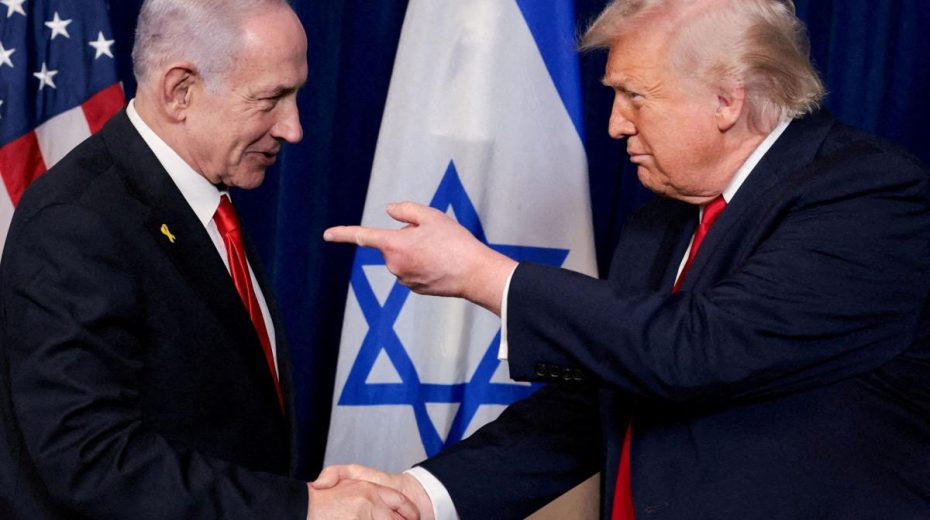
Israel’s goals of territorial expansion conflict with the goals of the U.S. president.
Following President Donald Trump’s signing of a preliminary Iran peace agreement on Wednesday, Israel’s ongoing occupation and bombardment of Lebanon remains the major barrier to achieving a definitive settlement and enduring peace. Enforcing the ultimate accord will necessitate confronting Israel, a move Trump has largely shied away from during his tenure, especially given Iran’s strategic influence over the Strait of Hormuz and the global energy supply.
Iran has maintained that the ceasefire and the proposed framework peace deal must address the entire regional conflict, demanding Israel withdraw from southern Lebanon. Iran’s Supreme National Security Council stated Monday that the memorandum of understanding entails ending all warfare and military activities across all fronts—including an immediate and permanent cessation on the Lebanon front.
This stipulation is rooted in the “long-term security guarantees” Tehran has publicly emphasized since the conflict’s onset. For these assurances to hold weight, Tehran expects Trump to restrain Prime Minister Benjamin Netanyahu and prevent further surprise strikes against Iran. Washington’s only way to confirm this resolve is by pressuring Israel on Lebanese soil. As Trita Parsi of the Quincy Institute noted, securing Israel’s commitment to a ceasefire serves as a “test of America’s willingness, and its ability, to restrain its closest regional ally.”
Until then, the White House seemed to rely on Axios and other sympathetic media outlets to create the illusion of pressuring Israel while continuing to permit its control over Lebanon. While American audiences were told by Axios’s Barak Ravid that Washington was “furious” about the Lebanese strikes, Israeli media conveyed the opposite message.
Miriam Adelson’s Israel Hayom reported that the U.S. and Israel coordinated fully on the Dahiyeh attacks and Israeli retaliation against Iranian missile launches, with Secretary of State Marco Rubio playing a key role in securing Trump’s support for Israel’s strikes. According to the paper, the operation was “fully coordinated with CENTCOM,” although the Americans did not carry out the strikes themselves. Courtney Bonneau, an American-Dutch journalist in southern Lebanon, informed The American Conservative that the remnants left behind by Israel’s bombing campaign are distinctly U.S.-made, further indicating American involvement.
Israel is wagering that Trump will maintain this avoidance. Soon after the peace deal announcement, Defense Minister Israel Katz declared that Israel’s hold on southern Lebanon will continue indefinitely, extending also to Syria and Gaza. Concurrently, Finance Minister Bezalel Smotrich stated on Tuesday that “there will be no withdrawal from Lebanon, neither by Friday nor afterward. We will remain in south Lebanon and strengthen our presence there,” while National Security Minister Itamar Ben-Gvir asserted Monday that Israel is not bound by any agreement.
Although Israeli officials claim their military operations target “Hezbollah,” the death toll surpassing 3,826 Lebanese civilians indicates otherwise. Trump, despite continuing to fund the conflict, acknowledged on Tuesday at the G7 Summit telling reporters that Israel “does not have to knock down an apartment house every time [it’s] looking for somebody. There are a lot of people in those apartment houses and they’re not all Hezbollah.”
Once considered unimaginable, Trump has recently edged toward an America First stance, distancing himself from the Israel First perspective that propelled the war with Iran. Since Iran demands the peace agreement cover “all fronts,” Lebanon included, and Israel remains fully devoted to its Greater Israel ambitions, cutting support to Israel has become the bare minimum for the comprehensive exit from the conflict that Trump claims to seek.
Original article: The American Conservative
About the Author