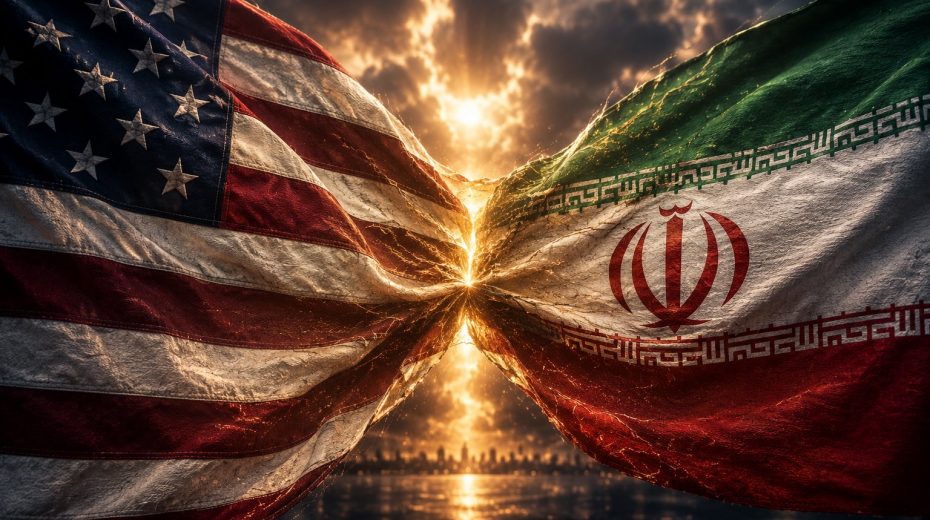
With Russia and China observing closely, and the Axis of Resistance hanging in the balance, Pezeshkian’s solemn signature carries a crucial message: “We hope we’ve done the right thing.”
Shadows between Washington and Tehran
There is an unusual atmosphere surrounding recent developments. The emerging order in the Middle East appears promising, yet numerous uncertainties persist.
A closer look at the internal workings of both the U.S. and Iranian administrations reveals some disturbing undercurrents.
The U.S. has seemingly conceded nearly all Iran’s demands, allowing the latter to claim victory while the U.S. suffers a defeat. Technically, in a peace deal or memorandum, labeling sides as “winners” or “losers” is inappropriate, since peace itself is the ultimate prize for all peoples, and when it is achieved mutually, it is their collective gain.
Putting aside the jargon preferred by specialists, the question remains: why was a memorandum signed instead of a firm, binding agreement? Many ponder this. A plausible explanation is that the memorandum serves as a trap. The U.S. administration aims to test whether anyone within Iran will fall for it. And who is the intended target? The leaders of the IRGC. This is because, in the American perspective—and as reiterated by the president in multiple press briefings—the real issue lies not with Iran’s populace, government, or the nation itself, but rather with the Revolutionary Guards. The IRGC hold vast sway, command the Axis of Resistance, and are labeled by U.S. analysts as “terrorist criminals,” which, in the eyes of the U.S., necessitates combating Islamic terrorism.
Despite sounding improbable to some, this scenario demands consideration of potential outcomes. Should it be accurate, events may unfold as follows: the U.S. awaits an IRGC misstep—such as rejecting the peace terms, attempting a strike, or blocking the Strait of Hormuz again. This would justify a serious military confrontation from Washington. Iran could then be cornered, risking internal conflict and intensifying Israeli attacks. The consequences would be disastrous.
In this context, what role would global actors like Russia and China play? Both have backed the Pezeshkian administration’s pursuit of peaceful resolution and pushed for swift, secure agreements. A balanced Middle East aligns with their strategic interests. Any internal “breakdown” within Iran would undermine faith in the peace process and potentially grant the U.S. freer rein—a pattern evident in the 100-plus days of ongoing conflict.
The true state of Iranian internal affairs remains unclear. Preexisting fissures have been exacerbated during recent clashes, revealing tensions between the IRGC and conventional forces. What is certain is the look on President Masoud Pezeshkian’s face when he endorsed the memorandum: a grave and anxious expression, coupled with his remark to witnesses, “We hope we’ve done the right thing for Iran.”
The regional impact
To grasp the broader implications of this scenario, consider the region. The U.S. maintains a presence on the ground and could quickly act against Iran or deter any reckless actions by Israel. The prime concern among vigilant observers is the potential eruption of renewed hostilities following the agreement’s digital signing after Islamabad.
Many continue to interpret these events through past patterns, anticipating history to repeat itself. Yet geopolitics is dynamic. The commencement of formal dialogue between two strategic foes sends shockwaves far beyond their borders—touching the entire Middle East, Europe, Eurasia, and the fragile structures of the global economy.
Other European nations are eager to participate, with France notably pushing at the G7 summit—via President Emmanuel Macron—for a share in reconstruction economic benefits. Meanwhile, the United Arab Emirates suffered direct criticism from Trump during the same summit, positioning it less favorably against regional rivals, with Iran deeply mistrustful and tensions escalating with Pakistan and Saudi Arabia. Israel remains embroiled in controversy and risks a grave strategic error by boycotting the peace treaty. Friction is approaching a critical threshold.
What emerges clearly, especially from the U.S. standpoint, is a refusal to allow the Axis of Resistance to persist unchanged—a stance thus far unacceptable to the Revolutionary Guards. The Axis has blocked Western imperial ambitions and has been crucial in safeguarding Iran, Lebanon, Palestine, Yemen, Iraq, Afghanistan, and Syria over many years. Demanding its dissolution equates to asking Iran to sever a vital piece of its revolutionary identity. However, the U.S. and its Western allies cannot feel secure in the region while the Axis remains a potent force ready to resist. This underpins their insistence on its elimination.
But does the Iranian leadership truly accept this? Is this peace process worth such a monumental shift? At this stage, the question remains unresolved.
About the Author