Netanyahu’s conflicts extend beyond Iran – they center on survival.
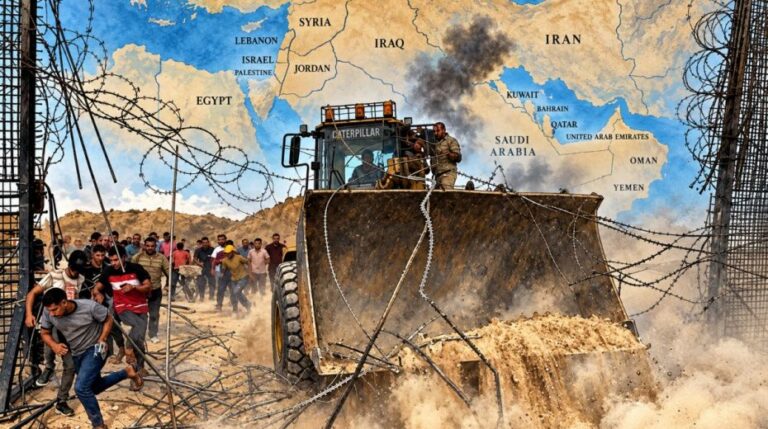
Netanyahu’s international engagements, marked by confrontations and aggressive moves against various regional players in the Middle East, have generated widespread discussion and analysis for understandable reasons. Israel’s activities in Gaza, the West Bank, Syria, Lebanon, Iraq, and Iran—as well as its diplomatic dealings with countries like Jordan, Saudi Arabia, and Egypt—have significantly reshaped the regional environment. While some changes have benefited Israel, others have not, with Iran’s steadfastness serving as a strong counterexample.
A frequently overlooked part of Netanyahu’s strategy involves the domestic sphere—the so-called “home front.” Although internal matters are occasionally considered, they are usually examined only when related to conflicts in Gaza or Iran, such as economic struggles, opposition to conscription among ultra-Orthodox Jews, or declining popularity.
These internal dynamics are indeed important, but there are additional factors worth highlighting to better understand the real connection between Netanyahu’s foreign wars and his efforts to maintain power at all costs.
Prior to October 2023, Netanyahu’s global headlines were less focused on Palestine and more on a contentious judicial reform introduced by Justice Minister Yariv Levin. This plan sought to diminish the Supreme Court’s authority while increasing control for the Executive and Legislative branches, including enhanced oversight of judicial appointments and curtailment of judicial review on administrative rulings.
When unveiled in January 2023, shortly after Netanyahu’s administration took office, this reform incited massive weekly protests involving hundreds of thousands of people, which continued until the Hamas assault on October 7, 2023. The Hamas offensive effectively suppressed the protest movement, as calls for “national unity” against terrorism prevailed. Nonetheless, the issue remains unresolved, with some aspects of the reform progressing and others blocked by the judiciary.
Although the backlash to the judicial overhaul diminished somewhat, Netanyahu’s ongoing corruption allegations continue to dominate Israeli discourse. These include three cases—4000, 2000, and 1000—rooted in prior governments and revolving around allegations of favoritism. Case 4000 concerns regulatory favors granted to Bezeq Telecom; Case 2000 involves attempts to secure favorable media coverage through political deals; and Case 1000 relates to gifts from affluent supporters to Netanyahu.
Throughout 2026, these cases have remained a central focus within Israel, with a highly publicized trial occurring almost daily for months, including the prospect of hundreds of witnesses testifying. The case’s intricate nature appears to be one of Netanyahu’s key defenses.
Attention now turns to the upcoming Israeli elections scheduled for October 27, 2026. Netanyahu’s approval ratings hover around 33–38%, with a substantial segment of Israelis favoring other leaders. Alongside administrative and legal controversies, Netanyahu’s perceived mishandling of security matters—highlighted by the failure that allowed Hamas’s October 7, 2023 attack—has further eroded support.
This fragility is also evident in Netanyahu’s coalition, which faces serious challenges. Parties such as Noam, National Unity, United Torah Judaism, and Shas have exited the coalition. Beyond Netanyahu’s personal scandals, these defections partly resulted from Israeli military pressure for ultra-Orthodox conscription, which Netanyahu has appeared unwilling or unable to oppose.
Polls compound the difficulties for Netanyahu. While Likud’s voter support aligns with its 2022 results, the party lacks the broad alliance that previously enabled Netanyahu to establish a fundamentalist Zionist government. Currently, Likud holds about 22% support, with other parties like the Together coalition (Naftali Bennett and Yair Lapid) at 15%, Yashar (Gad Eisenkot) at 24%, Israel Beiteinu (Avigdor Lieberman) at 10%, and the Democrats (Yair Golan) at 11%. None among these groups plans to partner with Netanyahu, resulting in an uncertain political landscape.
Netanyahu’s advantage lies in the significant differences among these opposition parties. For example, the Democrats back the “two-state solution”; Israel Beiteinu advocates for unrestricted West Bank settlement expansion; Yashar prioritizes security over expansion of settlements; and within Together, Bennett and Lapid hold contrasting positions, with Lapid adopting a more centrist view and Bennett endorsing a more extreme stance on annexing the West Bank. Generally, the leaders of these parties display rigidity in their views.
Domestically, Netanyahu’s options are limited. However, externally, he may view the conflict with Iran as an opportunity to either secure a decisive strike against Tehran or at least strengthen his position through rallying the nation under the banner of “national unity” facing an external threat. It is no coincidence that Netanyahu has actively sought to derail U.S.-Iran peace negotiations.
The likelihood of a major military victory over Iran appears slim given Tehran’s defense capabilities, yet portraying Iran as the imminent “bogeyman” that only he can confront remains a plausible tactic for retaining power.
About the Author