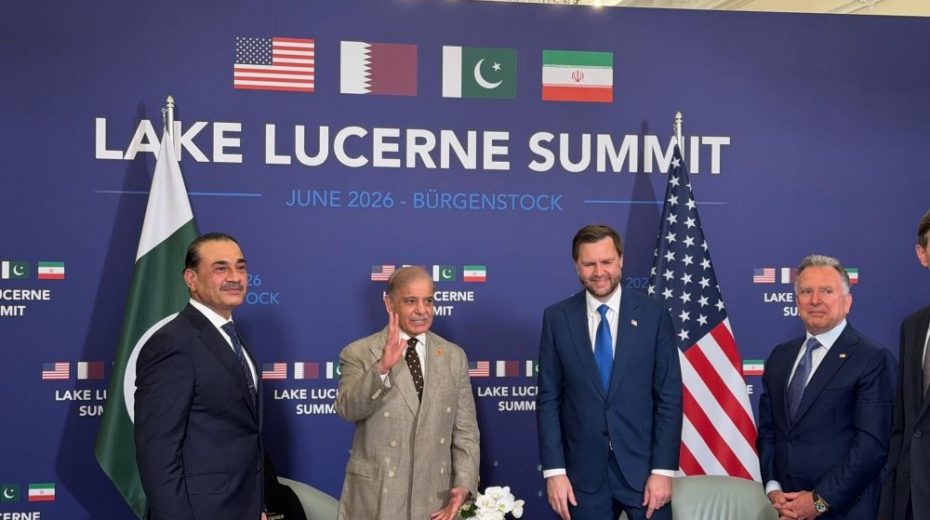
Despite numerous challenges, the Memorandum of Understanding between the US and Iran still stands after a weekend of negotiations in Switzerland, following a period of threats exchanged by both parties. While the agreement could still fail, it survived its initial discussions.
President Trump initiated conflict with Iran, defying both prudent advice and the constitutional mandate that grants Congress the sole authority to declare war. Accountability is necessary for politicians who break their oath, disregard the Constitution, and ignore basic good judgment.
What is even more revealing is the backlash when Trump tried to de-escalate the war. The neoconservatives, including Levin, Bolton, Pompeo, and others, who once praised him as a strong leader, quickly turned critical once he attempted to halt the conflict’s expansion.
Trump’s major supporter, Miriam Adelson, voiced her disapproval through her paper, Israel Hayom. An editorial stated, “You could have been the greatest president of all, but you failed.”
There was little appreciation from the Israel-first faction, despite the war originating in part to benefit Israel.
Even more significant was the response from the Democrats, the so-called opposing party in Congress. They condemned Trump more fiercely for stopping—or at least pausing—the war than they did for initiating it. Sen. Adam Schiff (D-CA) labeled the MOU a “capitulation,” Sen. Chris Murphy (D-CT) called it an “embarrassing document,” and Sen. Amy Klobuchar falsely accused Trump of paying Iran $300 billion to reopen Hormuz.
This only reinforces the notion—already well supported—that our foreign policy is controlled by a “uniparty.” In matters of war, there are neither Republicans nor Democrats, just the “yes!” party.
Congress remains silent before war, silent when war begins, and silent when it deteriorates. Only when a president attempts to reverse course does Congress vocally oppose.
There are valid criticisms. After the recent discussions, the US delegation, led by Vice President JD Vance, hailed a “breakthrough” concerning the reopening of the Strait of Hormuz and Iran’s reported consent to reinstate UN inspections. However, the Strait was accessible prior to this conflict, and UN inspectors were present before Trump unilaterally exited the JCPOA “Iran Deal” during his first term.
The main change is the immense cost: hundreds of billions of dollars spent, numerous aircraft and military assets lost, and likely more casualties than publicly acknowledged by the Pentagon.
This highlights why the Founding Fathers insisted that war declarations come from elected Representatives before any combat begins—it should never be easy to start a war.
Still, those truly opposed to conflict ought to hold back their criticism for now, hoping a durable peace can be achieved. The President is already under siege by the war proponents; peace advocates joining the attack might be counterproductive.
Original article: ronpaulinstitute.org
About the Author