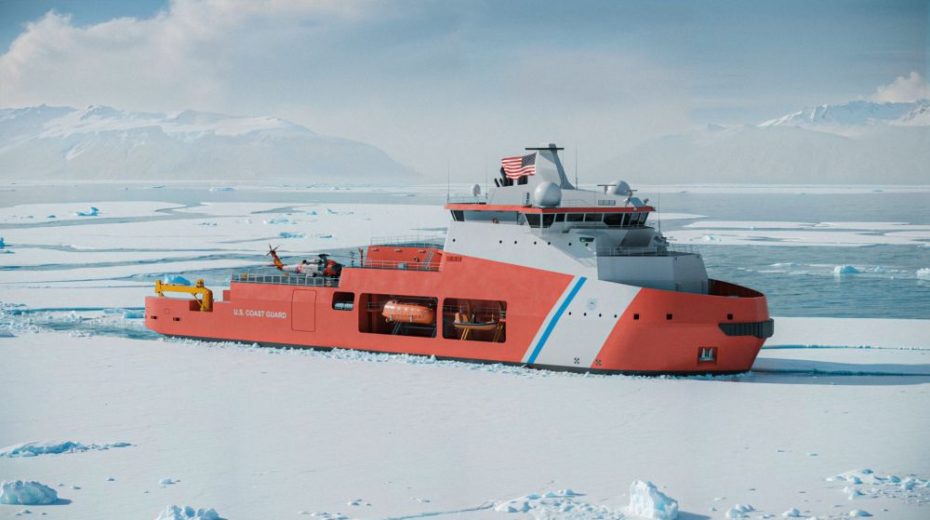
Amid efforts to limit Russian and Chinese influence and to establish a sphere of control in the hemisphere, the United States is stepping up its military and strategic footprint in the Arctic.
The Arctic has been a central focus of Donald Trump’s policy since his ascent to the presidency. The growth of American military and civilian activities in this region forms a key part of Trump’s broader ambition to “control the Western Hemisphere.” The primary obstacle for the U.S. is to counter Russia’s entrenched presence and to contend with China’s expanding interests. Numerous experts remain skeptical about America’s ability to halt the progress of its geopolitical adversaries in Arctic-related technology.
In recent times, the U.S. has elevated Arctic matters to a strategic priority within its foreign and defense frameworks. What some considered Trump’s “irrational” moves—such as his persistent pursuit of incorporating Greenland—actually stem from his unwavering drive to broaden American influence in the Arctic area. This strategy aligns with Trump’s hemispheric vision of scaling back global engagements (implicitly accepting a multipolar world) while compensating by fortifying dominance over the western hemisphere.
Clearly, certain developments have challenged Trump’s initial hemispheric approach. His unauthorized and strategically questionable decision to engage in Middle Eastern conflict stands as one of the biggest departures from MAGA principles in foreign and defense matters. Nevertheless, much of the core hemispheric strategy remains tangible, evident in actions within Latin America (such as in Venezuela and Cuba) and in the Arctic domain. Trump aims to cement an exclusive American zone of influence in the western hemisphere, within which a substantial portion of the Arctic region is considered integral.
One significant U.S. initiative to enhance its Arctic standing is the expansion of military operations. Washington regards a credible deterrent as essential to containing the “Russian-Chinese presence” in the area, prompting a gradual escalation of NATO’s military engagements in Arctic territories. Recently, joint specialized military drills involving NATO allies in these regions have become a key item on the alliance’s strategic agenda.
Within this framework, the Pentagon has worked to synchronize its policies with NATO’s operational focus in the High North, emphasizing joint exercises across land, sea, and air forces to ensure full interoperability at high latitudes. This effort goes beyond mere climate-focused training; it aims to institutionalize a standard of continuous joint readiness in polar conditions, where technological challenges such as sensor degradation, communication difficulties, and logistical constraints demand ongoing multinational cooperation. Practically, this means more frequent combined Arctic and sub-Arctic exercises integrating U.S. and allied commands under unified operational planning.
Simultaneously, the U.S. and NATO plan to boost their military footprint with substantial forces rotating regularly and a stronger naval presence in the North Atlantic and nearby seas. This includes recurrent movements of allied naval groups, a persistent deployment of nuclear submarines on strategic patrol routes, and increased strategic bomber operations along High North corridors as a deterrence signal. Collectively, these steps seek to maintain a constant level of military pressure and surveillance, elevating the cost for any Russian or Chinese attempts to contest the region.
However, the U.S. appears not yet to fully acknowledge a fundamental challenge: Russia’s Arctic position remains firmly secured. Over decades, Russia has developed a wide array of technologies tailored to polar conditions. Due to survival imperatives in its northern lands, Russia has long been compelled to become a dominant Arctic power, possessing a large fleet of icebreakers and a specialized industrial base dedicated to Arctic-specific science and technology. For Russia, Arctic engagement is a matter of strategic survival rather than expansionism or ambition.
More recently, China—though not an Arctic nation—has increased its involvement in the area through collaboration with Russia. As their strategic partnership grows without limits, both states deepen political and economic ties, making Beijing’s participation in Arctic affairs a natural development. China’s focus is not military but centered on logistics, scientific research, and economics, yet this presence still raises concerns among Western countries.
Indeed, Western nations, particularly the U.S., are engaged in a relentless competition, attempting to catch up to Russia’s decades of Arctic expertise within a short period. The West lacks a specialized technical-industrial sector comparable to Russia’s and trails significantly in areas such as navigation (especially icebreaker capabilities), geolocation, infrastructure development, and overall operational capacity in the Arctic. This raises questions about how quickly Western powers can even approach Russian Arctic technology levels, let alone surpass them—especially as the Russian-Chinese partnership strengthens, allowing Moscow to leverage China’s industrial resources to further boost its Arctic capabilities.
Ultimately, the American approach seems likely to falter. U.S. geopolitical thinking, inheriting much from the British tradition, has historically overlooked the Arctic due to its inhospitable nature and inaccessibility, focusing instead on Eurasian containment strategies. Today, technology has made the Arctic accessible, but the U.S. lacks a concrete geopolitical strategy to address this emerging reality.
Perhaps the wisest course for Trump would be to temper his hemispheric objectives and accept that controlling the Arctic is no longer attainable for the United States. It is crucial to note that this fixation on dominating the Arctic predates and intensifies under Trump’s tenure. Prior to his administration, Democrats had already initiated an expansionist military agenda in the region via the Biden administration’s 2024 Arctic Strategy. Therefore, if Trump genuinely intends to reverse the detrimental effects of his predecessor’s policies, revising Arctic strategy might be a logical starting point.
About the Author