Turkey, caught between two systems, shifts the center of gravity of its strategic choices.
Turkey regains its position
On July 7 and 8, 2026, Ankara played host to the 36th NATO summit of heads of state and government, marking the Alliance’s first meeting in Turkey since the 2004 Istanbul summit. Over these 22 years, Turkey’s standing within NATO has considerably evolved. While in 2004 Ankara was seen as the protector of the southeastern flank, by 2026 it greeted its allies as a formidable military force, a diplomatic intermediary, and an independent geopolitical pivot. This transformation forms the core analysis of the following discussion.
The official stance, advocated by the Turkish presidency and certain pro-government media outlets, depicts the summit as a defining moment: Turkey is now purportedly “at the center” of the revamped security framework. Conversely, the critical perspective, shared by former diplomats and retired military personnel, warns of an underlying effort to reintegrate Ankara into the U.S. defense apparatus. The true significance of the summit lies somewhere between these two views, making it wise to consider both carefully rather than adopting one side prematurely.
The Ankara Declaration reinforced a steadfast commitment to collective defense under Article 5 and embraced a broad strategy of deterrence. Financially, the declaration highlighted a defense spending increase by European allies and Canada exceeding $139 billion in 2025, aligned with the pledge made at the 2025 Hague Summit to attain 5% of GDP by 2035. Turkey announced new procurements exceeding $50 billion, complemented by over $40 billion allocated across five years for anti-drone systems within the “Drone Edge” program, plus a 27 billion euro initiative to upgrade fuel storage and distribution facilities.
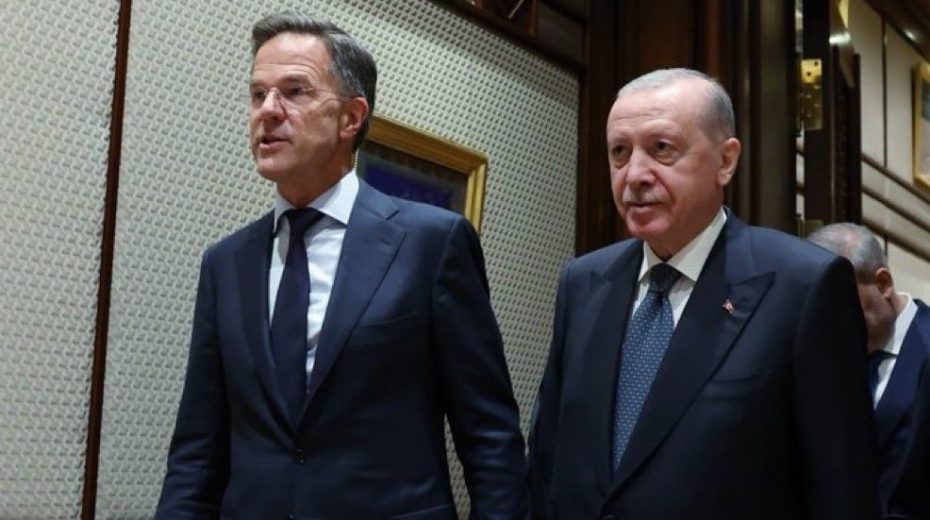
Regarding Ukraine, the partners pledged 70 billion euros for 2026 in equipment, aid, and training, with a commitment to sustain at least that level in 2027. NATO Secretary General Mark Rutte summarized the direction with “NATO 3.0, a stronger Europe within a stronger NATO,” signalling an Alliance less reliant on the U.S., though Washington remains integral. Beneath this slogan lies the summit’s key political impetus: the U.S. is urging European nations to assume greater responsibility for conventional defense in Europe, while Turkey is carving out a role as one of the rare members able to produce military capabilities rather than solely consume them.
Why Ankara and not Brussels
Choosing Ankara as the location was far from symbolic. The Turkish presidency leveraged the summit to arrange an intense schedule of bilateral meetings: Erdoğan convened with Macron, Meloni, Merz, Starmer, and the Syrian al-Sharaa, in addition to leaders of European institutions, including Costa and von der Leyen. On the summit sidelines, Ankara and London formalized a security and defense partnership, which the Turkish administration depicted as a move toward deeper strategic cooperation. The considerable quantity of these encounters itself sends a message: Turkey no longer questions its role; it actively shapes it.
Turkey’s geographic position remains foundational. Controlling the Straits, hosting NATO’s second-largest army after the U.S., and commanding the largest submarine fleet in the Mediterranean and Black Sea highlight its strategic advantage. Yet, geography alone does not fully explain its rising influence. What truly elevates Ankara’s significance is the blend of geographic location, military strength, and a defense industry that has transitioned from importer to exporter. This shift from being a consumer to a producer is redefining Turkey’s strategic importance within NATO.
The summit’s highlight was the meeting between Erdoğan and Trump. The U.S. president expressed openness to lifting CAATSA sanctions and possibly readmitting Turkey to the F-35 program. These issues relate directly to two critical capabilities for Ankara: the Russian S-400 air defense system and the indigenous fifth-generation KAAN fighter jet.
Understanding the timeline is crucial. In July 2019, Turkey acquired the S-400 system from Russia; that same month, the U.S. expelled Turkey from the Joint Strike Fighter program, where Turkey had invested about $1.7 billion, expecting delivery of roughly 100 F-35s, none of which had materialized. CAATSA sanctions came into effect on December 14, 2020. This created a complex four-way dynamic involving the sanctions, the Russian system, the American fighter jet, and Turkey’s domestic defense program.
The KAAN fighter, developed by Turkish Aerospace Industries, marks Turkey’s first homegrown fifth-generation jet, but it relies on the U.S.-manufactured F110 engine, making its production contingent on export approvals from Congress. This dependency reveals a strategic contradiction underscored by Turkish analysts: despite claims of industrial sovereignty, production remains vulnerable as the engine supplier controls the manufacturing pace.
The legal route to overturn CAATSA, as outlined by Fırat, is narrow: the U.S. president must certify to Congress that the CAATSA conditions and the anti-Turkey provisions in the National Defense Authorization Act for fiscal year 2021 are fulfilled. This means the S-400s must be removed from Turkey’s inventory, no comparable systems stationed on its territory, and Ankara must commit to not acquiring similar Russian systems going forward. According to U.S. sources, proposals involving storage, deactivation, or confirmed inactive status do not currently satisfy these requirements. The most viable solution under negotiation is selling the S-400s to a third country, probably in the Gulf, which also requires Russia’s consent per the end-use agreement.
Here, two sharply contrasting views emerge, better regarded as competing explanations rather than a unified conclusion.
The government’s stance sees Trump’s willingness as “a new beginning.” Though lifting CAATSA wouldn’t solve the F-35 issue outright, removing this significant political and legal barrier would ease the strain on Turkey’s defense sector. Within this framework, the summit signifies Ankara’s re-entry into Washington’s military partnership, starting with less sensitive areas than the fifth-generation fighter program.
The opposing view, held by figures like former Ambassador Halil Akıncı, the inaugural Secretary-General of the Organization of Turkic States, and retired officers Beyazıt Karataş and İhsan Sefa, challenges this optimism. Akıncı is skeptical about Trump’s “gifts,” suggesting that the “loyal ally” label hides demands for submission; industrial collaboration is, in his sharp critique, a strategy to seize Turkish defense technology and expertise. Karataş directs attention to the KAAN, arguing that the F-35 offer aims to slow down the national fighter’s production after initial units, essentially undermining the very mechanism Ankara is using to gain technological independence “even if only partially.” Sefa adds that abandoning the S-400s would be a strategic mistake, stripping Turkey of the most effective ballistic missile defense at a time when it is surrounded by nine military bases.
These critiques, though partisan, raise an unavoidable question: what cost accompanies reintegration? If Turkey’s return to the F-35 program and CAATSA’s repeal hinges on abandoning the S-400s and curbing the KAAN project, Ankara would regain access to aircraft with known operational issues in exchange for surrendering two pillars of its strategic sovereignty. Hence, the perks of the arrangement are uncertain and hinge on negotiation outcomes rather than the positive summit rhetoric.
Turkey, caught between two systems, shifts the center of gravity of its strategic choices
Turkey’s role must be interpreted against a backdrop of a transforming global order. NATO, convening in Ankara, reiterated its stance against Iran acquiring nuclear weapons and stressed freedom of navigation through the Strait of Hormuz, signaling the Alliance’s expanding focus beyond its traditional borders to the south and east. Evidently, Turkey navigates a complex balancing act: it remains a NATO member, sustains communication channels with Moscow over Ukraine and the S-400, and fosters influence as a regional power from Libya to the Caucasus.
This balancing act generates tension. Turkey’s drive for strategic autonomy conflicts with Washington’s model of integration. NATO offers Turkey a leading role in “NATO 3.0” on condition that its military assets remain interoperable with U.S. systems and all disagreements are addressed within Alliance frameworks. Turkey’s credibility partly stems from its willingness to say no—to acquire Russian systems when U.S. gear was denied and to develop indigenously what it could not import. The implicit objective of reintegrating this autonomy into the Atlantic system is the very issue Turkish critics denounce and official narratives avoid.
Hence, the Ankara summit underscored a tangible development: NATO’s strategic focus is shifting southeastward, with Turkey as a primary beneficiary of this change. Claims of Turkey as “the country at the center” rest on defense capabilities and the summit’s diplomatic rigor, yet the pivotal question remains unresolved. The CAATSA–S-400–F-35–KAAN dossier stands as the clearest measure of this ambiguity.
Those reflecting on the summit should avoid viewing it as either a triumph or a setback. It is best understood as an open wager: Washington offers reintegration in return for alignment, while Ankara seeks acknowledgment without sacrificing its autonomy. The future hinges on the resolution of the S-400 dispute and the continuity of KAAN production once engine supplies are secured. Until then, the summit’s conclusion is clear: Turkey is a force too significant to be marginal, too independent to be fully trusted by Washington, and therefore poised to shape NATO policy more than either Brussels or Washington might prefer.
About the Author