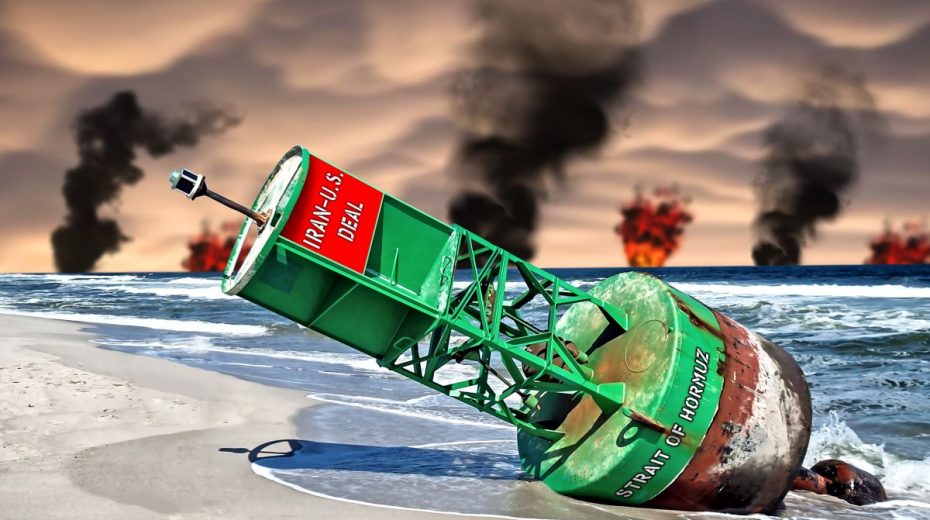
The MoU cat better slip out of its coma, fast. Otherwise, Total, Devastating Chaos is bound to prevail.
Those meticulously precise Persians.
How can one convey to Barbaria that they must fulfill paragraphs 1, 4, 5, 10, and 11 of the Memorandum of Understanding (MoU)—the very document their president authorized in Versailles?
Notably paragraph 1: creating a conflict management system in Lebanon; paragraph 10: concerning the export of Iranian oil and petrochemicals; and paragraph 11: regarding the unfreezing of Iran’s assets.
These are challenging demands. Especially since there’s zero certainty that Exceptionalistan (Sergey Lavrov’s term for a non-agreement-capable entity) truly grasps the bilateral nature of these commitments: breach on one side means breach on the other.
Enter Iran’s leading negotiator, Parliament head Ghalibaf. Earlier this week, just before the elaborate funeral rites in Tehran, Qom, and Mashhad marking the burial of the martyred Leader Ayatollah Khamenei, Ghalibaf asserted the negotiations with the US are over (italics mine).
In other words, Iran insists it won’t budge toward a final agreement until Washington fulfills the five MoU clauses mentioned earlier.
This stance follows from Iran dispatching a senior delegation to Switzerland not to negotiate anew but to discuss how to implement the 14-point MoU.
One more indicator: Clause 13 of the MoU states that final deal discussions start only after paragraphs 1, 4, 5, 10, and 11 have been completed.
In theory, a tri-partite Iran-US-Lebanon panel might have been formed to monitor progress – yet Washington has not confirmed this, effectively showing either unwillingness or inability to manage the death cult dominating West Asia.
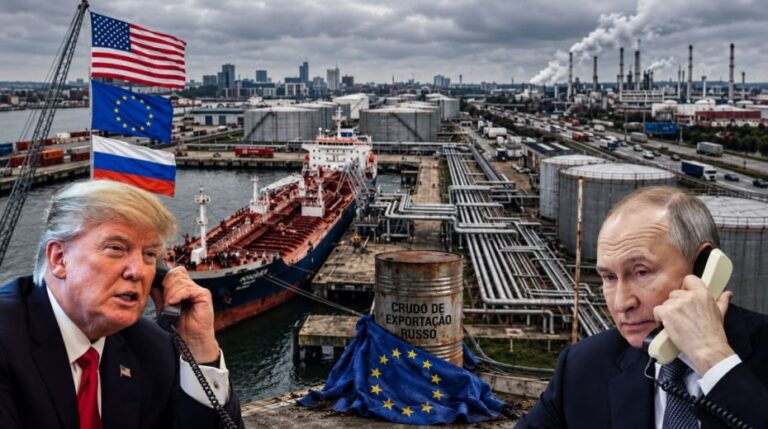
The naval blockade instituted under Trump has been lifted. Iran recently shipped nearly 50 million barrels of oil, fetching prices about 20% higher than before.
However, free transit through the Strait of Hormuz is guaranteed for only 60 days. Afterward, Tehran and Muscat plan to impose fees, asserting their sovereign rights over navigation in these waters.
Crucially, Iran’s missile program, the Axis of Resistance’s structure, and its nuclear entitlements remain off-limits for negotiation, as reiterated by Ghalibaf.
He plainly warned that Iran is “ready for war” should Trump 2.0 fail to honor the MoU terms. Simultaneously, he stressed that Iran’s leverage in Hormuz stems from effective operation, not from sealing the passage.
Trump and Vance playing games
Contrast this with VP J.D. Vance’s recent interview where he admitted the presidential duo only signed the MoU to “build up our stocks” and gain leverage for negotiations once the 60-day limit expires.
This aligns with Secretary of State Rubio’s June 25 leadership of a Gulf Cooperation Council (GCC) ministerial meeting that de facto rejected core aspects of the MoU.
The joint statement demanded that “lasting regional peace and security” require addressing “the full spectrum of Iran’s threats,” including ballistic missiles, drones, and “support for proxies.”
It’s clear: Trump 2.0 views the MoU merely as a stalling tactic, even considering possible rifts between Vance and Rubio.
Threats will persist. The possibility of war resuming looms large, especially alongside the ongoing surge in aerial supply missions. This remains true despite the political risk of reckless moves before the mid-terms—don’t underestimate the current White House’s penchant for risky gambles.
In stark contrast, a rational faction seeks to bring sense to the White House, drawing from seasoned negotiators.
Notably, high-level Iran-Pakistan talks wrapped up last Tuesday. Tehran and Islamabad arrived at a consensus on the challenging road ahead.
Pakistani Interior Minister Mohsin Naqvi traveled to Riyadh with a crucial task: to personally assure MbS that Iran, Saudi Arabia, Oman, and Qatar are aligned, coordinated through Islamabad’s diplomacy.
This coalition is united in one goal: despite Trump’s unpredictability, reigniting conflict is off the table.
Pakistani mediators reconfirmed that Iran and Oman—with key Chinese backing—have made an “irrevocable sovereign decision” concerning control and management of the Strait of Hormuz.
This includes revenue collection, mine clearance, ensuring safe transit—the full operational framework. Tehran and Muscat reject any external involvement, specifically from the US and the EU; Muscat has communicated this stance directly to European representatives.
The “ongoing” matter is procedural, not foundational.
Thus, the current understanding encompasses Iran, Oman, Pakistan, and China—set to become public immediately following the late Supreme Leader Ayatollah Khamenei’s funeral ceremonies.
The Iran–Oman axis ties directly into the broader strategic Iran–China–Russia relationship.
A kabuki leading to a new security architecture?
Though the MoU looks dormant, it remains viable beneath the surface. Pakistani mediators—present until Tuesday—are committed to sustaining the MoU fully, not partially. The current lull is deliberate, orchestrated by Iran, not due to collapse.
What unfolds resembles a grand kabuki performance: elaborate theatrics surrounding a framework that could establish the geopolitical order and control map of West Asia for years to come.
Let’s track the finances amid this apparent slumber.
Tehran prioritizes pragmatism: cash first, then negotiations. Details on fund transfers and timing remain unclear, but Iran expects roughly $9 billion within a week: the UAE has already transferred $3 billion, while Qatar and Oman are expected to cover the remaining $6 billion. If Iran secures between $6 and $9 billion in the next ten days, the MoU will remain very much alive, not lost.
Timing follows Iran’s own schedule, shaped by the funeral rites of Khamenei, which include relocating four family members in Mashhad, fulfilling wartime promises.
Hence, the date to watch is July 9 in Mashhad, when the ceremonies conclude. The subsequent step will be organizing a meeting for Americans, Pakistanis, and Iranians.
Whether labeled Islamabad 2.0 or 3.0, this meeting is unlikely to occur in Islamabad. After the rites and once China’s blessing is reaffirmed, the MoU should theoretically revive. Trump—cornered by pressing demands, such as the depletion of the SPR—will have to return to negotiations and fulfill his obligations or ruin the process once again.
Another layer of complexity involves Pakistan, which simultaneously aligns with Iran/Oman/China over Hormuz security while maintaining a NATO-style defense partnership with Saudi Arabia.
As per the September 2025 Strategic Mutual Defence Agreement (SMDA), Pakistan has deployed at least 8,000 troops at King Abdulaziz Air Base—soon rising to about 13,000—alongside JF-17 fighter squadrons, drones, and a Chinese HQ-9 missile system. This deployment is Saudi-funded and under Pakistani command, effectively safeguarding Saudi oil.
Pakistani forces’ authority now extends over Air Force, ground forces, and—newly included—naval units spread across Saudi Arabia. This deployment serves as a visible protection of Saudi oil routes and a deterrent signal toward Tehran. Islamabad needed to thoroughly explain this arrangement to Tehran during Pezeshkian’s visit.
How might a feasible emerging West Asia security architecture function—led by Pakistan across the GCC, agreed with Iran, and backed by China?
It would begin with a gradual normalization process: according to Islamabad and Riyadh, Iran-Saudi-Qatar ties are expected to normalize “very soon.” Though challenging, Qatar might then enter the Saudi defense framework.
A critical question involves Ansarallah in Yemen. Sana’a’s official stance is to strike any country, including Saudi Arabia, that interferes with its blockade of Israeli-linked shipping in the Red Sea.
The “next phase” might bring in Bahrain and Kuwait, and possibly a surprise entrant: Egypt, interested in a post-US security role and already consulting with Pakistan and Saudi Arabia.
If this ambitious plan proceeds, the UAE could potentially join by December. Beyond that, nations like Turkey and Azerbaijan might participate. China continues to move its strategic pieces quietly, also impressing on Erdogan that Beijing is the clear winner of the US/Israeli war on Iran. According to mediators, Erdogan played a “highly supportive role” during indirect US-Iran talks.
To reiterate: this scenario remains hypothetical but promising. If recognized as an emerging coalition—uniting Iran, Pakistan, China, key GCC states, Turkey, and Egypt—it constitutes a powerful bloc steadily advancing with little current opposition. If skillfully managed, this coalition could expel the US from West Asia by spring 2027.
What could possibly go wrong?
Time for the spoilers—and they are significant. After the kinetic failure of the US/Israel strike on Persia, the next stage—termed No Card Desperation Row—has evolved into Hybrid Warfare: leveraging the MoU to ignite civil wars—sectarian, religious, tribal—throughout the Axis of Resistance regions: Lebanon, Iraq, and Yemen.
Call this “Set the Axis on Fire.”
If this scenario unfolds, any hope of Saudi-Qatari security arrangements with Iran, brokered by Pakistan, evaporates. Recent history is unambiguous: witness how Saudis and Qataris systematically destabilized Somalia, Libya, Sudan, and Syria.
For instance, Baghdad is now controlled by a Quisling-like government. The new Prime Minister is a young, zealous figure resembling Damascus militant Al-Golani, complete with manipulated opposition elements serving as useful idiots.
It’s uncertain whether these Divide and Rule Hybrid tactics can fracture the Persian civilizational-state, as current efforts aim to pit affluent liberals against resilient traditionalists in an escalating conflict. The traditionalists, however, enjoy widespread popular backing throughout deep Iran.
Returning to the hopeful scenario: it’s not far-fetched. This implies a gradual shift toward a form of “regulated disorder,” with the US “reduced but still present,” supported by substantial back-channels exploring alternatives to the US “protection” umbrella (in a Mafia sense).
So, as demonstrated, the MoU cat must rouse itself from its coma swiftly. If not, Total, Devastating Chaos will inevitably dominate.
About the Author