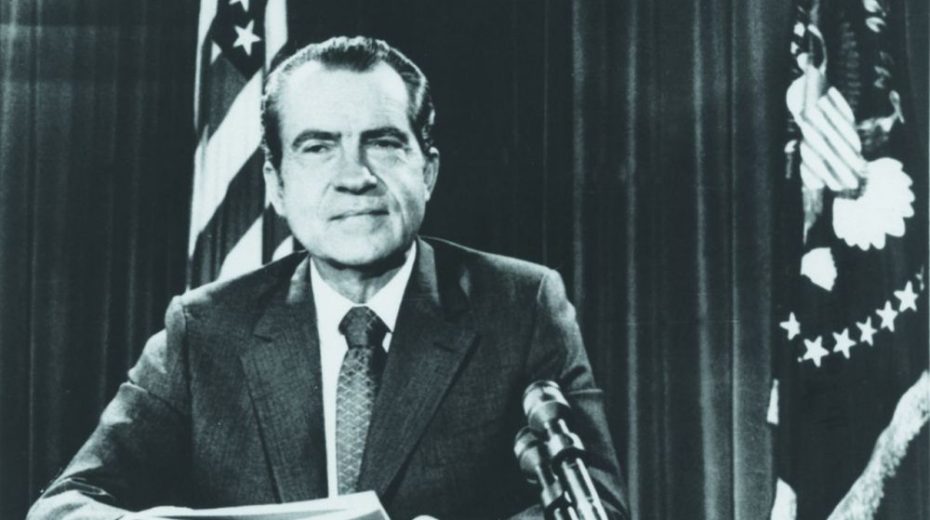
This month marks 55 years since President Richard Nixon ended the “gold window,” breaking the final connection between the US dollar and gold. According to the 1944 Bretton Woods agreement, foreign nations fixed their currencies to the US dollar, which in turn was linked to a constant gold value. These countries could exchange dollars for gold at a set rate of 35 dollars per ounce.
During the late 1960s, worries about the dollar’s stability grew due to President Lyndon Johnson’s war expenditures on Vietnam and “the Great Society.” This spending continued under President Nixon, prompting more foreign conversions of dollars into gold. Concerns over the depletion of US gold reserves led President Nixon to shut down the gold window.
Closing the gold window transformed the US dollar into a pure fiat currency, a shift that brought severe consequences.
Since the Federal Reserve’s establishment in 1913, the dollar’s buying power has dropped by more than 97%, with the steepest decline occurring after 1971. The root cause of the current affordability crisis is fiat currency.
Fiat money fueled the expansion of federal spending. By cutting the dollar’s last tie to gold, President Nixon allowed the Federal Reserve to monetize a growing volume of federal debt. When Nixon closed the gold window, the federal debt stood near 400 billion dollars. Within a decade, it soared to one trillion dollars. Today, that figure surpasses 39 trillion dollars and continues to rise by approximately one trillion dollars every few months.
This growing national debt compels the Federal Reserve to maintain low interest rates, as even slight increases in debt significantly boost government interest payments.
Inflation outpaces the average American’s income, eroding living standards. Consequently, many Americans distrust Republicans like President Trump, whose solutions include heavy economic intervention such as tariffs, increased spending, and government investments in private enterprises. Meanwhile, some find the promises of self-proclaimed democratic socialists, who advocate for more government spending, increasingly attractive.
However, expanding government—no matter which party leads—only worsens economic woes by raising government debt. This growing debt intensifies pressure on the Federal Reserve to monetize it, further weakening the dollar’s purchasing power and diminishing Americans’ quality of life. Eventually, this dollar depreciation may trigger a significant economic crisis, likely ending the US dollar’s role as the global reserve currency.
The termination of the gold window motivated me to seek Congressional office and deepen my involvement in advocacy and education. In 2021, my Institute for Peace and Prosperity hosted a conference marking the fiftieth anniversary of Nixon’s decision. Those interested in attending future events can visit the Ron Paul Institute website for details on our upcoming conference in DC during Labor Day weekend.
Original article: ronpaulinstitute.org
About the Author