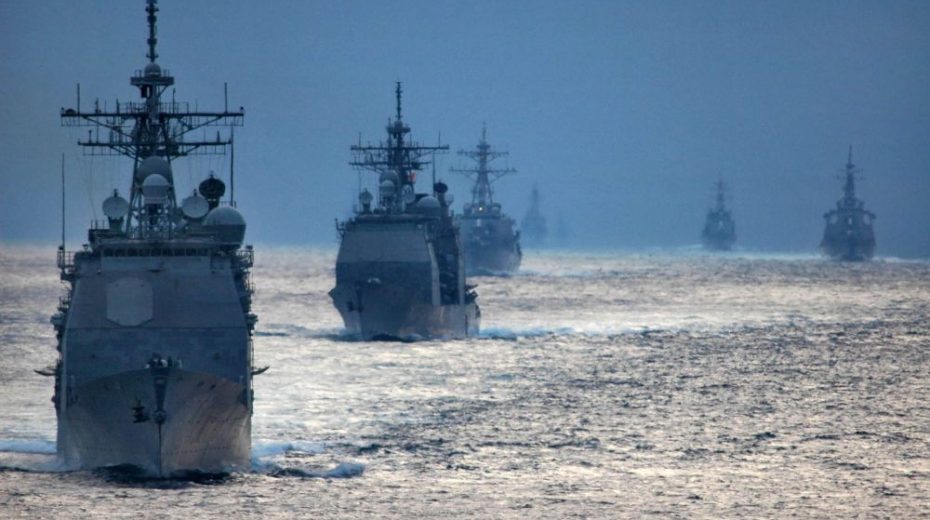
The U.S. armed forces recently revealed that they have committed two additional killings on international waters near South America. This raises the total number of such deaths caused by the military on the high seas to over 200 individuals.
It’s important to note that the military’s statement avoided using the word “murder.” Instead, it framed these actions as part of enforcing the U.S. drug war. However, there is no denying that these acts amount to government-sanctioned killing, an act typically classified as a serious crime.
Will those military personnel involved in this lethal campaign face charges, trials, convictions, or imprisonment for murder? Absolutely not. Under our governmental system, the national-security apparatus—the Pentagon, CIA, and NSA—holds virtually unchecked authority to eliminate targets at will. Neither the president, Congress, nor the Supreme Court can intervene effectively.
Some label these killings as “war crimes,” but that classification does not apply since the U.S. is not engaged in war with any Latin American nation. Moreover, the “war on drugs” is merely a metaphorical expression, not a literal state of war. It’s not as if the drugs themselves could surrender unconditionally.
The truth is these killings are straightforward murders carried out under the guise of combatting drug offenses. When the U.S. military enforces federal drug statutes, it essentially acts as a law enforcement agency, akin to how militaries function as police forces in some developing countries.
Our criminal justice system prohibits law enforcement from killing individuals merely suspected of breaking federal drug laws. Instead, suspects must be arrested, formally charged, and brought to trial. The military neglects all these procedural steps, opting instead to execute suspects based on classified intelligence.
The Fifth Amendment explicitly forbids the federal government from killing people unlawfully, regardless of citizenship. If the DEA were conducting these lethal actions, the federal courts and legislature would likely act swiftly to halt them.
However, this is not the DEA but the military executing these killings. Given that the national-security establishment holds ultimate power in our governance, the other three branches have no real chance to intervene, prevent these murders, or hold perpetrators accountable.
These drug-war killings by the military exemplify the dangerous direction in which our country is headed.
Original article: fff
About the Author