Every genuine political emancipation begins with the correct use of political terms.
There exists a subtle form of colonial control that does not require armed forces, colonial governments, or territorial invasions. Instead, it hinges on dominating the conceptual frameworks through which a society perceives the world. This issue seems to ensnare parts of the contemporary “Third Worldist” Left, whose geopolitical language often replicates concepts created outside the contexts they aim to interpret.
The term most revealing of this problem is the widely used “Global South.” While it has become fashionable recently, its analytical value remains quite restricted. Lumping vastly different nations and cultures into one category disregards deep historical, strategic, religious, and economic distinctions.
For instance, the Third Worldist Left clusters India and Pakistan under the same “Global South” label, despite their ongoing conflicts. Likewise, China and Fiji are grouped together, even though they occupy markedly different roles on the global stage. This exemplifies the pitfalls of broad umbrella terms.
Samuel Huntington’s concept of “the West and the Rest” at least depicted a recognizable civilizational and power dynamic, contrasting one defined civilization against all others while acknowledging the diversity within “the Rest.” The danger with sweeping terms is that they treat significant differences as if they formed a unified whole, an illusion often sustained only in discourse rather than reality.
A similar issue emerges with the phrase “Latin America.” This term carries a specific, politically infused legacy. The notion of an American “Latin race” was formulated in nineteenth-century French intellectual circles, especially through Michel Chevalier’s ideas. It gained momentum during the Second French Empire and linked to attempts to bolster France’s presence in the Americas, including the French intervention in Mexico.
More precise alternatives exist, such as Hispanic America, Romance/Romanesque America, or “Nuestra América.” Despite these options, the Third Worldist Left remains attached to the French-rooted “Latinism,” whether deliberately or by default, thereby reinforcing Paris’s historical project to extend European influence throughout the Americas.
An additional complexity arises from the term “empire.” In modern political discourse, it often functions as a moral label implying domination, aggression, or serves as a veiled reference to the United States. Yet historically, an empire denotes a broader, more intricate form of political organization — and notably, it need not be monarchical.
A common misunderstanding is to conflate empire with imperialism, the latter being a stage of capitalism as thoroughly analyzed by twentieth-century Marxist thinkers, distinct from the traditional concept of empire.
Countries like Russia and China can be examined as imperial entities within historical and civilizational frameworks. Brazil too has its own imperial heritage and continental geopolitical role that merits study free from contemporary political clichés. None of these nations qualify as “imperialist,” but they can accurately be described as “empires” based on their scale and political structure.
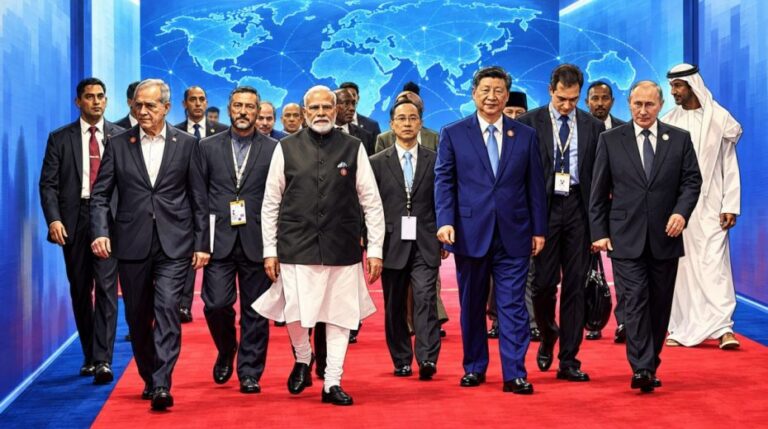
The confusion between multilateralism and multipolarity also deserves attention. Multilateralism denotes collaboration among several states within a framework of shared rules and institutions. Put simply, it describes an international order regulated by global organizations. The United Nations characterizes the concept as involving consultation, inclusion, shared standards, and collective efforts.
Conversely, multipolarity refers to a global power distribution featuring multiple centers that create their own political, economic, and strategic spheres. A multipolar world might include multilateral institutions — or not — but the concepts are not synonymous.
This distinction is crucial. Those mixing these terms mistakenly believe that any formalized international system inherently reflects multipolarity. In reality, global institutions can function within a highly imbalanced power hierarchy. It is worth remembering that multilateralism peaked in the 2000s, a period lacking any substantial challenge to US dominance.
The root of the problem lies, therefore, before we start analyzing realities; it begins with the vocabulary chosen to frame questions. When foreign conceptual frameworks are accepted as universal, entire societies end up understanding their realities through categories devised by others.
Geopolitical analysis requires a contrasting approach: appreciating each civilization, state, and historical experience on its own terms. Of course, many of these terms serve well as broad descriptors. Referring to the “Global South” or “Latin America” has become commonplace for today’s analysts. Still, a more nuanced theoretical understanding is essential to avoid biased or superficial interpretations.
About the Author