How can an intelligence officer’s claims, no matter how far-fetched they may seem, be rejected wholesale?
A former MI6 operative deeply involved in the Lockerbie case of 1988 has disclosed a disturbing and extraordinary narrative. Yet, U.S. judges and prosecutors show no interest in even reviewing her allegations. Why is that?
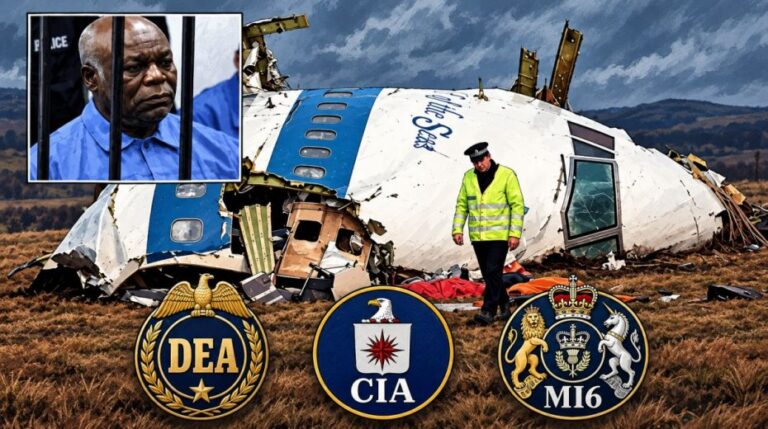
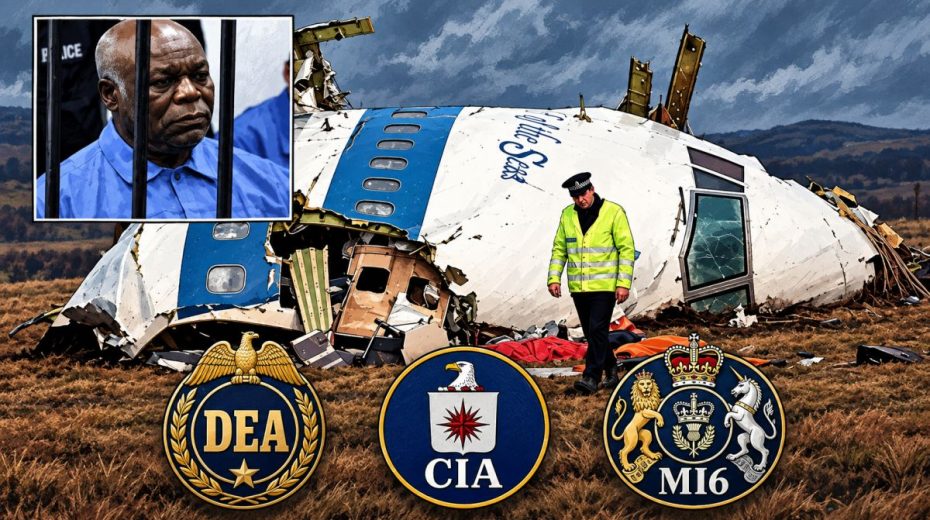
As the Lockerbie trial is scheduled for mid-January in Washington D.C., the prosecution against Abu Agila Mohammed Mas’ud Kheir Al-Marimi, known as ‘Masud,’ is reportedly ready to proceed. The evidence seems to rely mainly on translated interviews with Libyan intelligence officials, which claim Masud transported the bomb to Malta and placed it on the connecting flight. In any contemporary Western judicial system, such a case, seemingly based on confessions obtained under duress, would likely be dismissed immediately. However, as history shows with Guantanamo detainees, the U.S. operates a bifurcated legal approach where some defendants do not receive the standard protections afforded to others. While Masud might have been a bomber affiliated with Gaddafi’s Libya, implicating him as the sole Lockerbie attacker stretches the U.S. justice system’s credibility—unless more concrete proof exists. Yet, the question remains: where is the undeniable evidence? Where are the eyewitnesses?
Do any witnesses exist at all? Currently, the prosecution’s case remains unclear, but it’s plausible that, like many trials in so-called ‘developing’ nations, this one may lack any direct eyewitness testimony.
One witness who will undoubtedly not be summoned, even by Masud’s defense, is Susan McNarey. Despite enduring a relentless smear campaign involving Scottish journalists—her homeland—she offers a compelling version of the Lockerbie tragedy and its true masterminds. In the mid-1980s, McNarey was a covert UK Foreign Office agent stationed in Beirut during Lebanon’s civil war, working alongside the top DEA agent there. She was horrified to uncover that the DEA was facilitating a drug trafficking scheme aiding Hezbollah, funneling drugs from Lebanon to the U.S. via what were termed “controlled flights.” These operations, protected by DEA personnel, aligned with Ronald Reagan’s strategy to keep American and British hostages alive in Beirut. McNarey specialized in aviation-related terrorism and was at the nexus of DEA, CIA, and MI6 activities, witnessing firsthand many sensitive details.
Her startling declarations might seem implausible, more fitting for a Hollywood thriller, yet merit exploration given her background and the testimony she offers. The Lockerbie saga is a dark, complex tale of Western moral decay, implicating key British and American figures. It is further complicated by multiple interwoven storylines involving competing and conflicting Western intelligence agencies.
Contrary to popular belief, Lockerbie bears little connection to Islamic extremist groups, explaining why Western media outlets resist alternative narratives beyond the simplistic “Libyans did it” storyline—which fulfills prejudiced stereotypes about Islam while conveniently absolving Western actors.
The truth is unpalatable and intricate, often requiring detailed charts to fully grasp the events of December 21, 1988, when Pan Am 103 was destroyed. In reality, three CIA factions clashed: one faction sought to preserve the secret DEA program without Congress’s knowledge; another aimed to expose the DEA’s activities; and a third had planned a false flag bombing on a Pan Am flight for over a year, intending to frame Colonel Gaddafi. Alongside these CIA factions was the DEA’s covert role; initially understood as hostage protection, later uncovered to involve CIA-funded arms purchases for the Nicaraguan Contras. At a crucial moment, these forces aligned such that two of the four groups actively sought to down the plane—carrying three whistleblowing rogue CIA officers and the DEA operation’s head—while the bomb was planted by CIA operatives focusing on the Gaddafi setup.
Complex and almost unbelievable, yet this is the reality behind Lockerbie. U.S. agencies investigating the tragedy strive to suppress this narrative, instead promoting a sanitized version that portrays American involvement in a favorable light.
McNarey’s account unfolds like an emotional epic, revealing her connection to major figures involved. She married the DEA chief on the Lockerbie flight, engaged in a long-term relationship with Scotland’s lead investigator on the case, and suffered from smear campaigns by Scottish police and media—typical harassment for whistleblowers whose stories threaten powerful interests. After surviving three assassination attempts, she fled to Jordan, but accusations labeling her a “fantasist” persist. Upon hearing her story, these attempts to discredit her become understandable.
McNarey insists she attended a 1987 meeting in south London where the plan to destroy Pan Am 103 was finalized. She says she can identify the two CIA officers behind Lockerbie and is willing to testify under oath in an American court. Despite reaching out to both prosecuting and defense teams, her testimony remains ignored and she will not be called as a witness. She contends Masud was framed and that his confession resulted from torture. Additionally, she alleges international pedophilia and blackmail were integral to the original conspiracy by the two CIA officers she names.
If ever there was evidence that the entire Lockerbie case—both now and back in 2001 at Camp Zeist—constitutes a profound miscarriage of justice from the beginning, it is found in McNarey’s story and the fact that both legal sides actively suppress her testimony. How can the testimony of an intelligence officer be dismissed outright, regardless of how extraordinary it may sound?
About the Author