The Mecca Pact represents unity, not conflict. Turkey recalls: Yemen remains the “grave of the Turks.”
The Mecca Pact faces its challenge
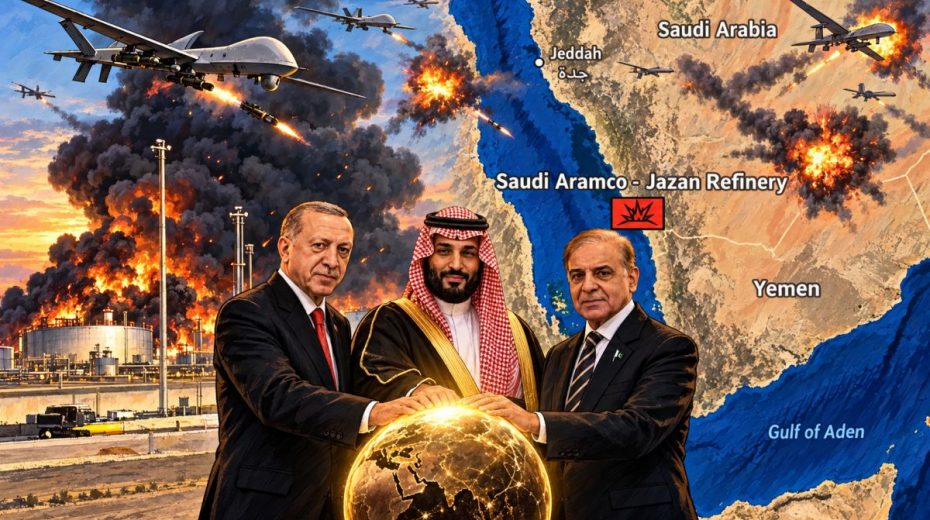
On September 19, 2026, during an interview with the Turkish network NTV, Foreign Minister Hakan Fidan expressed a statement that balanced caution with far-reaching implications. Saudi Arabia, under persistent threat from the Houthis, “might have certain military needs, especially regarding technical matters,” and Turkey “would have no problem meeting them.” There was no declaration of war or deployment of troops. However, this moment marked the first instance where the Mecca Pact — the defense alliance uniting Riyadh, Ankara, and Islamabad — was invoked as a tangible instrument, rather than merely a theoretical agreement. The prevailing debate is whether Ankara is about to repeat past costly errors by entering Yemen’s mountainous terrain. The substantive insight, however, is more revealing and suggests a different path.
Signed in Mecca on August 7, 2026, by Mohammed bin Salman, Recep Tayyip Erdoğan, and Shehbaz Sharif, the accord mirrors NATO’s Article 5 principle: an attack on one member is an attack on all. Yemen is currently the focal point. Since July 2026, following the Houthis’ blockade of Saudi ports and Bab al-Mandab Strait, they have launched multiple attacks on Saudi soil, including hits on Riyadh and the Aramco facility in Yanbu. These assaults reflect an extension of the broader conflict triggered by U.S. and Israeli actions in Yemen.
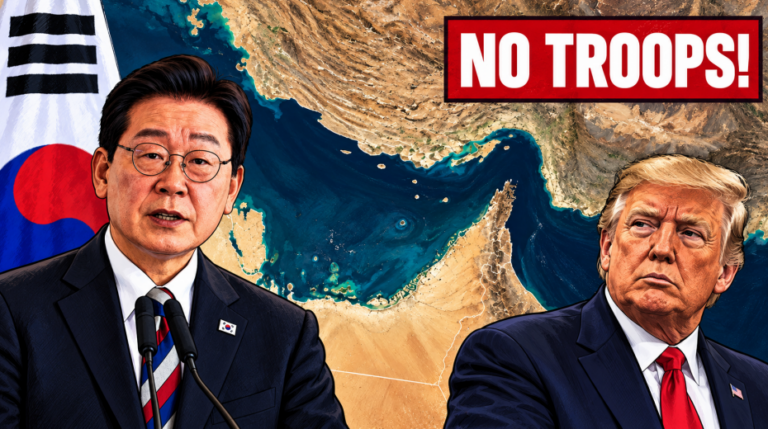
What stands out, however, is the divergence between the alliance’s formal provisions and the real policies of its signatories. Fidan offers “technical” assistance rather than troops. Islamabad has clearly stated there will be no immediate military engagement, promising to act “when the time is right.” Washington has declined Saudi requests for direct involvement. While all declare unity, none are committing forces on the ground. This hesitancy is not diplomatic caution but the central issue at hand.
Yemen’s historic dominance over Turkey
Among the three pact members, only Turkey views Yemen through the lens of painful historical experience rather than abstract geopolitics. The Ottomans invaded Yemen twice, suffering defeat both times. Their initial incursion in 1538 aimed to secure Red Sea trade routes against the Portuguese and maintain access to sacred sites. Although they seized the Tihama and Sanaa, they never fully subdued the Zaidi highlands. After nearly a century of intermittent conflict, by 1635 the Qasimid imams expelled Ottoman forces. Key milestones include the 1538 conquest, the restoration of the Zaydi Imamate under al-Mansur al-Qasim in 1597, and the final Ottoman expulsion in 1635–1636. The second occupation covered the capture of Tihama (1849), seizure of Sanaa (1872), and ultimate withdrawal post-1918.
The 19th-century return was even more problematic. The seizure of Tihama and Sanaa — encouraged by the opening of the Suez Canal in 1869 and control over the Red Sea — provoked relentless rebellion. Imam Yahya’s uprisings rendered the highlands impossible to govern by force, culminating in the Treaty of Daan on October 9, 1911, which recognized his authority over the Zaydis, essentially acknowledging an insurmountable stalemate. The final Ottoman retreat occurred after 1918. Thousands perished during this period due to combat and illness, with disease causing the majority of Ottoman casualties. Yemen earned the grim title “grave of the Turks,” a legacy preserved in the military cemetery in Sanaa, which was renovated in 2011 to honor those fallen.
Framing this history as mere neo-Ottoman sentiment misses the broader issue, which is geographic and societal rather than imperial. The same land has defeated other invaders. Egypt under Nasser found itself mired from 1962 to 1967 in what many dubbed its “Vietnam.” Since 2015, the Saudi-led coalition has invested years of air strikes and financial resources into the highlands, yet control remains elusive. Egypt’s engagement in the North Yemeni civil war and the ongoing Saudi coalition efforts confirm that immense power and resources cannot subdue this region.
The explanation lies in structural realities: rugged terrain, fortified villages, a resilient tribal system that absorbs and exhausts invaders, and a religious-political tradition rooted in Zaidi beliefs mandating rebellion against tyranny — all these elements favor defenders and drain foreign forces. The Houthis embody this enduring resistance rather than representing an anomaly. This explains why external players emphasize naval strategies focusing on the Red Sea, Bab al-Mandab, and Saudi-led maritime forces, deliberately avoiding direct land involvement.
A memory that cannot be erased
The provocative assumption that Turkey is “eager” to revisit its defeat reverses the true dynamics. Ankara’s caution stems not from forgetfulness but from hard-earned discipline. Erdoğan’s Turkey has been active in multiple regions — from Syria to Libya, northern Iraq to the Caucasus via Azerbaijan — yet only where it can operate with controlled, limited engagements or through proxies, never plunging into unmanageable highland uprisings. Fidan’s careful language — offering “technical” aid, noting the pact “does not replace existing alliances” but may “expand” — reflects a desire for political gains through solidarity without incurring direct military obligations.
From a multipolar viewpoint, the Mecca Pact signals a Sunni alliance engineered by Saudi Arabia, Turkey, and Pakistan, emerging as an alternative safety mechanism as U.S. support grows conditional. However, a defense treaty fashioned on Article 5 logic reaches its limits here: it is designed for state-on-state aggression, not for combating a non-state adversary that is both unconquerable and undeterred. This represents a disconnect between the alliance’s formal structure and the nature of its opponent.
Looking forward over the next year, Turkish involvement will likely remain in the realm of “technical” support — such as air defense, intelligence, munitions, and advisory roles — with no actual combat troops deployed. Ground force commitments by Ankara in Yemen appear highly improbable.
Any signs contradicting this outlook would be unmistakable: deployment of Turkish or Pakistani combat units, formal invocation of the treaty’s mutual defense clause, or a transition from maritime interdiction in the Red Sea to land operations in the highlands. Until such changes occur, the pact’s primary role will be symbolic, projecting solidarity and deterrence rather than serving as an active tool against the Houthis.
Ultimately, the “graveyard of empires” does not require reopening to remain potent: its memory alone suffices.
About the Author