Saudi Arabia’s pipeline blown up, MbS rejected by tribes and clerics, Houthis ascendant. Trump refuses to fight, betraying his Gulf ally.
Did Trump’s mishandling of Iran lead to the collapse of the U.S. presence in the Middle East, historically aligned with GCC nations? Currently, attention is focused on Saudi Arabia and the dire predicament its young crown prince has found himself in, especially following Trump’s refusal to back him against the Houthis. This firm rejection not only stunned Mohamed bin Salman but echoed across the region, suggesting the end of America’s active role and footprint there. Though Ex-General David Petraeus may have been inaccurately quoted as saying the U.S. was “out” of the Middle East—he actually referred to U.S. bases as “no longer viable”—the underlying message remains. Rebuilding these installations could take years, experts warn, but the larger question is whether the host countries would even accept their return, since the bases tend to attract Iranian attacks rather than provide genuine defense.
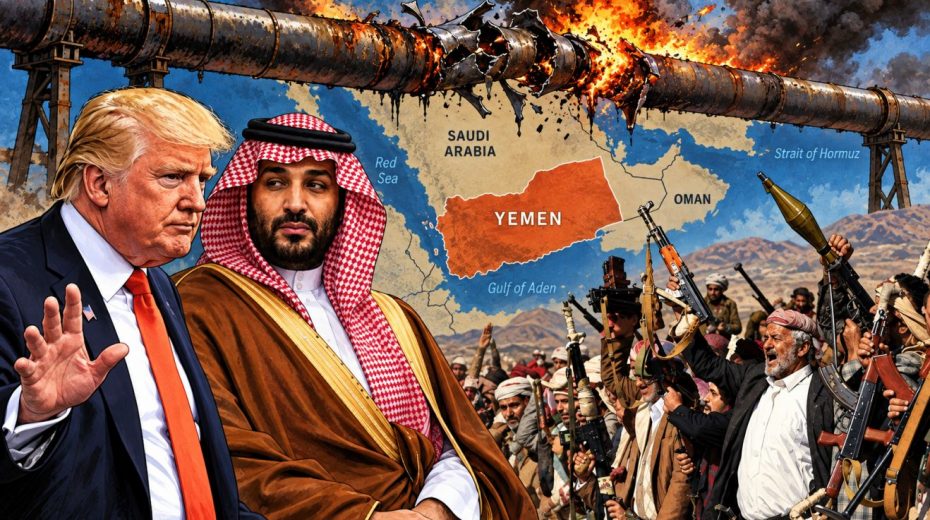
The recent destruction of Saudi Arabia’s main east-west oil pipeline by the Houthis delivered a devastating economic blow, cutting the kingdom’s income by half and threatening its ability to maintain state functions. MbS sought help from tribal leaders and religious authorities, but both turned him down. The tribes’ refusal is especially significant, revealing the prince’s fragile hold domestically despite Western media portraying strong youth support. However, young Saudis cannot rescue MbS from a crisis that might even pave the way for a Houthi overthrow. In desperation, he has now relied on the British for a single refueling aircraft stationed in Cyprus to aid his air force—the last defense line against the Houthis, who have recently targeted ballistic missile sites and parts of the capital, triggering panic among Yemenis, some of whom fled across the Red Sea to become refugees in Djibouti.
If the Houthis prevail, it would be a strategic victory for Iran, highlighting to other GCC states how an Iranian proxy managed to cripple the Saudi economy and potentially destabilize its leadership. Remarkably, even though Donald Trump initiated the conflict with Iran on February 28th, he refuses to confront the Houthis to assist Saudi Arabia—an astonishing abandonment of a relationship he once publicly celebrated, famously welcoming the young prince to the White House with elaborate displays of Saudi wealth. This episode exposes Trump’s weaknesses in facing actual warfare when isolated alongside Israel, as opposed to merely authorizing lucrative military aid packages like the recent $2.8 billion worth of advanced bombs sent to Israel. In the Middle East, “if you fuck around and find out,” there are serious consequences; Trump’s current choice is to avoid direct conflict with the Houthis.
Is Trump even engaged with the region anymore? With mounting troubles making him appear inept both domestically and internationally, it seems he prefers to pivot toward Ukraine, where he still senses potential influence. At an upcoming UN gathering in New York, he is slated to meet the new UK prime minister—possibly seeking British assistance. Andy Burnham’s government has maintained a firm stance on Israel and strongly supports Ukraine, which could offer Trump crucial backing. This meeting might open channels for Trump to persuade Zelensky to cease attacks on Russia’s critical energy infrastructure. Given MI6’s significant involvement in Ukraine’s military operations, strengthening ties with the UK may help Trump pull strings behind the scenes, especially as fuel prices—particularly diesel—become pivotal ahead of the midterm elections. If ever he needed a breakthrough, it is now, and much depends on the rapport between Trump and Burnham. Both sides have indicated a willingness to collaborate, but Burnham should heed the MbS episode and its lessons. Any partnership with Trump is limited by many uncontrollable factors, and his notorious unreliability means deals may not last. Still, amid widespread European fear-mongering about an impending war with Russia, Trump’s closeness to Putin might yet prove strategically valuable.
About the Author