The Strait Debate Gets Heated
Is the Strait of Hormuz open or closed?
That depends on who you ask.
Those bearish on oil argue that crude is still flowing through the Strait at roughly 80-93% of levels seen before the conflict. Bloomberg’s oil expert Javier Blas notes that Gulf crude exports have recovered to about 80% of their usual volume:
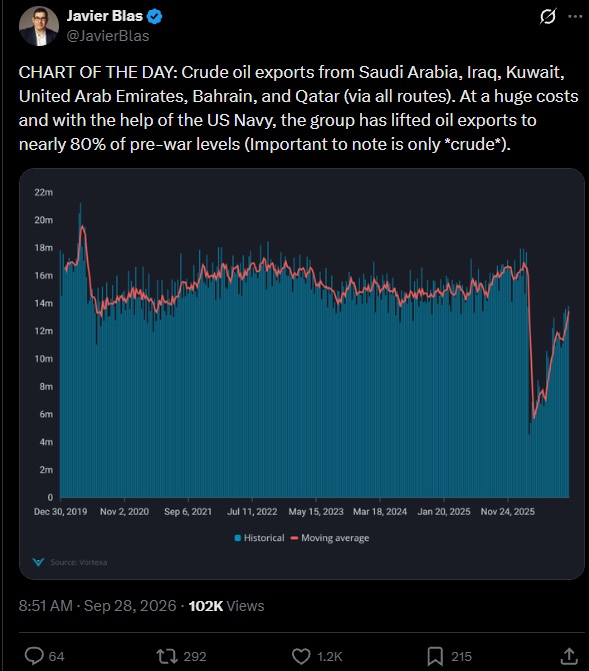
Javier is a prominent voice in energy reporting, often approaching the news with an optimistic perspective.
If his figures are accurate, it would suggest a significant flow of oil through Hormuz. I remain doubtful, however. Let’s dig into the facts.
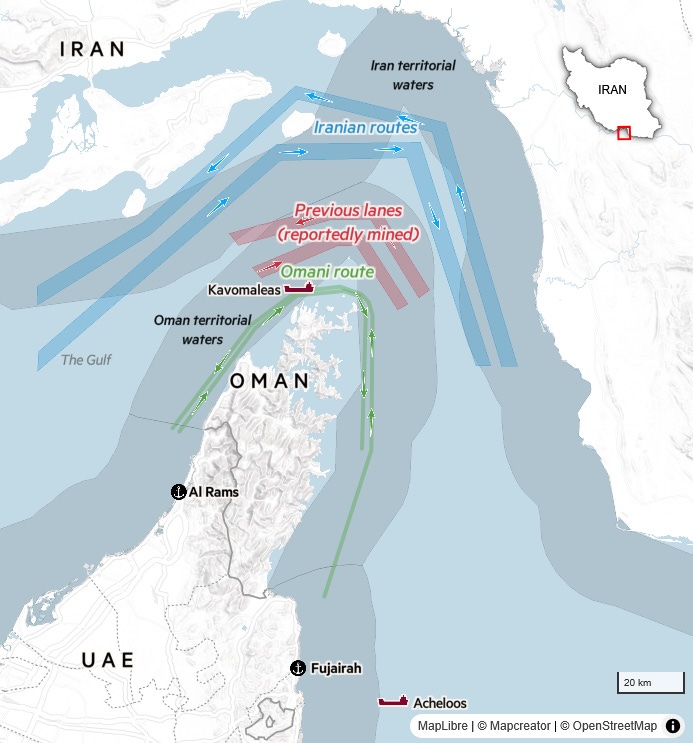
Currently, the Strait is split into two main passages. The northern route lies under Iranian control, while the southern path, through Oman, is overseen by the U.S.
Source: Financial Times
Vessels traveling the southern Omani route typically receive protection from U.S. fighter jets capable of intercepting drones and missiles.
It appears U.S. forces have also dredged the Omani passage to accommodate large tankers.
Interestingly, U.S. military personnel sometimes accompany these tankers. NBC News recently disclosed:
Eight U.S. Marines were injured two weeks ago when an Iranian cruise missile attacked the ship they were operating on in the Strait of Hormuz, according to three U.S. officials.
The Marines were not on a U.S. Navy ship, according to the officials. The officials declined to define what type of ship it was, instead referring to it as a maritime vessel.
Notably, the ship wasn’t a Navy vessel. Fortunately, all eight Marines recovered and returned to duty.
This revelation is significant, especially given the timing—“two weeks ago.” Why only now is this coming to light?
What is the exact function of U.S. soldiers aboard vessels transiting the Strait? Are they crew members or providing security? The specifics remain unclear, but clearly, there’s more happening behind the scenes.
Information Wars
It’s evident that oil volumes passing through Hormuz have increased since the war’s onset, but the precise amount is heavily disputed.
Before hostilities began, approximately 20 million barrels per day flowed through this strategic narrow passage. Currently, I estimate the figure at no more than 7 million barrels a day.
Some of this deficit was supplemented by Saudi Arabia’s East-West pipeline, which sustained drone damage weeks ago and has only recently resumed service.
We must remember, however, the repaired pumping stations remain vulnerable to further attacks.
Global energy supply continues to be fragile. Given the risk of renewed conflict escalation, I remain wary of oil bears forecasting prices dropping to $60 per barrel by year-end.
For me to take a bearish stance on oil, I would need to see a credible path toward resolving this conflict—and so far, none is apparent.
Iran Tells a Different Story
According to Iranian news outlet Fars, over the weekend Tehran launched anti-ship missiles against 19 vessels near the Strait of Hormuz. While at least one video captures a burning ship, the claim of 19 targeted ships remains unconfirmed.
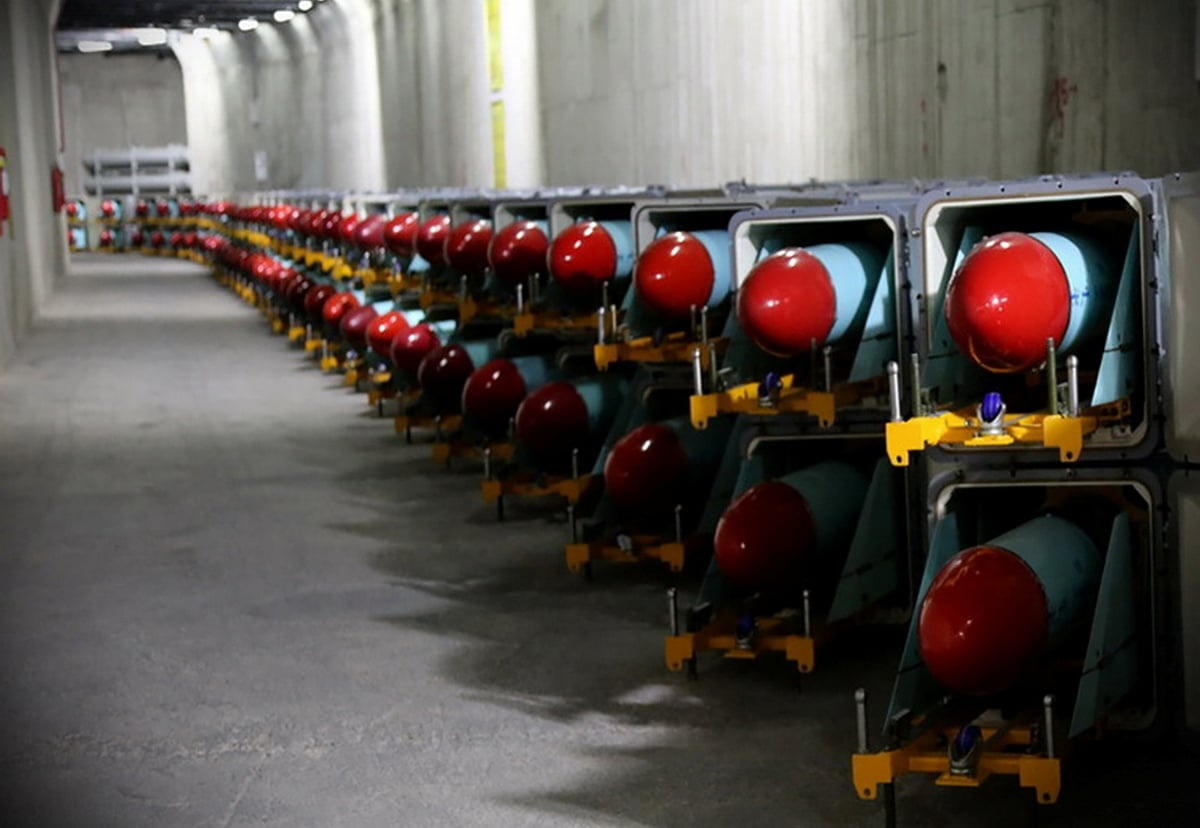
We have previously examined Iran’s anti-ship missile arsenal in depth. This diagram illustrates their approach:
Source: National Interest
Thousands of anti-ship missiles strategically concealed within fortified tunnels and subsurface bases along Iran’s coast make for a formidable defense.
Who’s Right?
So, whose account do we trust? The oil bears claiming Middle East exports are rebounding to normal, or the bulls who contend otherwise?
My view aligns with the skeptics. I remain optimistic about oil prices while doubting an imminent resolution to the conflict.
Accurate data on current Middle Eastern oil exports is lacking.
Moreover, many scenarios could disrupt supply again. A few more drone strikes could shut down the East-West pipeline, or attacks on tankers might deter owners from risking passage through the Strait.
Every mention of a forthcoming deal has so far proven to be yet another illusion. Consequently, I take market reactions to supposed peace progress with skepticism.
I don’t expect traffic through Hormuz to return to pre-war levels until a genuine agreement with Iran is reached—a process likely requiring considerable time.
The widespread talk of a sudden recovery in oil shipments strikes me as overly optimistic given the unclear data.
For now, I am maintaining my long position on oil. Should my stance shift, you will be the first to hear about it.
About the Author