Nobody would argue that the Iran War has been a political blessing for President Donald Trump and the Republican Party. However, some Israel-First conservatives have insisted—repeatedly lately—that this conflict hasn’t been a political disaster for Trump.
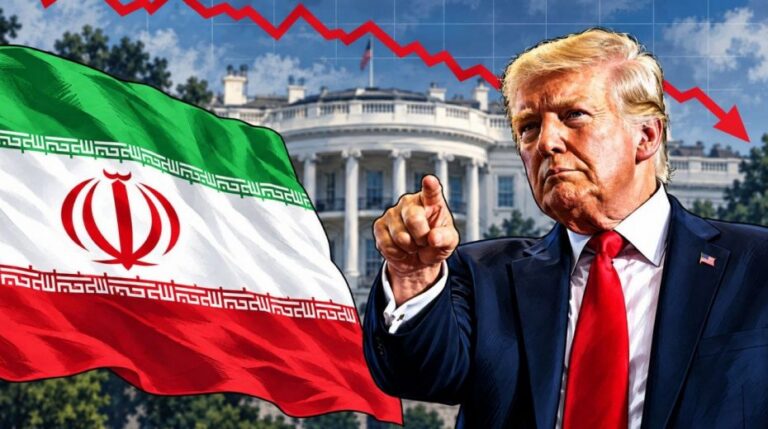
Those Israel-First voices are mistaken, even if some nuances complicate the picture. The Iran War has lowered Trump’s approval ratings, consumed much of his time in office, and worsened the GOP’s chances in the approaching midterm elections.
A prominent advocate of the claim that Trump hasn’t been seriously harmed politically by the Iran War is Ben Shapiro from the Daily Wire. His analysis is clearly influenced by his earlier vocal support for the war, during which he wrongly assured that Iran would not be able to shut the Strait of Hormuz, a critical passage for global energy flows.
“There’s an op right now to pretend that the real reason for President Trump’s unpopularity is foreign policy, but that is not true, by the polling data, it is not true,” said Shapiro on a recent episode of his podcast. “The reality is that Americans have affordability concerns, President Trump came into office saying he was going to alleviate the affordability concerns. He has not in fact alleviated the affordability concerns, and therefore, his polling numbers have consistently slid since Liberation Day.”
This is reminiscent of me insisting my wife’s anger isn’t caused by my drinking but by the fact I crashed the car while intoxicated.
As widely acknowledged, the Iran War has pushed gasoline prices upward—an issue very visible to American drivers nationwide. Before the war began, average gas prices were $2.98 per gallon; now, they have climbed to $4.48. Historically, Americans strongly dislike fuel price hikes and often hold presidents accountable, even when such blame may be misplaced.
Make no mistake: most adults are aware that 1) the Middle East supplies much of the world’s oil, 2) Trump initiated a major conflict in that area, and 3) gas prices rose sharply soon after. Even if Americans did not directly connect the war with soaring fuel costs, the resulting price spike would still have hit Trump’s political standing as a consequence of the war.
The war’s impact extends beyond gasoline. Food and goods are transported across the country by diesel-fueled trucks that consume more fuel than typical passenger vehicles. Diesel prices have shattered records, rising from $3.76 before the war to roughly $6.50 now.
Unsurprisingly, truck drivers are angry, fueling talk of a potential nationwide strike.
Moreover, the Iran War has fueled inflation across the U.S. Anyone following official economic figures knows this conflict accounts for over a third of the recent inflation surge.
Prior to the war, inflation was trending downward, approaching the Federal Reserve’s 2 percent target. Had Trump avoided this misguided Middle East war, he might have been applauded for reducing inflation, possibly leading the Fed to cut interest rates and stimulate economic growth. Instead, inflation currently stands at 3.4 percent.
(As an aside, during a recent visit to Istanbul, several Middle Eastern individuals from different countries told me Americans oppose the war merely because of the rise in gas prices. That perception is incorrect. Popular opposition to the war began immediately after American-Israeli strikes eliminated Iranian figures, including Supreme Leader Ali Khamenei.)
Shapiro, sticking to his neoconservative views, suggested that the drop in Trump’s approval ratings is more attributable to tariffs than to the war. However, data does not support this claim, as conservative commentator and election analyst Ryan Girdusky pointed out on X in reaction to recent surveys. “The most eye opening part of this poll is that Trump’s approval rating and the strength of the economy went up right after Liberation Day,” Girdusky said. “Fell slightly afterward and then plummeted at the start of the Iran War.”
Inadvertently, Shapiro has highlighted another indirect way the Iran War has eroded Trump’s standing and, consequently, the GOP’s image. Recently on Fox News, Shapiro sympathized with host Mark Levin—also an Israel-First advocate and pro-war commentator—over the criticism from antiwar conservatives who blame the Iran War for much wrong.
“Iran is a 4-percent issue with the American people,” Levin stated, with Shapiro agreeing. Levin was referencing Fox News polling that shows relatively few voters identify the Iran War as their primary concern. “So, whatever happens in the midterms, it doesn’t appear that Iran’s going to drive anything one way or another.”
“I think that’s exactly right,” Shapiro answered.
However, Levin’s analysis misses a key point. In the poll, 34 percent of Americans identified the cost of living as the top issue—a challenge worsened by the Iran War.
Even more telling is that Americans perceive Trump as overly focused on foreign affairs while neglecting the issues that affect their daily lives, such as the increased living expenses fueled in part by the war. This contrast is disastrous for both the Trump administration and the Republican Party. Despite Trump’s claims of having courageously prevented a nuclear crisis with Iran, Americans do not prioritize a war dominating the headlines and distracting the White House.
While it may seem grotesque to find any positive aspect in this ill-advised and deadly conflict, here is one: Americans have grown skeptical of the official justifications for the war. That, however, is no blessing for Republican candidates this election season, no matter how cynically they seek to distance themselves from it. In reality, their electoral performance will likely suffer considerably compared to a scenario in which Trump had not initiated this avoidable war.
Original article: theamericanconservative.com
About the Author