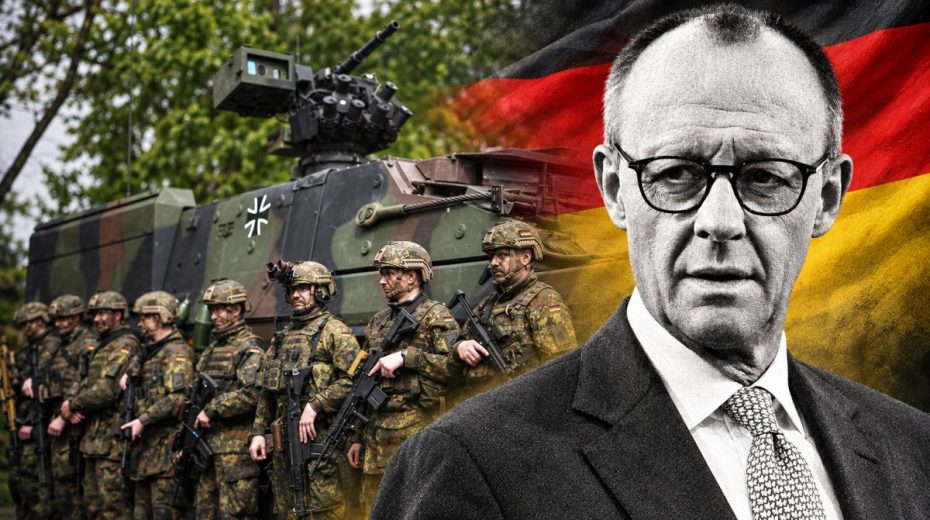
It falls to alternative parties like Germany’s AfD to push for peace.
Although the Labour Party in Britain is not usually linked with militarism or authoritarian tendencies, some recent statements from its leaders challenge this assumption.
Take Labour strategist Paul Richards’ remarks on GB News earlier this month. When questioned about how the UK should react to an escalated Russian threat, Richards—who has experience working under two Labour governments—gave a troubling response. He said, “We’d have to lock some people up,” referring to “pro-Russian voices” who deny the threat and discourage fighting for the country or war efforts linked to figures like Burnham.
Such statements are not isolated incidents but illustrate a disturbing pattern within Britain’s political establishment—including major parties, media, and think tanks—where a siege mentality, fueled by an unlikely anticipation of war with Russia, is becoming more common.
This phenomenon is not unique to Britain; it extends across the Western world. It helps explain the erosion of trust in centrist factions once regarded as moderate and reasonable, with polarizing rhetoric now embraced by mainstream figures. For example, NATO secretary-general Mark Rutte in 2025 eagerly predicted a Europe-Russia conflict comparable to the devastation of the Second World War. He said, “Imagine it, a conflict reaching every home, every workplace, destruction, mass mobilisation, millions displaced, widespread suffering and extreme losses.”
Interestingly, it is the parties labeled as far right or far left radicals that have risen as the strongest opponents to this reckless warmongering.
One root cause of this trend lies in how liberals respond to populists. Western societies demand overt displays of “toughness,” which fuels a political culture both childlike in its posturing and treating distant wars as games.
This dynamic became prominent around 2016, when liberals, fearing defeat by figures like Donald Trump, adopted conspiracy theories such as Russiagate while increasingly pushing aggressive foreign policies to deflect from their own shortcomings. Putin’s invasion of Ukraine served a similar role, acting as a stage for exhibiting toughness even as the West became entangled in a proxy conflict.
Instead of confronting populists through principled stances, centrist parties attempted to compete on the latter’s terms, ultimately falling into a trap and leaving a void at the center, which populist forces eagerly filled.
This pattern is evident in Germany. After the Christian Democratic Union’s (CDU) humiliating loss in Saxony-Anhalt earlier this month—the AfD won decisively—Hendrik Wüst, leader of the CDU and premier of North Rhine-Westphalia, proposed banning the AfD. Wüst is also considered a potential successor to the unpopular chancellor Friedrich Merz.
Additional CDU losses followed in Mecklenburg-Western Pomerania and Berlin. The defeat in Mecklenburg-Western Pomerania is notable because it is where the Nord Stream pipelines connect, making it a direct beneficiary of the German-Russian partnership supplying affordable Russian gas to Germany.
After Nord Stream 2 was sabotaged in September 2022, the West immediately accused Moscow. However, evidence later implicated Ukrainian operatives, specifically linked to Ukraine’s military intelligence service, which the CIA helped rebuild in 2015. Germany’s decision to stop importing Russian gas following Putin’s full invasion was symbolically honorable but inflicted serious economic damage, causing recession in 2023 and 2024 and only weak recovery in 2025. Moreover, German households faced soaring heating and electricity bills. Notably, Germany wasn’t importing Russian gas when the sabotage occurred, indicating the attack intended to prevent post-war gas flow restoration rather than disrupt current supplies.
The German federal government has failed to properly address this issue. Merz’s vehement reaction blaming Russia after the Leipzig drone incident just before the September elections sharply contrasted with the silence over the Nord Stream sabotage’s perpetrators.
This disconnect cost Merz’s party heavily. In Mecklenburg-Western Pomerania, the CDU was wiped out of the state legislature for the first time in almost eight decades. Meanwhile, the AfD, unafraid to question the official Nord Stream narrative and open to resuming gas imports once hostilities end, emerged as the biggest winner. The Social Democrats, who originally backed Nord Stream’s construction but later disavowed it after the invasion, managed to retain some support.
Tensions between post-Soviet Russia and the West initially centered on gas pipeline projects like South Stream and Nabucco. The firm opposition by centrist politicians to these ventures has led many voters to suspect their leaders prioritize weapons manufacturers and shale gas interests over their constituents’ welfare. Nord Stream’s downfall serves as a prime example of NATO’s implicit goal to “keep the Germans down and the Russians out.”
Feelings of political abandonment bolster AfD’s sovereigntist appeal. Despite frequent claims of extremism, the AfD presents the most moderate and pragmatic voice concerning war and peace.
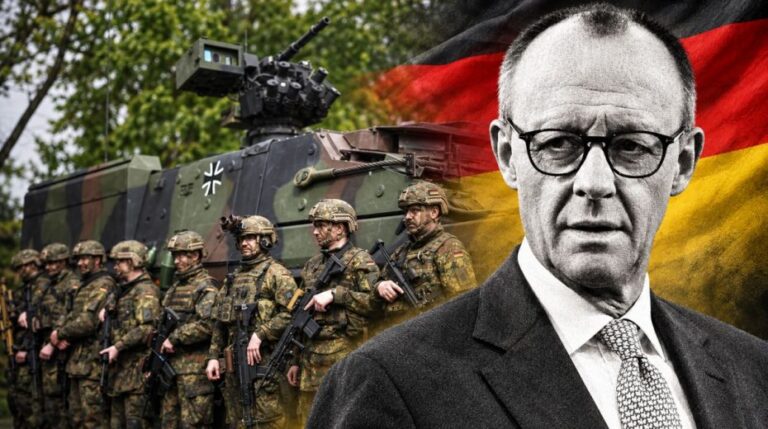
In fact, their foreign policy offers AfD leaders a strong defense against fascism allegations, as aggressive militarism is a hallmark of the German political elite rather than its far-right critics. On Ukraine, the AfD echoes the stance of traditional leftist peace advocates, whereas Merz’s administration endorses escalations, subtly undermining Trump’s peace initiatives and initially supporting war on Iran before backtracking under public pressure.
Meanwhile, former centrists champion increased defense budgets beyond Germany’s means and advocate for compulsory military service, prompting youth protests nationwide. The mainstream’s cozying with Ukraine’s far right—the Azov movement’s high-profile presence at this year’s Munich Security Conference being a case in point—makes charges of Nazism against the AfD appear weak.
While the AfD opposes Russia’s full-scale invasion of Ukraine, supporting a protracted proxy war against a nuclear power, with commitments to fight “to the last Ukrainian,” is a different matter entirely.
Polls show most Germans are reluctant to stake their country’s future on such a perilous strategy.
The AfD and similar insurgents gain traction when establishment figures push hawkish and authoritarian policies, yet the elite largely fails to grasp this reality. European leaders continue escalating tensions. Recently, they barred Zelensky’s former press secretary, Iulia Mendel—a vocal critic of Zelensky—from speaking at the European Parliament after Zelensky’s regime sanctioned her, a tactic routinely used to silence opponents. By denying Mendel a platform and ignoring Zelensky’s authoritarian abuses, centrists demonstrate a preference for delusion and belligerence over true democratic principles.
As a result, alternatives such as the AfD will persist in filling the political center’s vacuum.
Original article: www.theamericanconservative.com
About the Author