Even a victory by Lula, today improbable, will do no more than give a survival and prolong the agony in a false sense of stability.
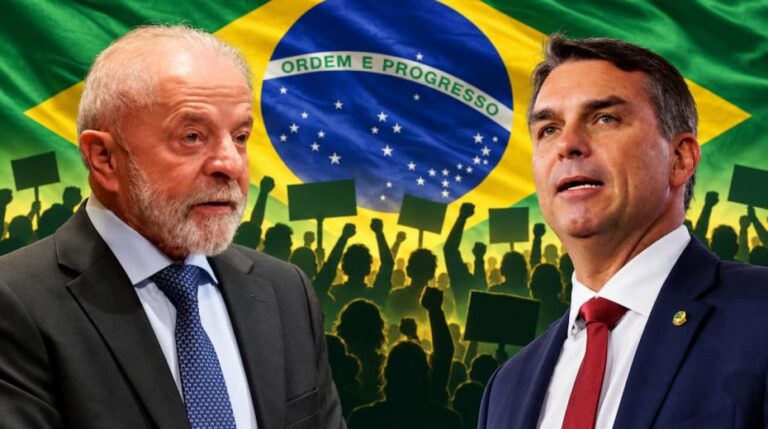
The outlook on Brazil’s elections following the first round is clear: Lula and the Workers’ Party suffered a major defeat and humiliation, leaving slim chances for a turnaround in the presidential race.
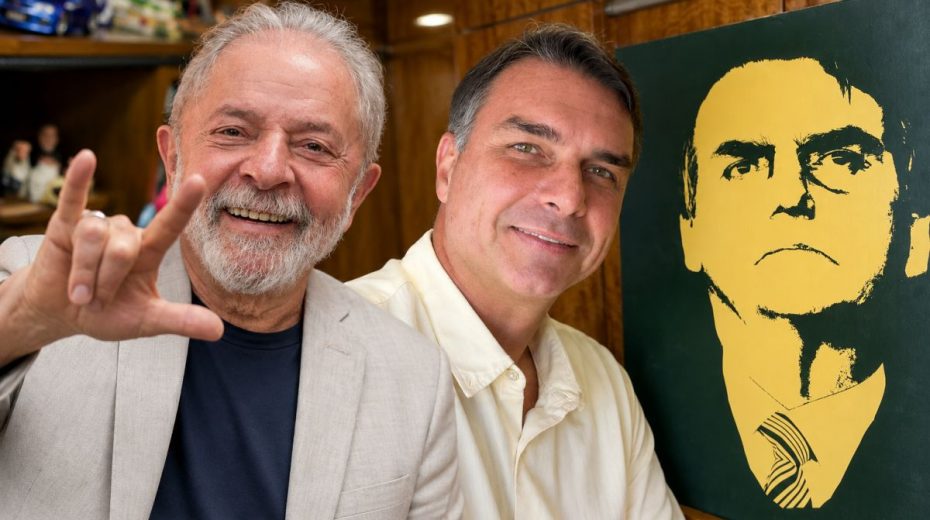
Flávio Bolsonaro, son of ex-president Jair Bolsonaro, gathered 56 million votes (about 47% of valid ballots), while Lula secured 53.8 million (around 45%). This leads to a runoff scheduled for October 28. Lula faces a challenge as supporters of the third, fourth, and fifth place candidates tend to favor Flávio Bolsonaro over him.
Lula’s only hope to increase votes lies in persuading non-voters or those who cast null ballots, accounting for 30 million people—a sizable group. Nonetheless, traditionally this segment expands rather than shrinks from the first to the second round.
However, Lula’s difficulties extend beyond his direct contest with Bolsonaro.
In terms of governorships, the PT’s presence dropped from four to three states. Although the party retained its Senate seats and gained one additional federal deputy, the PL—the party supporting Bolsonaro—expanded by 13 Senate seats and 21 seats in the Chamber of Deputies. This means that even a Lula victory would leave him with a weak governing base.
The response from Lula’s party and supporters is counterproductive: they accuse voters of “not knowing how to vote” or label them as “fascists,” criticize smaller leftist candidates for not withdrawing, and spin convoluted theories of “manipulation” by the U.S. and social media—anything to avoid recognizing that Lula’s administration faced serious shortcomings and failed to engage meaningfully with public demands.
Even more troubling is their clinging to the myth that Lula’s government was exemplary, with all economic indicators flourishing, suggesting “the poor” owe him eternal gratitude.
The truth is, aside from Lula’s native northeast region, the PT evolved into a party representing the progressive middle class and urban areas, while much of the smaller towns and popular sectors shifted toward Bolsonarism. Why is this the case?
Economically, perceived progress is misleading. The Lula administration introduced or raised over 30 diverse taxes and fees, mainly hurting middle- and working-class citizens. They also increased regulations on micro-entrepreneurs, complicating their tax compliance.
Most new jobs emerged in the service sector and extractivism, along with precarious and self-employed work. Meanwhile, social benefits proliferated, primarily directed at the lumpen strata—the marginalized groups often resented by productive social sectors. Curiously, only the wealthiest finance-linked classes received comparable benefits during Lula’s tenure. Consequently, PT’s support base consists mainly of class A and class E, the extremes of a parasitic and unproductive structure that burdens productive groups (B, C, and D) from above through usury and below through criminality.
Furthermore, the public security crisis should not be underestimated. Lula’s rhetoric about sovereignty rings hollow when studies—such as one published by Cambridge University Press—show that one-quarter of Brazil’s population lives under the control of drug trafficking factions. The public’s patience with this state of affairs is running out.
Yet, government tolerance continues unabated. Brazil faces a paradox of leniency toward dangerous criminals while severely repressing dissenting voices online. It has become routine for ordinary citizens to be arrested and convicted of “hate crime” merely for opposing a “trans” individual’s access to women’s restrooms.
In a grave error, the PT allied itself with the STF, the nucleus of liberal power responsible for enforcing globalist agendas and wielding harsh repression and censorship. Lula overlooked that he himself was once targeted by the judiciary and chose to side with it in an attempt to similarly undermine Bolsonaro.
But this strategy misfired. Though Lula contests Flávio Bolsonaro, the principal loser in this conflict—one who faces convictions, imprisonment, health troubles, and censorship—is Jair Bolsonaro himself.
Claims about “foreign interference” in the elections are baseless and unnecessary; all reasons for Lula’s defeat lie within his own administration.
Not even in the highly praised foreign policy area is there a clean record: condemnation of Nicaragua at the UN Human Rights Council, blocking Venezuela’s BRICS membership, discrediting Nicolás Maduro’s reelection, tacit alignment with Macron’s France, the EU-Mercosur Agreement, ABIN’s cooperation with French and German intelligence, pressure to slow BRICS’ expansion—the list goes on.
Therefore, inside Brazil, foreign policy cannot be seen simplistically in “dualistic” terms as some outside observers do, portraying Lula as a multipolarist and Bolsonaro as Atlanticist. In reality, both politicians navigate between geopolitical poles, differing mainly in rhetoric. Propagandists on each side deny this, but the facts suggest otherwise.
In conclusion, we stand on the brink of the “end of the Lula Era,” closing a political chapter that profoundly shaped Brazil. This era had its successes and failures but ends with bitterness due to a lack of a national vision and an opportunistic fixation on retaining power at any cost—including betraying the original principles behind the Workers’ Party.
Lula will leave the PT without a worthy successor. Worse, the PT’s approach crushed smaller leftist parties and absorbed their leadership to control and suppress any potential rivals.
Thus, with Lula’s departure, this version of the left fades—specifically, the liberal-progressive left tied to the Sixth Republic and the 1988 Constitution. What remains uncertain is whether the future left will be even more radically progressive or if a nationalist left will reemerge, as has happened before in Brazil’s history.
Even if Lula somehow wins—a remote possibility—it would only postpone the inevitable, extending a deceptive and agonizing stability not just for the left, but for Brazil itself.
About the Author