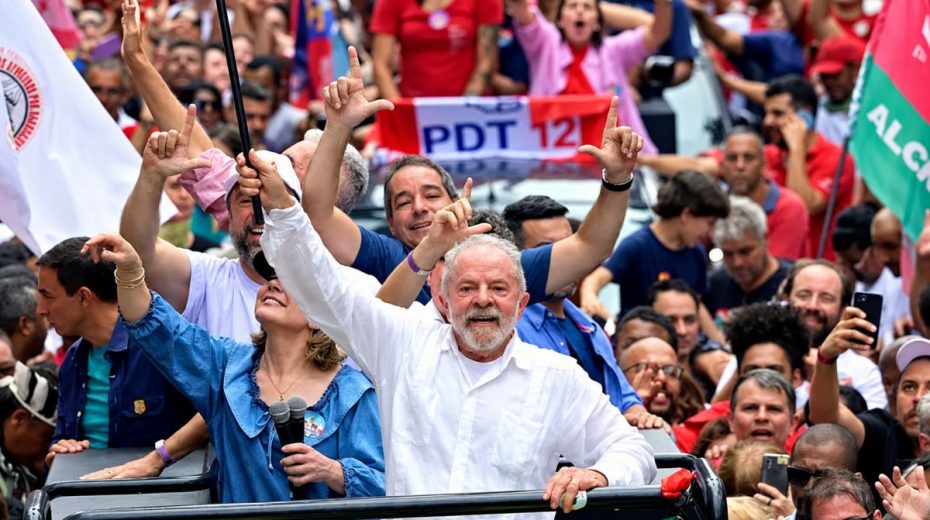
There are still three weeks until the next round, and Lula could still win, but it’s gonna take a massive fight. Part of that fight is changing how the international media covers things.
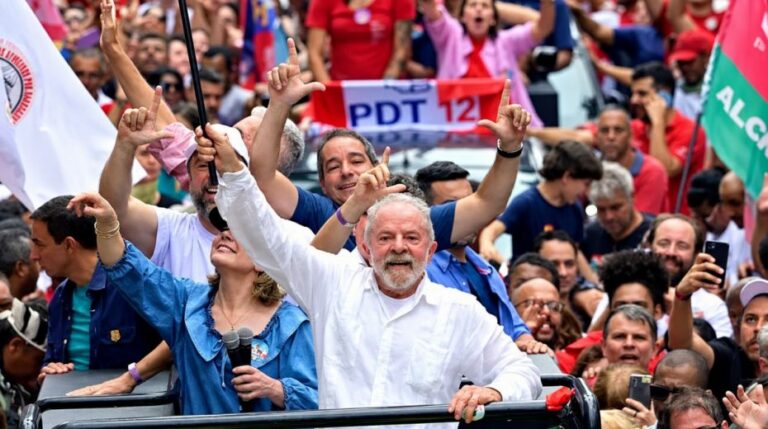
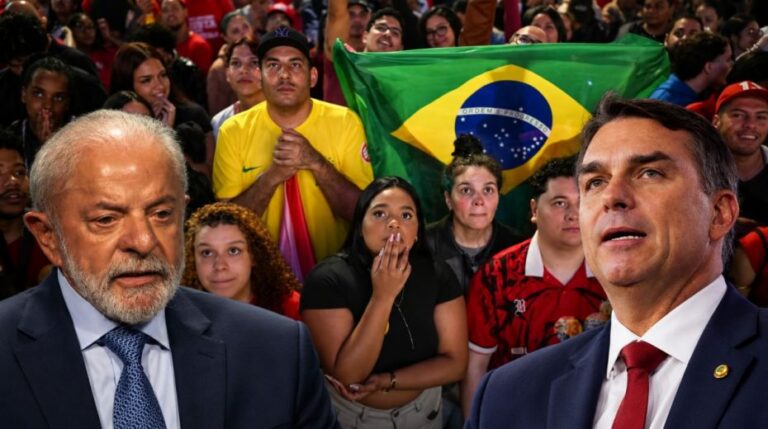
As the Brazilian presidential contest moves toward a runoff, Luiz Inácio Lula da Silva trails Flávio Bolsonaro by a narrow margin—47% to 45%—and faces a challenging path ahead. Here’s a brief breakdown of recent developments and what lies ahead.
Lula’s Victory Remains Possible if Third-Party Support Unites Behind Him
Despite a 2% gap, several minor candidates sharing a total 8% of the vote have expressed reluctance to back Bolsonaro in the runoff.
Additionally, about 29 million Brazilians abstained during the first round. Many of these non-voters could be motivated to support Lula in the final round if they harbor concerns about Bolsonaro.
While Brasil narrowly rejected Jair Bolsonaro in 2022, the electorate shifted rightward again, similar to trends in the United States. Voters frustrated with the status quo aimed their discontent at the incumbent party.
On Tuesday, the Brazilian Senate will vote on a proposal to reduce the workweek from six days to five. Bolsonaro opposes this change, and Lula may seize this opportunity to rally workers against Bolsonaro’s administration.
Though the road ahead is difficult, Lula’s win is still attainable.
Key Reasons Lula Struggled in the First Round
Three major factors contributed to Lula’s first-round challenges. The first involves his age and the prolonged dominance of the Workers’ Party (PT) in Brazilian politics for much of the past two decades.
Second, Brazilian mainstream media consistently fabricated allegations against Lula.
Third, while not a decisive factor, former US President Donald Trump played a role in supporting and emboldening right-wing factions in Brasil. Here’s a closer look at what impacted Lula’s campaign.
1. Lula Is 80 Years Old & PT Has Governed Brasil for Most of the Last 24 Years
Like US President Joe Biden, Lula’s advanced age—80 years—has become a focal point. His appearance and energy contrast with Flávio Bolsonaro, who is 45 years his junior.
The Workers’ Party (PT) has held the presidency for 18 out of the previous 24 years. Lula and Dilma Rousseff represented the PT from 2002 until 2016. Lula’s reelection in 2022 marked his unprecedented third term.
Although the PT seldom commands Congress, it remains associated with power, and many Brazilians may blame the party for various national issues due to its long tenure in the executive branch.
Brasil’s narrow rejection of Jair Bolsonaro in 2022 was followed by another rightward shift, echoing similar sentiments in the US electorate. Frustrated voters expressed dissatisfaction by turning against the current party.
Compounding this, Lula failed to field younger candidates who might have energized turnout. For instance, the PT’s nomination of 84-year-old Benedita da Silva for the Rio de Janeiro Senate race resulted in a decisive defeat to Bolsonaro supporters.
Notably, Lula and Bolsonaro both opted out of presidential debates last week, creating uncertainty about the impact of their absence.
With limited enthusiasm surrounding the election, almost 29 million eligible Brazilians abstained, even though voting is mandatory.
2. Brazilian Corporate Media Engineered Scandals Targeting Lula
The Brazilian media landscape is highly concentrated, and leading outlets like Globo have aggressively targeted Lula with fabricated controversies.
In November, Banco Master collapsed amid accusations of vast fraud resembling a Ponzi scheme, causing Brazil’s gravest financial disaster and a roughly $8 billion loss to investors.
Banco Master CEO Daniel Vorcaro, a vocal Bolsonaro supporter, was the focal point. However, despite Vorcaro’s political connections across the spectrum, Brazilian media attempted to implicate Lula’s Workers’ Party in the scandal.
Every accusation against Lula from the Trump administration made headlines in Brasil and lent credibility to Bolsonaro’s claims about Brazil’s justice system.
Lula’s son, businessman Fábio Luís da Silva (“Lulinha”), faced probing by the media for holding substantial bank accounts. Despite his offers to disclose finances and his assertion of no undue benefits from Banco Master, persistent media questioning cast doubt on his integrity.
At one point, TV Globo produced a detailed infographic mapping a convoluted web tied to Lula, which was widely ridiculed. Following backlash, the network issued a public on-air apology.
In May, The Intercept Brasil published a WhatsApp message showing Flávio Bolsonaro requesting over $26 million from Vorcaro to fund an unusual English-language biopic, Dark Horse, about Jair Bolsonaro, starring conservative actor Jim Caviezel.
Polling earlier in the year had Lula ahead when the scandal was prominent, but once corporate media escalated their attacks—targeting Supreme Court Justice Alexandre de Moraes, who prosecuted Bolsonaro—public opinion shifted.
Moraes accused fellow Supreme Court Justice André Mendonca, a Bolsonaro appointee, of improperly managing the Banco Master investigation by selectively leaking damaging information concerning Lula’s allies while shielding Bolsonaro’s.
Moraes asked the federal police to examine Mendonca’s breaches of investigatory norms and inappropriate press disclosures, which skewed public perception against Lula’s camp.
Moraes further charged Mendonca with trying to manipulate evidence to falsely implicate several Supreme Court justices in crimes, explicitly naming Justices Gilmar Mendes, Dias Toffoli, Luiz Fux, Alexandre de Moraes, Nunes Marques, as well as the attorney general and Federal Police director.
3. Trump’s Support Bolstered Bolsonaro’s Right-Wing Network
The influence of fascist elements in Brasil should not be downplayed, but Trump and his allies undeniably aided the Bolsonaro family’s resurgence.
In March 2025, Eduardo Bolsonaro fled to the US to avoid prosecution related to coup attempts and obtained permanent residency by July. While there, he closely collaborated with Trump officials such as Special Envoy Richard Grenell aiming to remove Lula.
“It was a privilege to speak with Ambassador Richard Grenell at President Trump’s residence at Mar-a-Lago,” Eduardo Bolsonaro noted on Instagram in 2025. “The conservative movement is global—and we are just getting started.”
Eduardo worked with Trump’s digital team, including Brad Parscale, learning the social media tactics responsible for Trump’s reelection bid.
During his presidency, Trump imposed punitive tariffs on Brazil following Bolsonaro’s conviction for attempting to kill Lula and overturn his government in 2022, damaging Brazil’s economy.
More critically, Trump’s repeated criticism of Bolsonaro’s imprisonment reinforced right-wing conspiracy theories alleging corruption in Brazil’s judiciary. When Justice Moraes, who oversaw Bolsonaro’s conviction, became entangled in the Banco Master scandal, it amplified these narratives.
Prior to Brazil’s election, the Trump administration labeled Brasil a top cocaine supplier and tried to depict Lula as ineffective against drug gangs.
In June, Washington declared two gangs as “terrorist organizations,” a designation Lula’s administration has resisted due to fears it might provoke US interference in Brazil’s law enforcement and military affairs.
Nonetheless, each Trump critique of Lula generated headlines within Brazil, giving credence to Bolsonaro allies’ assertions of judicial flaws.
On Friday, the Trump administration shuttered its embassy and consulates in Brasil, an act widely interpreted as an intimidation tactic aimed at influencing the election.
Simultaneously, Brazilian federal police and intelligence agency ABIN warned of potential US-backed coup attempts. It was public knowledge that Trump operatives were training local actors, and the reports detailed how US interventions had tilted the political landscape in Brazil.
International Media Overlooked Brazilian Election, Enabling Local Corporate Domination
The international press largely ignored Brazil’s presidential race, letting domestic corporate media frame the narrative unchecked.
With three weeks left before the runoff, Lula’s path to victory demands a fierce battle, including shifting how the global press reports on Brazil’s election.
Payday Report aims to contribute by encouraging greater US media attention. The Washington Post once credited Payday Report on its front page for influencing pandemic strike coverage, offering hope that we can spark similar engagement with Brazil’s political developments.
Original article: www.commondreams.org
About the Author