The right-populist leader deserves scrutiny but offers clarity on Russia–Ukraine and Iran.
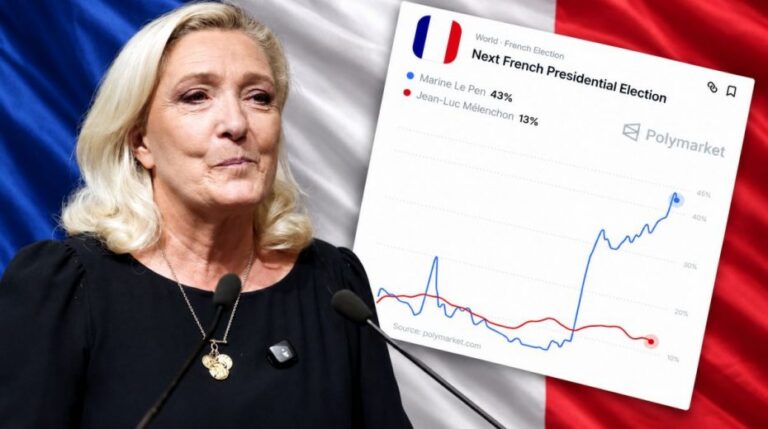
Marine Le Pen, the leading candidate in France’s 2027 presidential election from the right-wing National Rally, has outlined foreign policy positions that many American advocates of realism and restraint might support, regardless of their views on her broader platform.
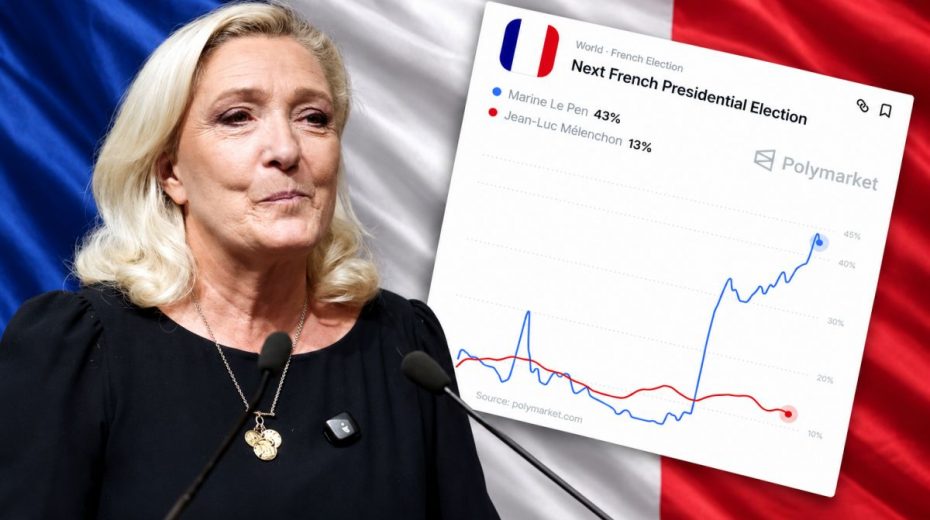
Although the National Rally has been effectively sidelined and prevented from gaining power in past years, it would be unwise to assume the French political elite can stop Le Pen’s rise—her ideas could feasibly become official policy. Recent polling indicates her advantage is growing: According to Toluna-Harris Interactive, she would win a runoff with 57 percent of the vote against centrist and former prime minister Édouard Philippe, and an overwhelming 69 percent against far-left candidate Jean-Luc Mélenchon.
The spring 2027 election remains far off, and political dynamics may shift—as shown by the recent exposé from the leftist outlet Mediapart about National Rally leader Jordan Bardella’s controversial teenage posts—though her followers regard such revelations as part of the establishment’s failed attempt to undermine Le Pen.
Regardless of personal opinions, Le Pen’s foreign policy is notably consistent. On Iran, she—once branded a “Trump ally”—presented a much clearer stance than Macron, whose position remains ambiguous. She stated, “We would still need to know what Trump wanted to do there,” Le Pen explained. “Because for now, we still do not know what he wanted to do. He clearly has not achieved his war aims and he is setting the whole planet on fire.” Unlike Macron, who qualifies his criticism of Trump’s war with accusations of Iranian disruption in the Middle East, Le Pen straightforwardly denounces the conflict as harmful to French citizens.
She has also cautioned about global inflation “that will have consequences for all peoples” and argued it is preferable to persuade the U.S. against engaging in war with a complex and historically rich country far mightier than Trump anticipated.
Recent developments have validated Le Pen’s views. A civilization of 90 million cannot be defeated by bombing alone, a lesson Trump and Republicans are painfully learning as they approach tough midterm elections. Le Pen recognizes that the French, like many others, bear the brunt of this costly conflict.
Regarding Ukraine, Le Pen’s approach is equally frank and diverges sharply from Macron’s. She warned that the crisis could either escalate into a Third World War if NATO intervenes or devolve into a century-long conflict. She has called for a significant peace summit, expressing a willingness to engage directly with both Russian President Vladimir Putin and Ukrainian President Volodymyr Zelensky, and urges the inclusion of Germany, Poland, and Turkey in peace talks, as she has emphasized.
Le Pen has even pledged to cease French military support to Ukraine, citing France’s limited ability to sustain the expenditure authorized by Macron. She will need to clarify this stance, as a total cutoff lacks seriousness if the objective is to bring the war to a swift conclusion—a resolution requires approval from both Kyiv and Moscow.
Conversely, indefinite backing of Ukraine without a clear strategy is equally untenable, especially given France’s financial constraints. Engaging all parties, including Russia, in talks should not be viewed as appeasement or betrayal. Any meaningful peace agreement demands difficult concessions from Ukraine regarding NATO ambitions and territorial claims, and reciprocal compromises from Russia on security matters or permitting Kyiv to rebuild a credible conventional defense. Le Pen has recognized these challenges and expressed openness to necessary compromises, though detailed strategy remains to be articulated.
By contrast, mainstream figures take a different approach. Macron emphasizes the “Russian threat” and alleged hybrid aggressions from Moscow towards Europe. Yet, according to the reputable Le Figaro journalist Georges Malbrunot, French intelligence acknowledges the threat but views Macron’s rhetoric as exaggerated. Malbrunot claims Macron aims to influence public opinion against Le Pen and Mélenchon—who have more lenient attitudes toward Russia—ahead of elections.
Similarly, Le Pen’s center-right challenger Edouard Philippe has criticized her, asserting that “weakening Ukraine, as Marine Le Pen wishes, is threatening the security of Europe and France. I will do everything to prevent it.”
Meanwhile, Macron’s protege Gabriel Attal, a potential successor, delivered a grand address in Reims calling for a “United States of Europe.” He claims Europe faces attacks on its security from Russia, its economy from China, and its values from the United States, proposing a federalist vision to address these challenges “within years.”
Although deeper economic and technological cooperation among EU countries might be justified, the lofty federalism rhetoric misses the mark when French voters prioritize concerns like purchasing power, immigration, and national security.
This encapsulates the current foreign policy debate in France. Mainstream candidates rely on fearmongering, promising unrealizable federal dreams, and vacillate regarding the U.S. conflict with Iran. In contrast, the sole notable figure addressing paths to end wars instead of extending them, and seeking engagement with non-Western powers rather than choosing “good” versus “evil,” is branded by the establishment as extremist, as described.
This doesn’t imply Le Pen merits unreserved endorsement. Her past connections with Russia merit close examination, and her pledge to halt Ukrainian aid requires a comprehensive plan and a wider peace strategy to be credible.
She is correct on Iran, yet her party has also built strong ties with Israel, apparently united by shared opposition to Islamism and to counter antisemitism allegations. When it comes to the Middle East, it remains uncertain whether her policies, if elected, would be driven mainly by national interest or ideological anti-Islamism. Furthermore, given the lingering stigma of her party among French elites, it is uncertain whether President Le Pen could rally enough diplomatic expertise from the center-right to turn her instincts into workable strategies.
Nonetheless, these conversations are necessary. Dismissing Le Pen outright while resorting to scare tactics and unrealistic promises is no longer tenable. Perhaps the French establishment should confront an uncomfortable truth: why do calls for diplomacy and reason emanate from groups they label “extreme” on both ends of the spectrum? Instead, mainstream politics ought to reclaim the discourse on diplomacy and peace. Failure to do so will naturally push voters toward those who champion these values.
Original article: www.theamericanconservative.com
About the Author