Pam’s $2,300 Middle Finger
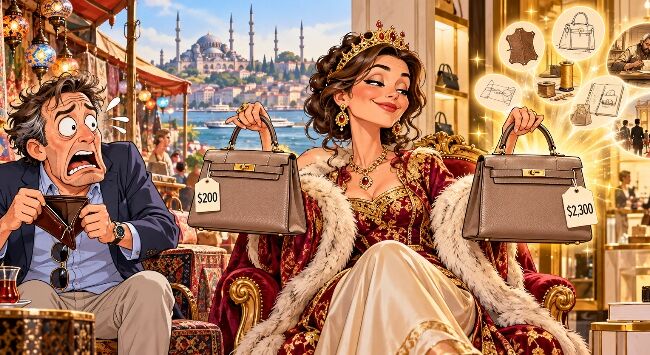
My beloved wife Pam has two Yves Saint Laurent bags (plus a Gucci bag, but that’s a tale for another time). One YSL bag cost $200, while the other set us back around $2,300.
The inexpensive one was purchased at the Spice Market in Istanbul. It was an obvious counterfeit, yet Pam adored it instantly. I thought it was a foolish buy. Still, since it was only $200, I figured it was a small price to pay for peace of mind.
She still carries that bag, and to my amazement, it looks just as pristine as the day she got it.
Years later, while in Copenhagen, my Long-Haired General was upset with me—though I can’t recall why or even understand now. While I was nursing a beer at a nearby bar, she stormed into the YSL store and spent $2,300 on the genuine article, much to my astonishment.
I was furious, not just because she was making a statement, but because I truly believe those bags don’t justify that kind of price tag.
Which one is superior? I examined both closely and honestly can’t discern a difference. That’s my frustration: if the $200 bag looks just as good as the $2,300 one, what exactly did that extra money buy?
Four Things, One Number
Here’s something Mrs. Ring might want to hear: Louis Vuitton’s iconic Neverfull MM is priced at $2,290, yet it doesn’t have a leather body. According to the brand’s website, it uses coated canvas with leather accents and a striped fabric interior. But it’s Damier Azur canvas, daaaahhhhling!
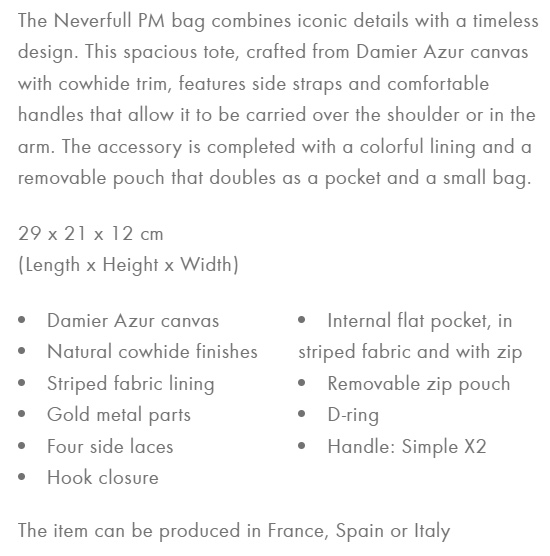
Credit: Louis Vuitton
Louis Vuitton is transparent about that. So the buyer must be paying for more than just the material.
Well, What Then?
Luxury prices bundle together four distinct elements.
First, the raw materials: canvas, leather, stitching, brass hardware.
Second, the design: its aesthetics, functionality, and how it wears over time.
Third, the brand’s assurance: the promise that skilled artisans crafted this item in a traditional European workshop.
And lastly, the name—the recognizable badge that signals status from across a crowded parking lot.
This is the Bundle Trick. One hefty price tag covers them all, so buyers trust the cost vouches for quality craftsmanship and authenticity. If it sells for that much, the workmanship must be genuine and the atelier reputable. Right?
In Abu Dhabi, a woman in one of my classes once told me Westerners are naïve. “We pay way too much for the name on jewelry,” she said. “Where I come from, people pay for the stones. They argue over cut and clarity, not the label.”
That perfectly describes the Bundle Trick. Maybe in older cultures, people aren’t so easily fooled.
The Workshop Behind the Promise
The bundle’s third component—the promise—is the trickiest to verify, which makes scrutiny essential.
In June 2024, a Milan court imposed administration on Dior’s Italian manufacturing arm. I live just ninety minutes from those factories. Here, “Made in Italy” still carries weight, much like “Made in the USA” does in America.
Authorities investigated four small Chinese-owned suppliers near Milan. They discovered workers sleeping onsite so machines could operate nonstop. Safety guards were removed from machinery to speed up output. Court papers revealed that one supplier billed Dior approximately €53 for a handbag retailing at €2,600.
Dior insisted those suppliers only assembled parts of the bag, so the €53 was just a fraction of the total cost. That might be true, but the issue remains: Dior promotes an image of masterful artisans working in tranquil workshops, yet some bags passed through places where workers literally slept beside their machines.
Prosecutors targeted the suppliers’ owners, not Dior itself. In February 2025, the administration ended after Dior enhanced its supply chain oversight. Dior also agreed to pay €2 million over five years to support victims of labor abuses in a settlement with Italy’s competition authority.
The handbag’s price told buyers nothing about where or how it was made. Someone had to dig deeper.
The Swoosh on the Balance Sheet
The Bundle Trick influences shareholders as well.
Nike investors have bought into a package deal: the iconic swoosh, consistent growth, and high profit margins. For years, the logo alone stood in for all three.
On June 28, 2024, Nike shares plunged 20%. Emerging brands like Hoka were poaching many disgruntled NKE customers. By 2025, Nike’s revenue dropped 10%, while net income fell 44%.
Last week, the stock sank again after a weak quarterly report failed to impress the market.
The swoosh remains the most recognizable symbol in sports. But customers and investors value different things. Customers buy the meaning behind the logo today, while investors focus on the future cash flows the company should generate.
Wall Street once regarded the logo as a moat protecting Nike’s business. Instead, it proved to be a reputation—and reputations need constant vigilance.
Nike has a recovery strategy called Pace, promising $2.5 billion in savings. The headline-worthy figure shows how significant the turnaround must be. When those savings materialize will reveal just how deep the damage is. (If you haven’t already, read more about Nike’s woes in this morning’s Rude.)
“Shanghai, $200”
On a different occasion in Abu Dhabi, a friend showed me his Rolex Batman watch—the one with the blue and black bezel. I admired it and told him I desperately wanted one.
He met my gaze and said, “Shanghai, $200.”
I nearly fell over. I’m no watch expert, but to my eyes, it looked flawless.
That’s where a rumor you might have heard originated. Some claim that many Rolex watches secretly come from China. No proof supports this, though. Rolex maintains that its watches are made, assembled, and tested in Switzerland. What factories in Shanghai produce are copies—but exceptionally good ones.
(Interestingly, a banker friend once said Chinese knock-off Panerais surpass the originals, but I have no evidence to back that up. Still, the fact that many believe it must worry Western CEOs.)
Feel free to critique the brands, but challenge the skeptics too. A counterfeit convincing your eye doesn’t mean the original is fake.
The Case for Prestige
Now, let me defend Pam’s position, which is reasonable.
Raw materials alone don’t equal the product’s worth. A Steinway piano isn’t priced only for its wood and strings. Buyers can appreciate beauty or heritage purely for what they represent. No one chooses a Ferrari because of its fuel efficiency.
Value resides in the buyer’s perception. The foundational lesson from the Austrian School is that all value is subjective. That holds true, even if it seems absurd to some.
However, preference and factual promise differ. Saying “I love how this looks” can’t be disputed. But the claim “Craftsmen in Italy made this under fair conditions” can be verified—and may be true or false. One is about taste; the other is an assertion of fact that you can investigate.
Wrap Up
Before you spend on anything—be it a handbag, a sneaker company’s shares, or a fund managed by a famed professional—separate the price into components. Question the assertions. Would you want it if the label were removed?
My Empress knew exactly what she was doing in Copenhagen. It was a deliberate statement, and she certainly made her point!
Purchase the style. Purchase the craftsmanship. Purchase the status, if that’s your desire.
Just be clear on what you are paying for.
About the Author