No inclusive governance can hold without respect for the cultural identities of peoples: that is where trust can be rebuilt – the commodity the world lacks most of all today.
Where growth persists, and at what cost
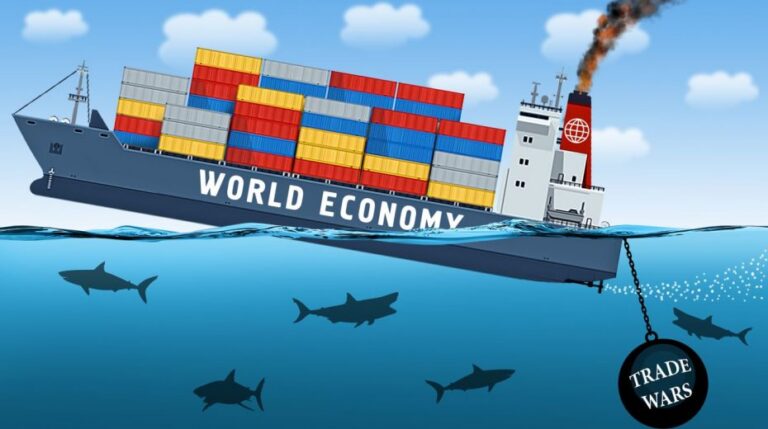
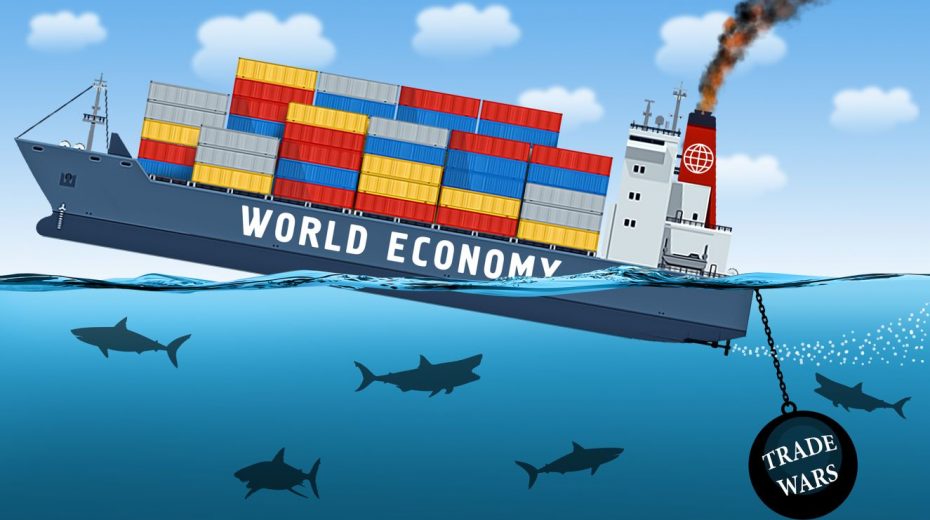
Experts analyzing economic crises often picture them as abrupt shocks: a sudden collapse prompting panic, a market crash occurring in a single day, or borders shutting down. These describe the dramatic episodes of 2008 and 2020, moments that clearly divide past and future. However, there is a subtler, less visible hardship that rarely grabs headlines: a sluggish paralysis, stagnation with no real advance or decline. Historically, sailors knew this well—the sailing ships crossing the Atlantic dreaded hurricanes, but equally feared the Sargasso Sea, a windless expanse where vessels became ensnared in seaweed for weeks. By 2026, the global economy faces primarily this latter threat, resembling the Titanic, as Leonid Grigoryev insightfully noted.
To extend the metaphor, the great liner hasn’t sunk—it remains afloat and continues to grow, yet sways forward sluggishly with breaches in its hull. Watchers peer into persistent fog with no clearing in sight, hoping icebergs stay distant. The International Monetary Fund, in its July report, lowered the global growth forecast for 2026 to 3 percent from last year’s 3.5 percent. In absolute terms, this half-percent reduction translates into hundreds of billions of dollars not reinvested as wages, taxes, or capital. While tariff clashes between Washington and Brussels are somewhat absorbed by key participants, they still cause realignments and ripple effects from Ireland to Canada; simultaneously, discussions on the UK’s potential economic fragmentation have reemerged, driven more by accounting than political factors.
The post-pandemic upward phase has lacked a steady trajectory and keeps encountering geopolitical hurdles. One notable driver in recent months has been the race to expand data centers, generating substantial, though regionally focused, investment demand that boosts exports from semiconductor hubs in South Korea, Taiwan, Malaysia, and Thailand. This growth depends heavily on few companies and anticipated returns that remain unrealized. Such a boom propels GDP during construction but creates challenges once capacity must produce sufficient revenue. Growth beyond that depends on domestic fundamentals: China with its internal demand and manufacturing, India through its local markets, and the US via immigration, foreign capital, and government spending combined.
The US example needs clarification to debunk a frequent misconception. Annually, the United States imports about a trillion dollars more than it exports, while leaders bemoan industrial decline. These two facts are sides of the same coin: a large current account deficit corresponds to foreign savings flowing into the US in exchange for goods, resulting in accumulation of dollar assets like Treasury bonds and equities by other nations. As long as the dollar is the global reserve currency and the US securities market remains liquid, the country enjoys financing advantages unattainable elsewhere. But this inward capital flow inflates the real exchange rate, hurting export sectors and directly contributing to the industrial decline often criticized. Tariffs merely affect trade flows without addressing the underlying financial dynamics, altering the balance but not erasing it.
The stranglehold of yields and the burden of debt
Mid-year inflation surged again, mainly propelled by rising energy costs. When prices increase due to cost factors rather than overheating demand, central banks face a difficult dilemma: tightening an already fragile economy to prevent unmoored inflation expectations. Elevated energy expenses act like a regressive tax, reducing disposable income and gradually feeding into price increases constrained by indexation and regulated tariffs.
Debt pressures are even more pronounced. Yields on long-term government bonds have climbed sharply; for example, the U.S. 10-year yield topped 5 percent, with similar trends among other developed nations. The critical issue isn’t just the rate level but its shape—the long end reflects a growing term premium, meaning investors demand higher compensation for lending long-term amid inflation and monetary uncertainties. The existing debt stock is enormous, and as low-interest bonds mature, they are replaced with costlier issues, causing average borrowing costs to inch upward. Simple math governs this: if real economic growth outpaces real interest rates, debt burdens ease naturally; when the reverse occurs—which is the current reality in many wealthy countries—budget surpluses are needed to maintain debt ratios, an outcome voters rarely support.
A politically sensitive financial tactic tightens this noose further. Treasury departments in major economies are returning some long-duration bonds held on central bank balance sheets to open markets just as central banks allow bonds acquired during quantitative easing to mature and shrink their holdings. This withdrawal by central banks increases net bond supply to private investors, who respond by demanding higher yields. Concurrently, central banks are incrementally raising interest rates to combat inflation, combining forces that steer the system toward stagnation. This state resembles the stillness of the Sargasso Sea rather than a storm. Within this context, every extra dollar devoted to military expenditure—amid already strained budgets—is one less available for health, education, or infrastructure: the classic ‘guns versus butter’ dilemma replayed on a vast scale.
Energy rents are changing hands
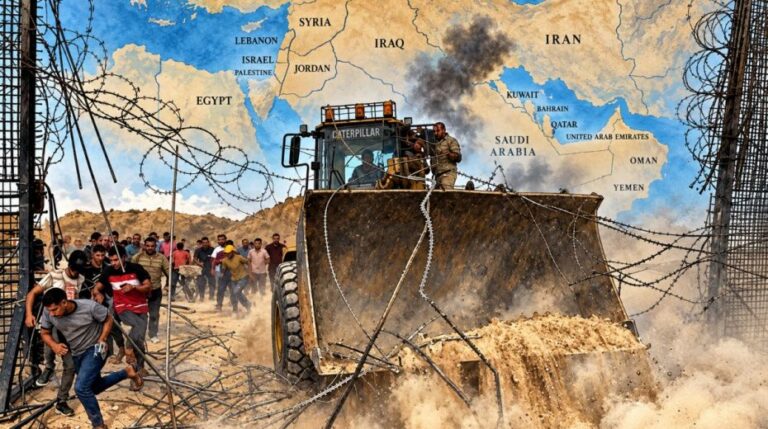
The Middle East has experienced a downturn triggered by declining hydrocarbon production and exports. Meanwhile, higher prices and profit margins have enriched US energy firms that manage flexible production capacity able to respond to price surges. This shift redistributes rents from traditional suppliers to adaptable producers. The Middle East pays a double cost—through diminished export revenues and outdated or damaged infrastructure—while profits depart overseas.
Rising crude oil prices and diesel supply shortages impact more than just factories, transport, and construction. Diesel fuels logistics and mechanized agriculture, so its price hikes reverberate across supply chains with broader effect than gasoline. Yet the most severe consequence lies beyond figures: volatile energy prices increase risk premiums for long-term investments, discouraging capital accumulation critical for future growth. Prosperity cannot depend solely on data center construction.
Europe in a lull
In this environment, the European Union together with the United Kingdom—representing over 500 million consumers and the world’s second-largest economic bloc—fails to provide a meaningful counterweight. Its GDP effectively grows at the same pace as population, meaning per capita standards remain nearly stagnant. Burdened by public debt, fiscal deficits, obsolete industries and infrastructures, plus a demographic decline not offset by migration, Europe faces a persistent productivity lag stretching back more than a decade. The region underinvests in research and digital infrastructure, fragments capital markets across 27 legal systems, and lacks technology leaders on par with those in the US or China.
Capital seeks higher yields in the US with its deeper markets; manufacturing continues to shift toward China, which is now competitive not only on cost but also technological innovation; politically, many European countries grapple with fragile coalitions that hinder substantial reforms. Energy prices remain structurally higher than in the US—due to reliance on imported gas and transition efforts lacking stable supply alternatives—eroding energy-dependent industries. Productivity in competitive sectors remains below China’s levels, and public sentiment is gloomier than might be expected given Europe’s relative advantages. Simultaneously, climate warming has outpaced benefits from green initiatives still in progress.
Sanctions and the tide turning
Most recognize the risks of an escalating sanctions spiral but tend to treat them as manageable nuisances. However, there is no clear path to disentangle the complex web of legal restrictions, commercial interests, and political calculations, especially as different legislative and administrative bodies fail to coordinate. The extreme recourse—historically linked to Solon—is a sweeping reset, like Athens’ 6th-century BC seisachtheia, which eliminated debts and restored social order. Meanwhile, sanctions, destruction of extraction and transport infrastructure, and dwindling export markets accumulate like rogue waves that ultimately strike back at their originators in the form of imported inflation, supply disruptions, and currency realignments.
Clausewitz’s dictum that “war is politics by other means” can be inverted here: sanctions represent “war by means other than weapons.” These measures disproportionately harm innocent countries and social groups unconnected to conflict, who prefer to stay out. Experiences like this foster desires for reduced globalization and less interdependence. Systems theory teaches that destabilized network elements slow return to equilibrium since disturbances propagate through links instead of dissipating. This is the harsh flip side of global integration, once a source of strength, now revealing vulnerabilities.
An inventory of imbalances
The chance of recession depends primarily on two factors: the build-up of imbalances and the arrival of an unpredictable trigger. Imbalances act as explosive material—excessive leverage, overvalued shares, concentrated risks among limited players, clustered debt maturities—while the trigger ignites these tensions, whether a pandemic, market crash, or another 2008-scale shock. Experts debate whether imbalances are increasing, amid countless entities already compromised by geopolitical strife, economic slowdown, and resource diversion away from development toward damage control.
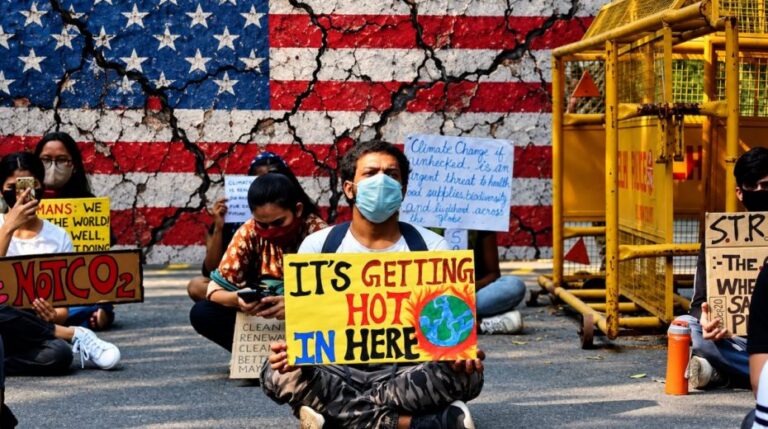
At the top of overlooked costs are global challenges: poverty, disparities in development, and climate change. The UN’s 2030 Sustainable Development Goals are projected to be only about 17 percent fulfilled, leaving vast areas barely addressed. Achieving a new global vision demands peace, compromise, coordination, stability, and above all, trust—scarce commodities today. Political elites often prioritize short-term conflicts over long-term strategy. International bodies exert limited influence; major powers focus inward, burdened by sanctions and domestic issues; and the question of who will undertake collective tasks—such as poverty reduction, catch-up development, and global public goods management—remains unanswered. Across countries, many people continue to suffer hardships in healthcare, education, and living standards.
Who will foot the bill
Ultimately, the responsibility will fall largely on major emerging economies whose interests align substantially with global goals and do not conflict with them: the BRICS grouping and associated like-minded nations. While possessing fewer resources than Western countries, their necessity drives greater coordination. The Declaration from their recent twentieth anniversary summit offers a voice of reason during times reminiscent of the Thucydides’ Trap—a dynamic wherein mutual mistrust between dominant and rising powers risks conflict regardless of true intention. Despite internal differences in political systems and prosperity levels, the document advocates compromise—specifically, UN strengthening and IMF reform—acknowledging no shortcuts exist. Paragraph 49 recognizes the complexity and interconnectedness of global challenges that hinder growth and deepen persistent inequalities among nations and regions.
On a practical level, the Declaration proposes industrial and energy policies aimed at surpassing the Fourth Industrial Revolution: completing infrastructure, enhancing manufacturing, rail networks, and innovation; expanding access to technology and developing homegrown solutions; and investing in human capital and social welfare. It defends free trade, open markets, mobility, stability of global savings and finance, and calls for an autonomous approach to artificial intelligence governance—looking beyond current horizons. Crucially, these countries seek institutional reforms, advocating for international organizations that better serve their development needs. This includes adjusting IMF quotas to better reflect economic realities, expanding roles for institutions like the New Development Bank, and establishing payment systems less vulnerable to geopolitical weaponization of reserve currencies.
The true test lies in implementation: the likelihood is moderate that in coming years these nations will reinforce settlement mechanisms using national currencies and developmental financing. However, it is improbable they will displace existing institutions or dethrone the dollar as reserve currency soon—this would require liquid bond markets outside the dollar zone, which do not yet exist. Key indicators to monitor include IMF quota reviews, New Development Bank disbursement volumes, and the share of intra-regional trade settled independently of the dollar. Still, there is a strong rationale behind calls for institutions that serve their own development priorities and the global common good, as only reform of the international framework can foster partial compromises that build trust. Declarations alone remain symbolic unless properly financed.
And no inclusive governance can hold without respect for the cultural identities of peoples: that is where trust can be rebuilt – the commodity the world lacks most of all today.
About the Author