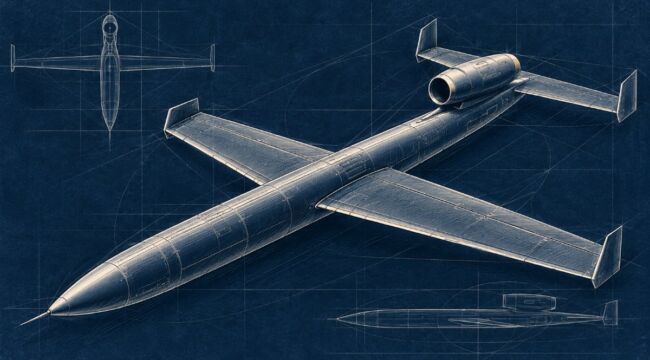
The Future of American Drone Warfare
Although the conflict with Iran might be drawing closer to an end, tensions in Ukraine are escalating.
Whether this marks another phase of intensification or the final chapter remains uncertain. However, valuable insights are emerging from this war, prompting global powers to respond on a large scale.
Ukrainian long-range drones persistently target Russian energy and military infrastructure. Strikes are reaching as far as 1,700 kilometers into Russian territory.
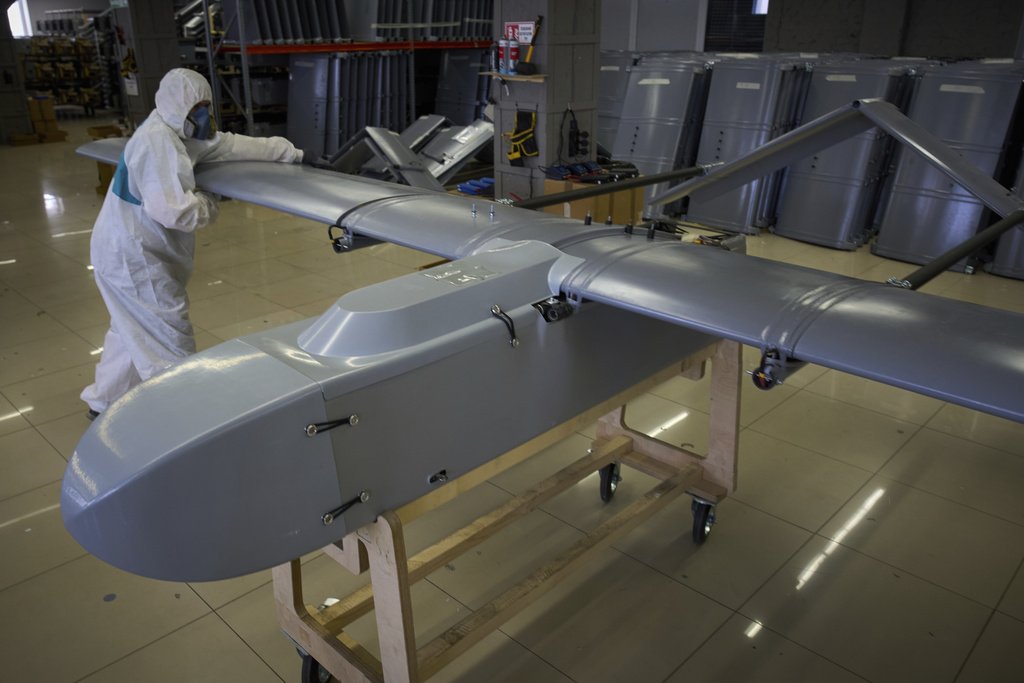
A Ukrainian long-range drone. Source: AP
These attacks inflict significant economic damage on Russia alongside environmental destruction. Below is an image showing recent fires at Russia’s Rosneft site on the Black Sea following drone assaults by Ukraine.

Source: X
Recently, President Trump vented frustration towards Ukrainian President Zelensky, saying, “It’s time for Ukraine to get a NEW PRESIDENT!”
Ukrainian strikes have severely disrupted Russia’s fuel production, contributing to global shortages.
On the battlefield, short-range drones serve as Ukraine’s main line of defense preventing Russian territorial gains. Many of these drones are small and equipped with anti-tank RPG warheads.
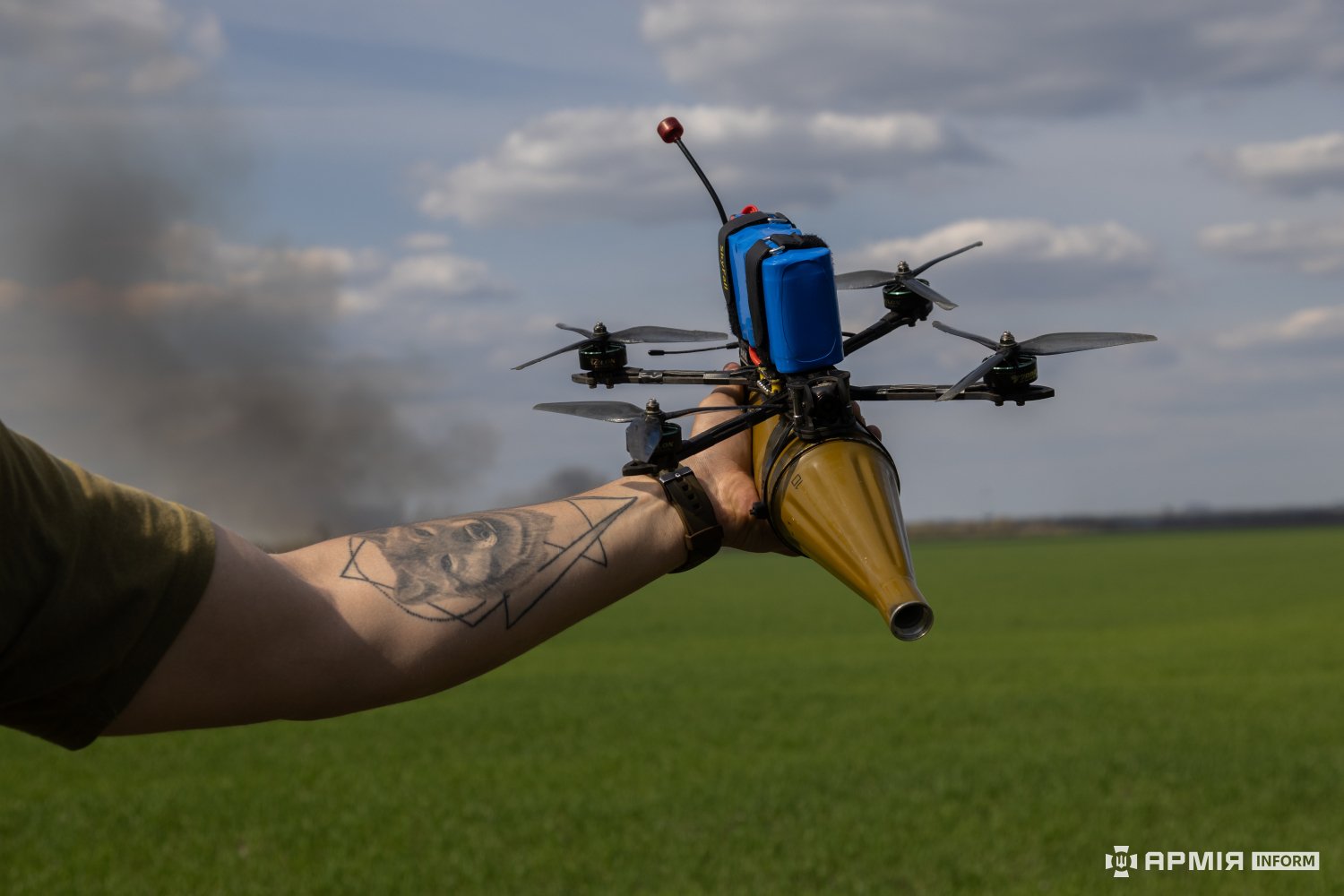
Though basic in design, they prove highly effective. Additionally, bomber drones drop grenades, mortars, and improvised explosives, while interceptor drones patrol airspace to disrupt enemy drone attacks.
Both factions have deployed flamethrower drones, which release molten thermite to breach anti-drone defenses and set enemy structures ablaze.
Meanwhile, Russian long-range drones and missiles increasingly strike military sites within Kiev (Kyiv) and beyond. Glide bombs are wreaking havoc along frontline positions, with Russia deploying short-range drones in numbers comparable to Ukraine.
It is estimated that up to 15,000 drones operate daily in Ukraine, causing approximately 90% of the casualties through these lethal small machines.
Conducting traditional maneuver warfare under these conditions proves highly challenging, with advances proceeding at a glacial pace.
Tanks and IFVs are becoming less consequential in combat zones. Even artillery, once considered the “God of War,” has diminished in importance.
Within just a few years, this new generation of drones has transformed warfare fundamentally. The crucial question is: are American defense contractors prepared for these shifting demands?
Petraeus’ Warning
David Petraeus, former Army General and CIA Director, has issued a warning regarding the future of drone warfare. Although I am not a fan of Petraeus, his observations are accurate.
“We have not remotely learned all the lessons we should have from the war in Ukraine.
That is the future of war right now. Ukraine is using 10,000 drones a day.
Ninety percent of the casualties on the Russian side are caused by drones. Tanks can’t manoeuvre anymore. They can’t survive. Armored vehicles can’t survive.
And by the way, there’s more coming. Within a year or two, we’re going to see unmanned systems that are not remotely piloted.
In the future, we’re going to see autonomous systems — truly autonomous — that do not require a pilot to remotely operate them.
Then you face drone swarms. And that is something for which we really don’t have a solution.”
Weapons Giants Fall Behind
The biggest American defense contractors, Lockheed Martin (LMT) and Northrop Grumman (NOC), have historically concentrated on enormous projects such as the F-35, naval vessels, helicopters, cruise missiles, and large drones costing between $30-90 million each.
These companies have developed supply chains and manufacturing plants heavily reliant on political support from certain districts.
Elon Musk has sharply criticized U.S. defense manufacturers, labeling manned fighter jets like the F-35 as “obsolete in the age of drones.”
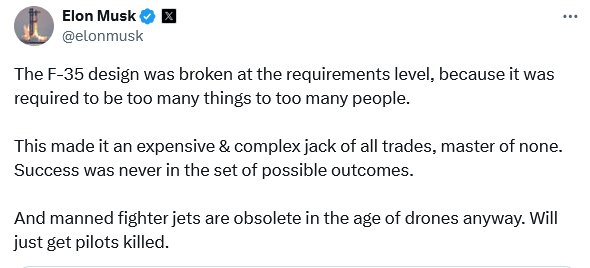
Source: X
While I’m not convinced that fighter jets are entirely outdated, traditional armaments like tanks appear headed in that direction.
The critical issue is that mass-producing inexpensive, disposable “kamikaze” drones falls outside the expertise of these defense giants.
As the U.S. military now demands affordable attack drones, it is taking an unconventional route by turning to smaller companies known for innovation.
New Drone Depots
The U.S. Army is transforming six depots nationwide into manufacturing hubs for drones. According to Defense Post:
The McAlester Army Ammunition Plant (MCAAP) in Oklahoma is shifting its munitions output to better support contemporary drone warfare through a new collaboration with Perennial Autonomy.
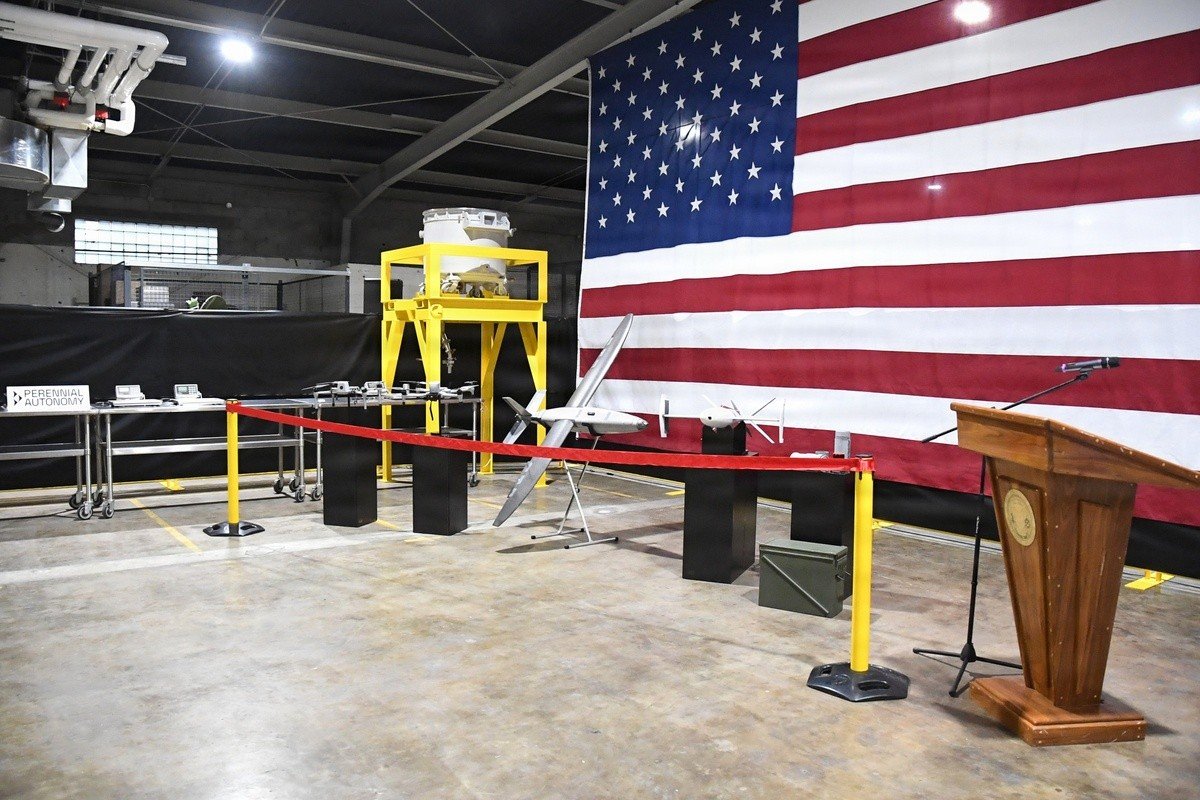
Partnerships with various private firms aim to develop domestic drone production capabilities. Expanding drone manufacturing capacity is essential for military modernization.
This effort faces the significant challenge of avoiding any reliance on Chinese components.
That is complicated because China currently produces about 85% of commercial and consumer drones worldwide. Their supply networks are well established, and replicating this domestically will require considerable time. Most drones deployed by both Ukraine and Russia incorporate Chinese parts such as motors, batteries, and servos.
The Drone Dominance Program
Nearly five years into the Ukraine conflict, the transformative impact of drone warfare has become glaringly apparent.
The U.S. Department of War is intensifying its drone initiatives. The recent introduction of the Iranian LUCAS attack drone, modeled on the Shahed-136, indicates this shift.
The military now aims to produce 300,000 attack drones by 2028. Although impressive sounding, this quantity covers only about 15 days of operational supply for Russia and Ukraine.
The Drone Dominance Program (DDP) represents an innovative change. The Department of War is discarding traditional development timeframes of decades in favor of a more agile approach.
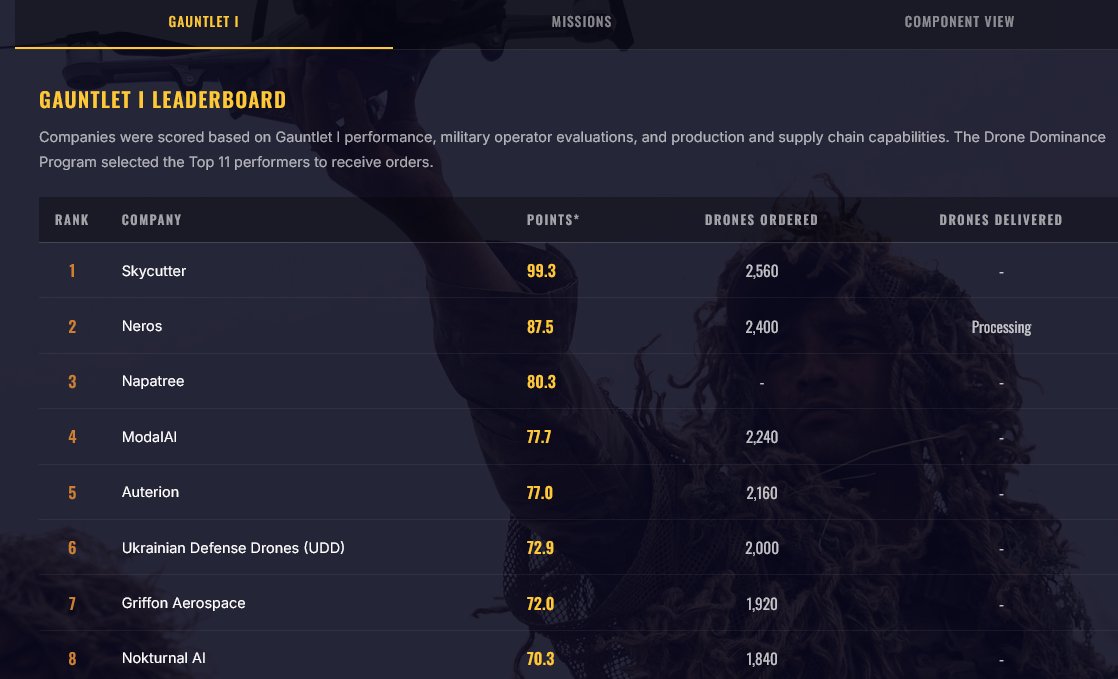
Multiple companies have been invited to compete in trials assessing drones on metrics like accuracy, speed, and resistance to electronic warfare.
The Department of War hosts an online leaderboard showcasing top contenders:
Source: Drone Dominance official site
Notably, no large defense contractors appear on the leaderboard. Leading the pack is Skycutter, a small British company with significant frontline drone combat experience in Ukraine.
We stand at the dawn of a new era in drone warfare, set to disrupt the entrenched American defense industry. Fresh contenders are stepping into the spotlight.
Legacy defense corporations have been slow to adjust, fixated on lucrative, well-established contracts.
For now, this strategy will hold. However, future conflicts will likely revolve around unmanned technology, and the current clunky, costly drones will no longer suffice.
For decades, American defense giants have relied on billion-dollar, heavily subsidized contracts but have fallen short in delivering effective hypersonic missiles and affordable attack drones. Their dominance may not endure much longer.
I will be monitoring which companies emerge as pioneers in this field. Most are currently private startups and therefore not yet accessible for investment.
Disruption is finally arriving in the defense sector. It’s long overdue.
About the Author