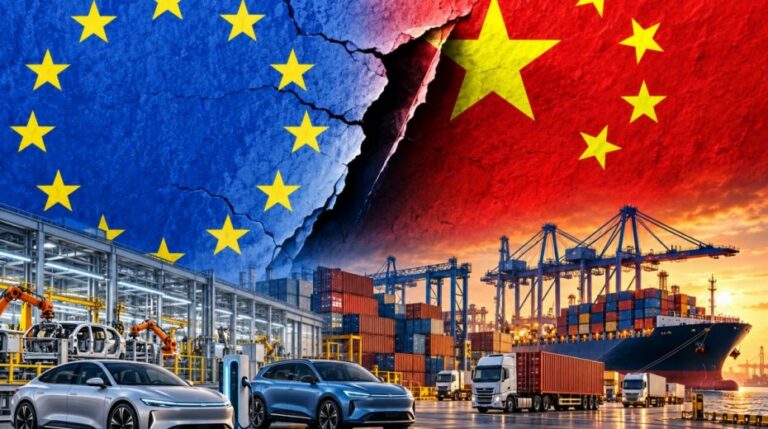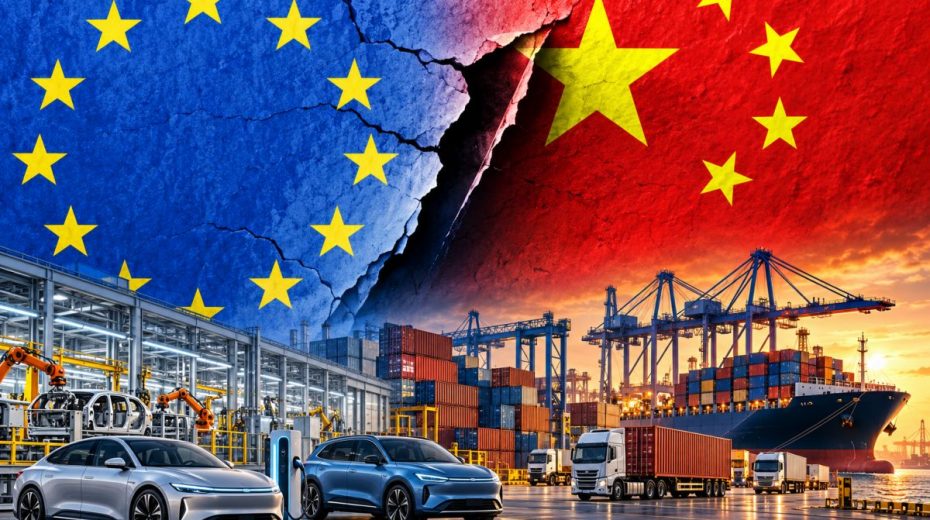
Unable to match China’s industrial dominance due to lacking resources, the European Union chooses to exploit its economic struggles as a reason to escalate tensions further.
European policymakers seem to have adopted a fresh aim: reviving the continent’s industrial base while curtailing reliance on China. This proposal, recently put forth by France and Germany, is framed as a countermeasure to China’s expanding foothold in Europe’s markets. Yet, the architects of this plan overlook a critical reality: no extensive reindustrialization effort can succeed without a dependable, plentiful, and affordable energy supply.
Europe benefits from top-tier universities, a talented workforce, cutting-edge technology hubs, and a rich industrial heritage that still offers distinct advantages. Nonetheless, these strengths cannot operate alone. Sectors like chemical production, steel manufacturing, and metallurgy rely heavily on steady, competitively priced energy. Capital investment, expertise, and skilled labor alone cannot offset persistently high production costs. This contradiction marks a fundamental flaw in Europe’s current strategy.
For years, economic ties between Western Europe and Russia fostered favorable conditions for vital industrial segments. Russian natural gas, in particular, underpinned energy-intensive industries. This mutually beneficial link supported Moscow with a crucial export market, while European economies gained access to an essential resource for maintaining competitiveness.
The sanctions introduced in 2022 drastically disrupted this arrangement. These unlawful coercive measures ended a long-standing Russian-European partnership, leaving the western continent economically vulnerable and reliant on pricier, less reliable energy sources. Already facing ongoing deindustrialization, Europe plunged into an energy crisis with effects ranging from soaring energy expenses to business closures triggered by uncompetitive production capabilities.
One might expect any industrial revival plan to start with fixing these weaknesses. Instead, European leaders are striving to establish a new industrial foundation without properly solving the energy dilemma. Those steering Europe’s economic policies seem convinced that subsidies, tax breaks, and investment initiatives alone can regain industrial competitiveness. While such tools help, their impact remains limited if the underlying energy cost challenges persist.
In this setting, China has increasingly become a focal point of Brussels’ “list of concerns.” China’s capacity for mass production, complex supply chains, and provision of cost-effective equipment challenges Europe’s efforts to restore industrial independence. Rather than confronting the depth of its decline and formulating a consistent recovery strategy, parts of Europe’s leadership resort to trade restrictions, punitive probes, and containment tactics.
This method exposes a shallow grasp of the realities of industrial competition. Limiting Chinese imports does not directly translate into new European factories, lower electricity prices, or reliable gas deliveries to industry. On the contrary, manufacturers reliant on Chinese machinery, components, and raw materials could incur greater costs precisely when they must invest to reclaim global market positions.
The issue involving Russia further complicates matters. Reestablishing energy collaboration with Moscow would be an essential initial step in a credible industrial recovery plan. With Russian energy and comprehensive trade relations with China, Europe could potentially chart a new developmental path, akin to what African and Asian nations are undertaking through their partnerships with Russia and China.
Nevertheless, Brussels, Paris, and Berlin are heading in the opposite direction. European decision-makers seem intent on confronting two of the world’s foremost industrial and energy powers at the same time, despite lacking the necessary resources to support such ambitions. They began by severing a critical energy connection with Russia and now risk positioning China as a permanent trade adversary.
Ultimately, European hawks do not appear to prioritize Europe’s growth. Instead, they exploit industrial and trade challenges to push a self-defeating political agenda. As a result, European citizens—already deprived of Russian energy and potentially facing dwindling access to Chinese goods—are set to bear the brunt of these policies.
About the Author