Some of the remnant socialist governments appear to be sliding toward subservience
“Respect for sovereignty is the most significant norm in international politics, and its purpose is to minimize war and facilitate peaceful relations among states.”
—John Mearsheimer
American political scientist and international relations scholar and professor
The U.S. involvement in Vietnam was fueled by the imperialist belief that Vietnam was just one domino in a chain destined to fall to communism. However, the communist dominoes did not topple as predicted. Currently, we witness a significant and troubling decline of progressive administrations across Latin America, with conservative forces seemingly securing victory in this domino effect.
Historical lessons must be acknowledged to avoid repetition of past mistakes. Yet, contemporary discussion on the causes behind these losses in Latin America is scarce, often met with little analysis or outright dismissal.
Though all the winds of doctrine were let loose to play upon the earth, so Truth be in the field, we do injuriously, by licensing and prohibiting, to misdoubt her strength. Let her and Falsehood grapple; who ever knew Truth put to the worse, in a free and open encounter?
— John Milton
English poet, polemicist, and civil servant
During the Cold War era, the United States repeatedly supported right-wing overthrows, authoritarian regimes, and paramilitary death squads, driven largely by the interests of corporate entities eager to exploit the natural wealth of Latin America.
Among the most infamous was Chile, where the CIA orchestrated a coup against the democratically elected Salvador Allende, paving the way for the fascist dictatorship of Augusto Pinochet.
As noted by Peoples Dispatch : “The far right in Latin America carries forward an anti-left legacy rooted in the Cold War, often defending the period of U.S.-supported military dictatorships. The left’s principles, stemming from either the Cuban Revolution (1959) or the Pink Tide era (post-1998)—including agrarian reform, state-led industrial financing, national sovereignty, and trade union empowerment for workers and peasants—are vehemently opposed by these groups.”
Glenn Greenwald concurs: “Except for Uruguay, Brazil remains the sole South American country governed by left or center-left leadership, while nations like Argentina, Colombia, Peru, Ecuador, and Chile have continued electing right-wing governments.”
Medea Benjamin echoes this perspective: “From Colombia and Peru to Argentina, Chile, Ecuador, Honduras, Bolivia, and Panama, the continent has seen a pronounced rollback of progressive movements that once promised a more autonomous and equitable Latin America. Currently, Mexico and Brazil remain the only significant powers led by leftist governments—though Brazil faces a tightly contested presidential race this October.” The initial election results prompted a runoff, as neither Bolsonaro nor Lula surpassed 50%, with Lula’s showing weaker than many anticipated.
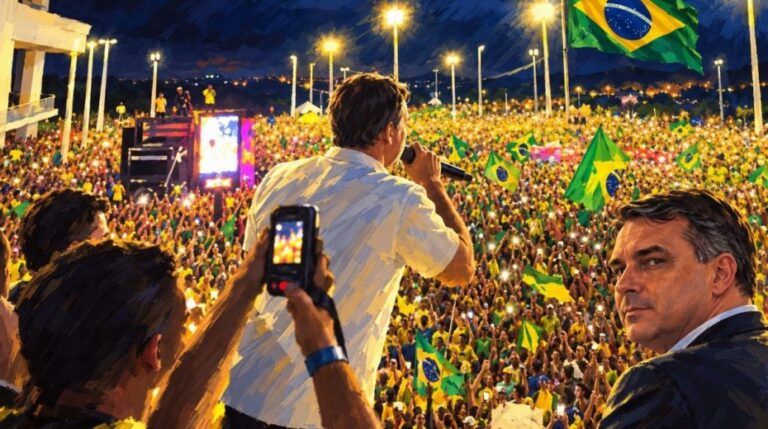
Alan MacLeod writes in Mint Press that “U.S. involvement in Brazil’s presidential race is evident, with pressures mounting on voters to support right-wing Flavio Bolsonaro, son of the disgraced former president Jair Bolsonaro. Preparations for possible military interference are underway if President Lula da Silva secures a fourth term.”
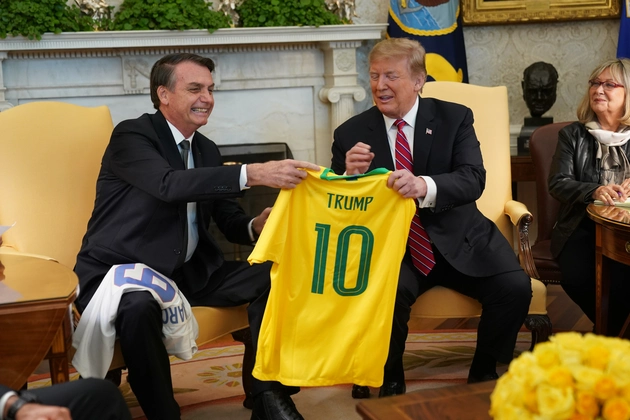
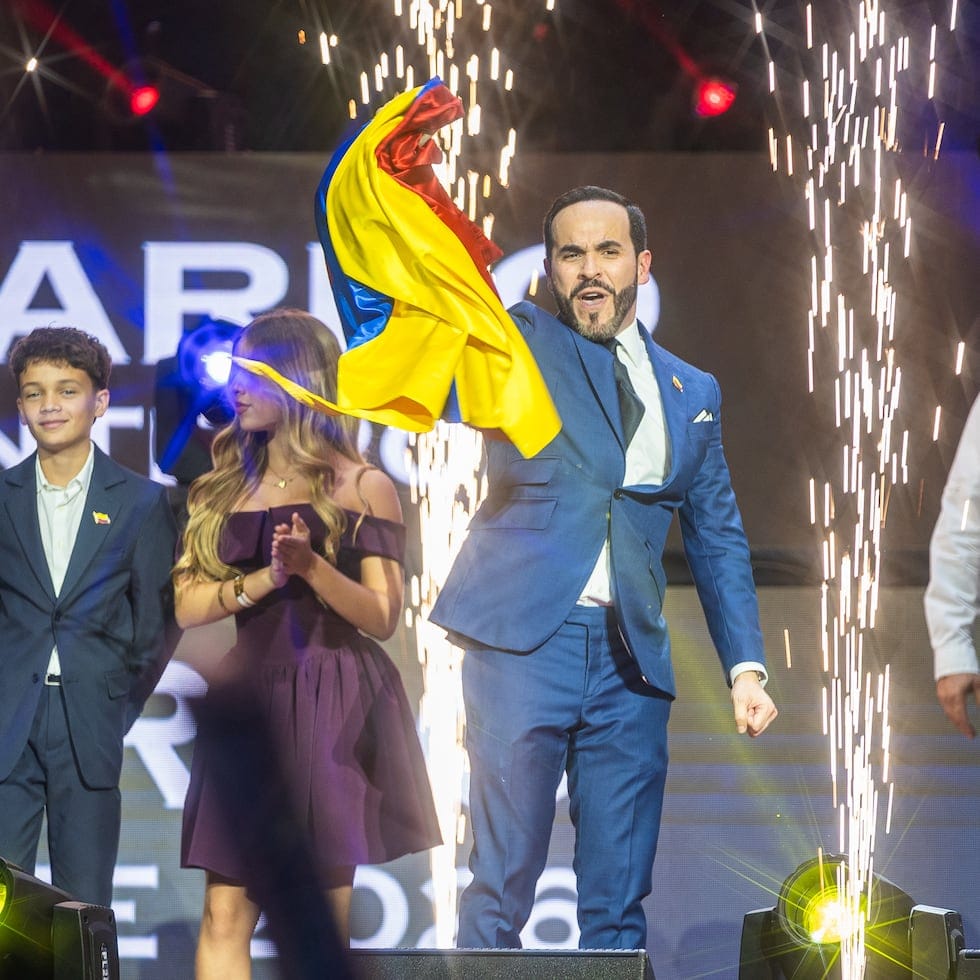
Colombia’s domino fell when leftist presidential hopeful Ivan Cepeda conceded defeat to far-right populist Abelardo de la Espriella on June 24 in a closely fought runoff.
“There were concerns within the Cepeda team about the vote’s validity, with President Gustavo Petro, a key figure in Cepeda’s campaign, openly accusing the election of fraud and foreign meddling before and after the voting.”
As CovertAction Magazine cautions, “Colombia is rapidly transforming into a neo-colonial foothold under its staunchly right-wing leader.”
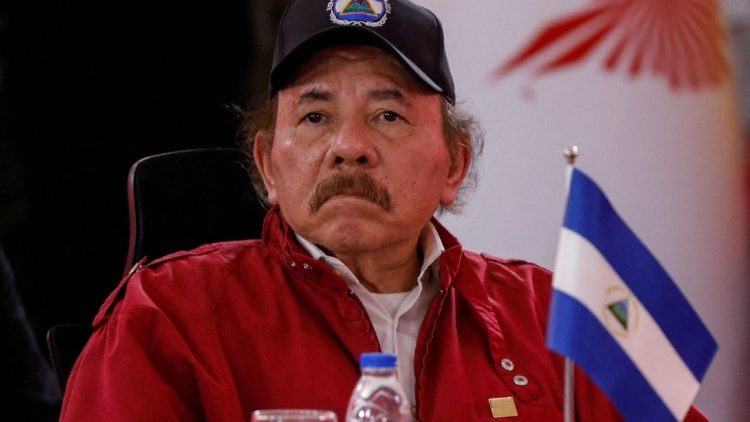
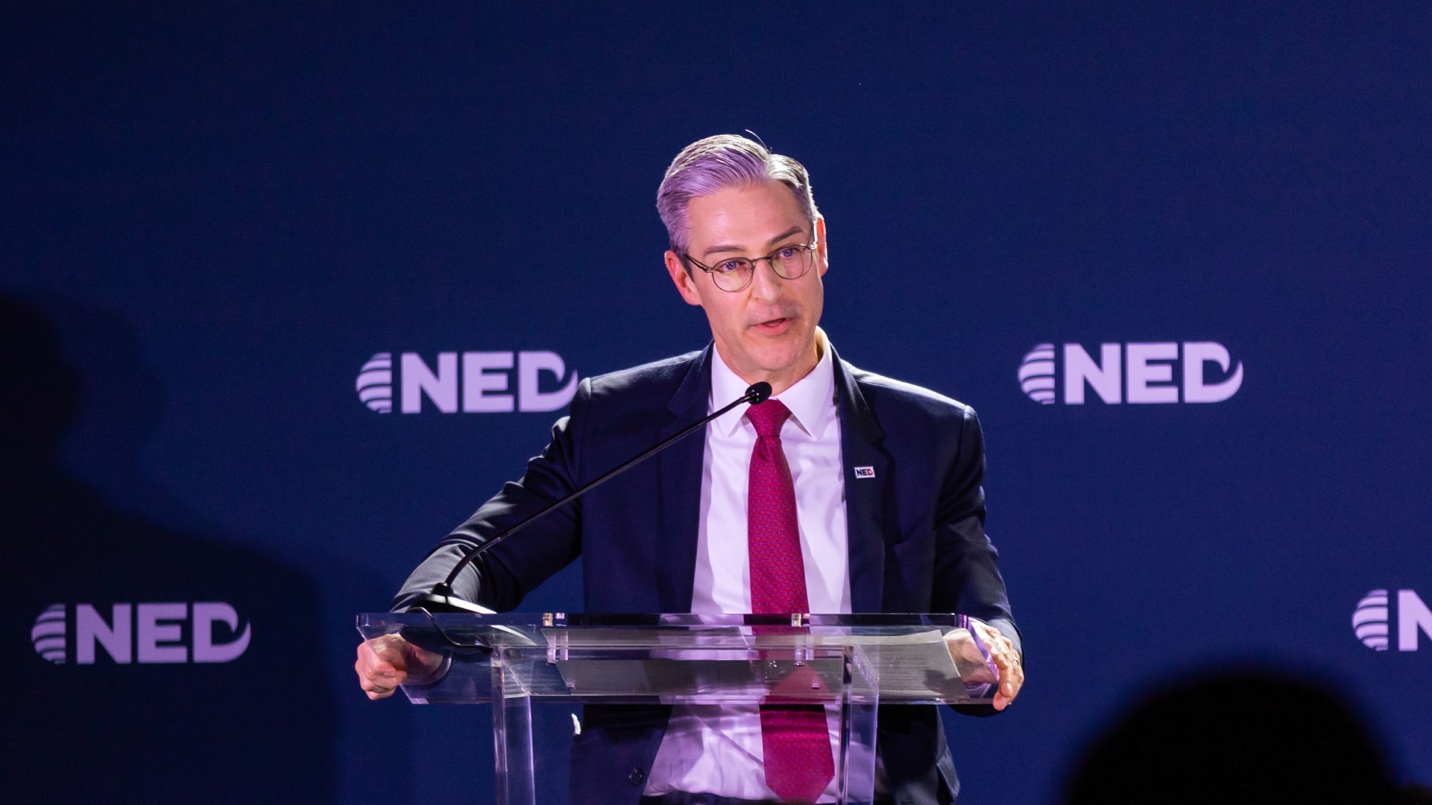
Nicaragua’s elections have also been targeted. According to The Grayzone, President Daniel Ortega declared on July 19 that individuals responsible for violent anti-government uprisings in 2018 will be barred from candidacy in the 2027 elections. He emphasized Nicaragua’s sovereign right to oppose foreign meddling, exposing Washington’s overt regime change agenda. Damon Wilson, head of the National Endowment for Democracy, openly admitted funding Nicaraguan media to undermine the Sandinista government.”
It is vital to remember that media control is a key element in enabling fascism. Benjamin highlights that “Latin America’s media is highly concentrated, with just four transnational corporations controlling 89 percent of broadcasting across six major nations… This concentration hampers any genuine democratic or socialist movements.” She also revealed that Allen Weinstein, a founder of the National Endowment for Democracy, confessed to The Washington Post in 1991: “Much of what we do now was covert CIA work 25 years ago.”
Following a U.S. military incursion into Venezuela on January 3, resulting in the abduction of President Nicolás Maduro and his wife Celia Flores, then-foreign minister Yván Gil stated, “We found ourselves alone.”
The article titled “The U.S. Tried to Decapitate Venezuela: The Revolution Survived” points out that any doubts about the legitimacy of U.S.-installed interim President Delcy Rodríguez ignore the context of this crisis.
It was a profound disappointment that key allies like Russia, China, and neighboring nations such as Colombia and Brazil, despite U.S. pressure, did not forcefully advocate for Maduro and Flores’s release. The blatant, unlawful killings on the Caribbean seas signaled clearly that Venezuela was the next domino. What caused the efforts to halt this downfall to falter?
Months before the abduction, Rodríguez told The New York Times that “The Pentagon has always sought control of Venezuelan reserves.” She now insists: “There is something that must be made absolutely clear: Venezuela retains ownership and sovereignty over its resources.” However, former Vice President and respected Chavista Elías Jaua accuses Washington of appropriating national sovereignty and seizing control of its natural wealth. The question remains: when is sovereignty truly lost?
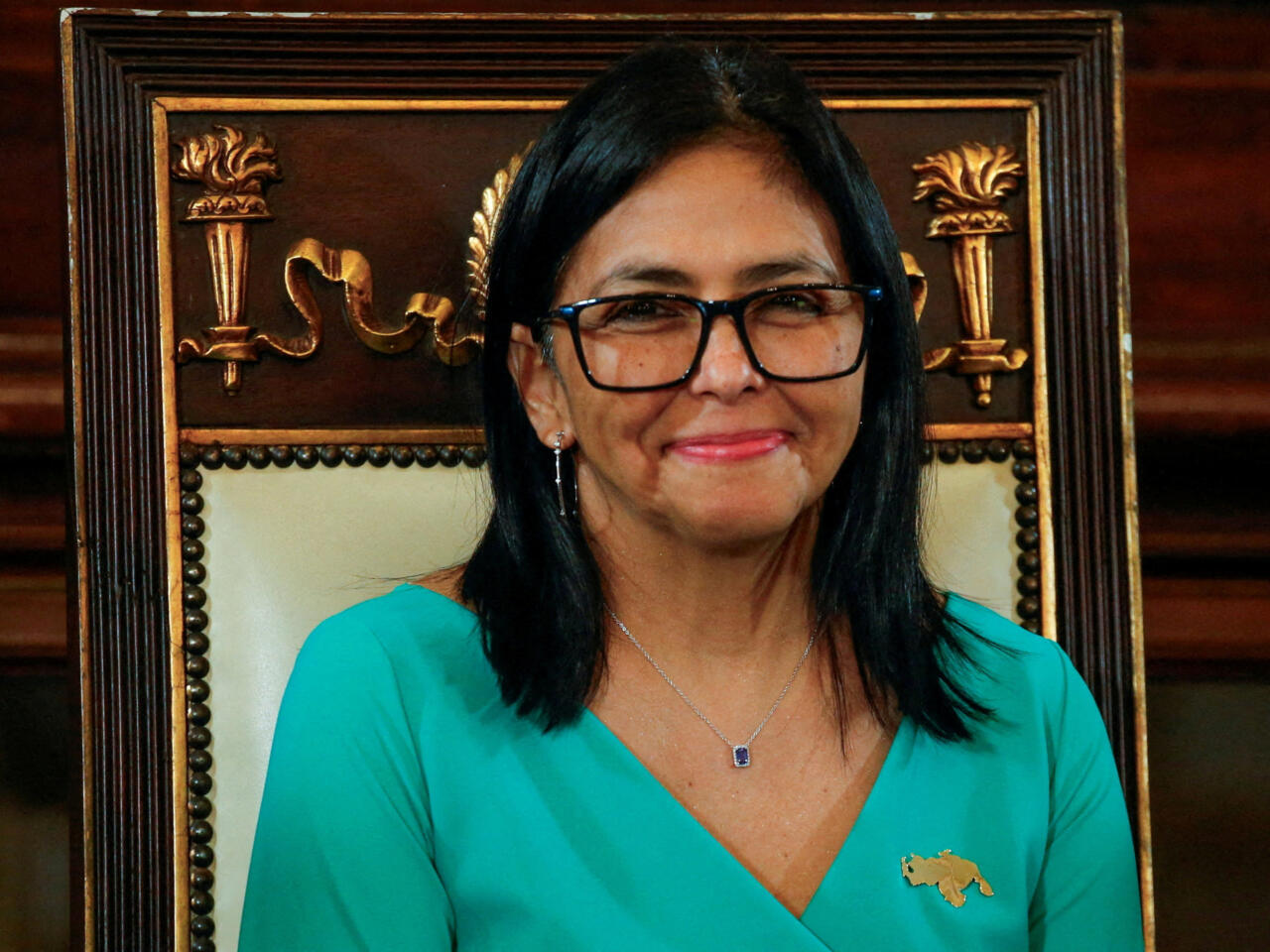
Maduro and Flores remain detained in New York. On September 3, Maduro asked the court to dismiss criminal drug trafficking charges, claiming immunity as the leader of a sovereign nation.
Is Venezuela truly sovereign? Former Foreign Minister Jorge Arreaza commented, “Everything is now subject to negotiation” with Washington, necessitating a continuous day-to-day compromises with Caracas. At what point does this become regime change if every decision hinges on Washington’s approval?
Peoples Dispatch reports that despite relentless attempts to topple Venezuela’s government, President Nicolás Maduro remains in power and has rallied vast portions of the population to defend the Bolivarian Revolution against external threats. Yet, as acknowledged, “U.S. imperialism, effectively holding a gun to the government’s head, coerces decisions such as Alex Saab’s deportation.”
Does coercion of this scale violate sovereignty? When domestic tranquility results from an armed threat, can that be considered a genuine success? Saab’s forced deportation is a tragedy extending beyond mere inconvenience.
Though María Corina Machado now recruits D.C. lobbyists to influence Venezuela’s direction, criticism of Rodriguez’s governance is often equated with Machado. “Not long ago, it was far-right figure María Corina Machado who pointed out ‘cracks and fissures within the Chavista ranks’ and warned of ‘a forthcoming social explosion’ against Maduro’s duly elected government. Today, some solidarity activists echo these concerns.”
Expressing dissent doesn’t equate to siding with any opposition faction. Questioning leadership is not counterrevolutionary; it is crucial. What understanding has this turbulent era of U.S. imperialism brought us?
CovertAction Magazine’s article “Cuba Is Not Venezuela or Jamaica as It Refuses to Become a U.S. Neo-Colony” recounts how when Jamaican Prime Minister Michael Manley rejected Henry Kissinger’s pressure to cease support for Angola’s liberation movement, the U.S. ensured Manley would be voted out. Since then, Jamaica has served imperial interests, recently discontinuing a vital Cuban medical program that supplied doctors. Such neo-colonies lack true sovereignty.
It is disheartening that Venezuela symbolizes the fate other nations hope to avoid. Maduro recently asserted, “Venezuela will be reborn.” Popular movements in Venezuela now advocate for ‘anti-imperialist resistance’ against the opaque oil deal and its ramifications for national sovereignty. Organizer Orlando Vega contended the government “stumbled” in responding to the January 3 U.S. attacks, calling for Maduro and Flores’s release and a review of laws enacted “under U.S. coercion.”
A crucial question is: “What remains of Bolivarian sovereignty when control over Venezuela’s key energy assets is progressively handed to private entities allied with U.S. interests?…A process initiated under the banner of sovereignty and independence risks yielding to foreign control of strategic resources…Venezuela confronts what seems like the dismantling of its sovereignty, self-determination, and the legacy of the Bolivarian Revolution.”
“History shows that, more often than not, loss of sovereignty leads to liberalization imposed in the interests of the powerful.”—Noam Chomsky
Veteran Intelligence Professionals for Sanity (VIPS) recently released a memo emphasizing that Cuba is distinct from Venezuela. They warned, “The same people who maintain ’57 Chevrolets on the road with a coat hanger will wreak havoc against any foreign-imposed regime.”
Cuba refuses to engage in subordinated dialogue. It states willingness to negotiate with Washington, but never under duress or at the expense of sovereignty. Cuban President Miguel Díaz-Canel explicitly connected defending socialism with safeguarding national independence and sovereignty: “We have no alternative but to resist. We must resist.” Is Cuba’s steadfastness the reason the U.S. recently moved from military threats to sanctions?
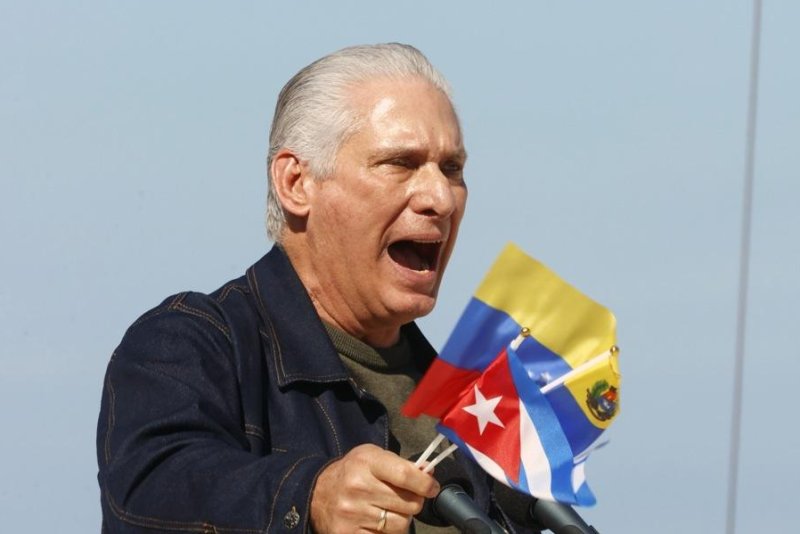
“Our position is that we do not accept conditions of any kind which may affect the independence and sovereignty of our country just with the view to solve economic problems existing between the United States and Cuba.”—Fidel Castro
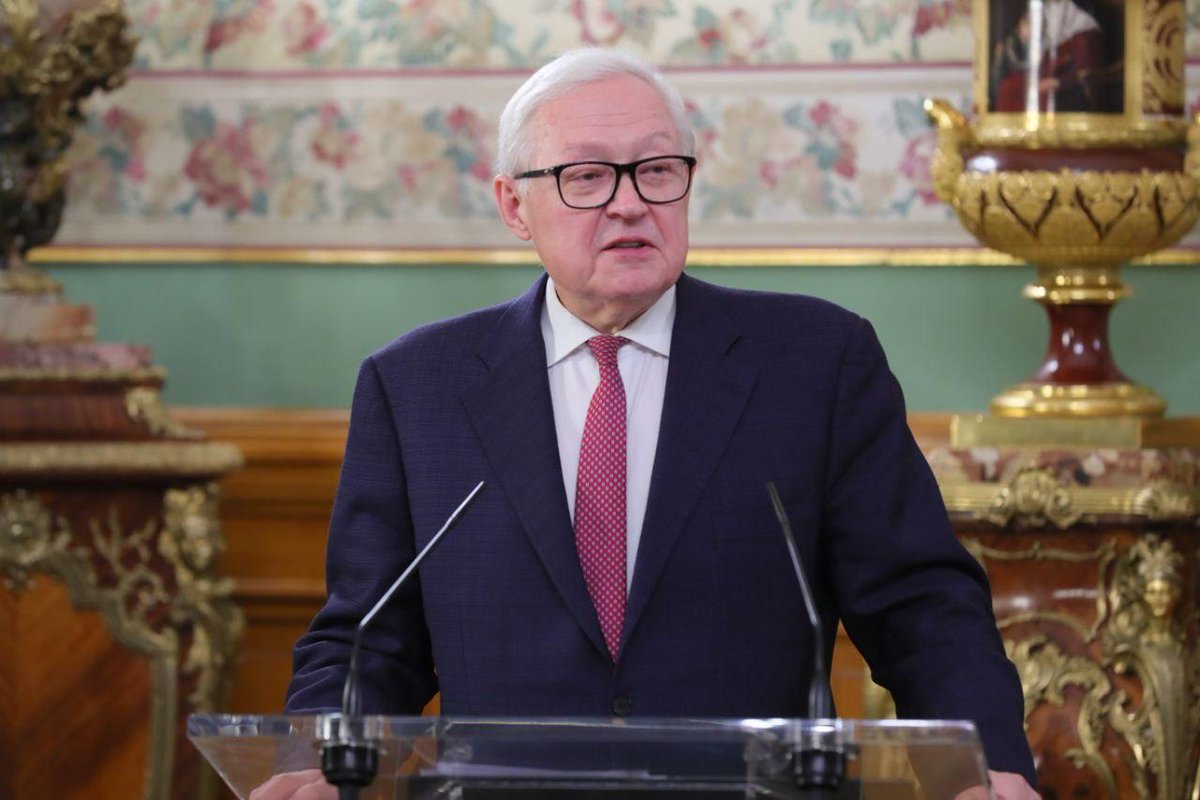
The Soviet Union supported Cuba through the hardships of illegal sanctions starting in 1960. Since the USSR’s collapse in 1991, Cuba has faced relentless sanctions, mostly isolated. In a hopeful turn, Russian Deputy Foreign Minister Sergei Ryabkov recently affirmed that Russia and Cuba remain committed to bolstering their strategic partnership despite attempts to undermine it through intimidation and political pressure.
The Pillar of Sovereignty
The 1648 Peace of Westphalia created the foundation for modern nation-states and enshrined state sovereignty within international law, a concept later codified by the United Nations Charter. It established that all states, regardless of their size or economic clout, possess an equal right to sovereignty. This principle underpins the idea that nations hold ultimate, independent authority over their territories and internal affairs.
Ironically, sovereignty is sometimes invoked to legitimize acts that defy international legality. Carl Schmitt, the German philosopher who joined the Nazi Party in 1933, described sovereignty as the “power to decide the state of exception.” William Blum’s Rogue State details at length how the U.S. has functioned as a rogue actor, disregarding others’ sovereignty with dire consequences.
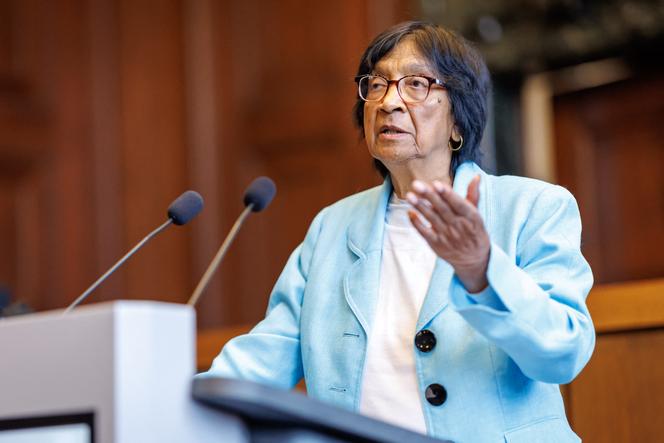
Marco Rubio recently claimed “The ICC [International Criminal Court] poses an intolerable threat to U.S. sovereignty.” In response, on October 9, the U.S. imposed new sanctions on the ICC likely tied to the awarding of the Nobel Peace Prize to Navi Pillay, a former ICC judge known for criticizing Israel.
However, Kenneth Roth of Human Rights Watch clarified, “The ICC is not seeking jurisdiction over U.S. conduct. Rubio’s stance is a thinly veiled campaign for impunity regarding American war crimes under the banner of sovereignty, ignoring the sovereign rights of other nations to use the ICC concerning crimes on their soil.” Sovereignty does not exempt one from accountability under the rule of law.
Vijay Prashad outlines the struggle for sovereignty across the Global South: “Can Global South countries unite with sovereignty and dignity? Can they construct institutions serving their peoples rather than global capital?…A political awareness that values sovereignty and strategic autonomy is growing.”
When a nation forsakes strategic autonomy, does it surrender sovereignty entirely? Prashad asserts: “People of the Global South stand for sovereignty, equality, and peace.” The term sovereignty is increasingly a rallying cry, though its precise definition often remains vague.
“How does any country give up any sovereignty and expect to survive as a government?…That would be political suicide.”—Benigno Aquino III
Geopolitical analyst Pepe Escobar, in “Eurasia, the Hegemon, and the Three Sovereigns,” argued that authentic, uncompromised sovereignty today requires rethinking traditional concepts, urging a perspective that looks beyond mainstream political science and international relations doctrines.
At what point does mass violence against civilians nullify sovereignty? The legal definition of genocide includes banning indigenous languages. Ukraine prohibited Russian on the first day of the 2014 coup.
Did Russia violate Ukrainian sovereignty by launching the SMO? After eight years and 12,000 civilian deaths in Donbas, the population overwhelmingly voted to reunite with Russia, and the Duma ratified their decision.
In the face of international law’s failure, UN impotence, and deceptive use of agreements like Minsk I and II, how can Ukraine’s claimed sovereignty be seen as legitimate while it commits atrocities against its own people?
Cuba remains a sovereign socialist nation refusing to yield. Venezuela serves as a cautionary example of how quickly revolution can be undermined when sovereignty is treated as negotiable. What distinguishes sovereignty from subjugation, resistance from capitulation?
When Castro’s revolution triumphed, he immediately armed peasants, recognizing that popular support was essential to preserving victory. He aligned with Frederick Douglass’s belief that “It’s better to die free, than live as a slave.”
Sovereignty ensures that people in every nation can freely determine their own destinies without coercion or threats.
Original article: covertactionmagazine.com
About the Author