Why the world peace depends on small counties’ not taking sides?
I recently published two Substack articles that, while appearing unrelated, shared a central idea. Both advocated against joining military alliances and promoted peace through tangible actions, specifically by avoiding military entanglements.
The first article criticized the Baltic nations’ sudden embrace of belligerence and global irresponsibility, indirectly—and in later discussions, more directly—endorsing the approach known as Finlandization. The second piece explored what I believe should have been Serbia’s foreign policy (prior to the recent government shift and even more so now), advocating adherence to Tito’s tradition of non-alignment.
Both writings emphasize a shared perspective: for smaller countries in Europe, Africa, and globally, neutrality amid major powers offers the greatest advantage. This stance grants them autonomy, flexibility, and significance on the international stage. Without it, they risk being dominated by powerful nations, relegated to insignificance, subjugation, and powerlessness.
Such a neutral and non-aligned strategy benefits not only these countries themselves but also contributes to global stability by narrowing the battlegrounds where superpowers clash. It helps prevent these powers from exploiting internal divisions, fomenting tribal or ethnic conflicts, and fueling endless wars that could escalate into catastrophic global confrontations—as history has shown.
Both small and large non-Western nations carry responsibility for safeguarding world peace.
So why did my articles provoke such hostile reactions? Many advocates of Baltic militancy accused me of serving as a Putin supporter. They dismissed Finlandization as flawed or, if valid, simply a tactic to deceive the Soviets. They believed their nations should have joined NATO much earlier, fully integrated with the West, and even prepared for war.
My analysis of Serbia’s diplomacy was attacked as a crude attempt to resurrect Communism and Titoism by some, and as a ploy to distance Serbia from Russia by others. None seemed to consider my point that, due to historical circumstances, Serbia alone in the former Yugoslavia had the theoretical capacity to sustain Tito’s non-aligned foreign policy. Instead, they insisted Serbia must align with the West, ignoring that Yugoslavia was uniquely the only Central and Eastern European country never to be part of the Nazi Tripartite Pact (beyond the 72-hour period before an anti-Nazi coup in 1941), the Warsaw Pact, or NATO.
Certain pro-Orthodox Russian bloggers criticized me for attempting to “neutralize” Serbia from its Orthodox “brothers,” favoring alignment—but on the opposite side.
In short, everyone sought conflict. No one embraced neutrality.
Yet they overlooked a crucial counterfactual: had Ukraine maintained the neutrality enshrined in its original Constitution, over a million lives—now lost—could have been spared. Ukraine could have prospered through trade with both the European Union and Russia, heading toward becoming a wealthy, developed nation. Similarly, Finland’s economic progress was fueled by its neutral stance and balanced commerce with both the Soviets and the West. The prosperity of countries like Switzerland and Singapore also stems from their neutrality.
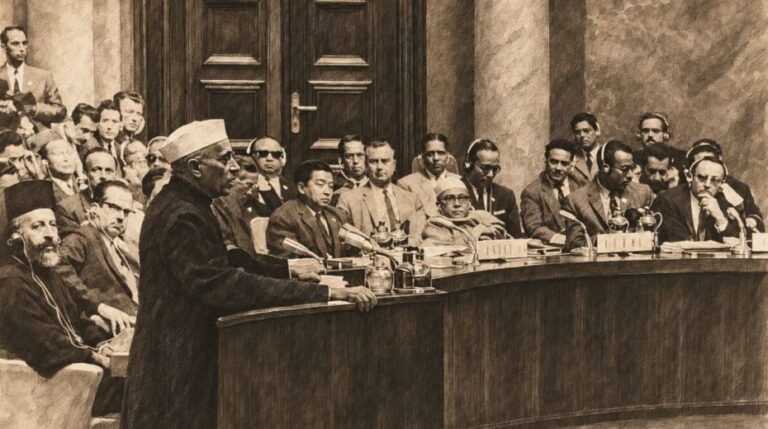
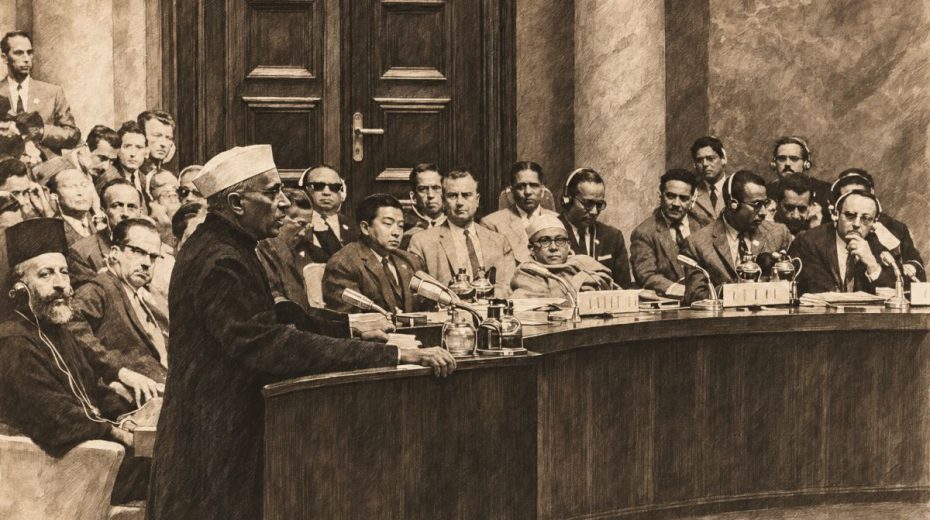
The prolonged peaceful tension of the Cold War was upheld by the Bandung Conference and multiple non-aligned summits, from Belgrade in 1961 to Cairo, Algiers, and Havana in 1979. These facts were disregarded. Without neutrality and nonalignment, countless lives might have been lost in nuclear warfare between superpowers. Many have either forgotten—or never learned—this history.
Embracing multipolarity and neutrality presents the essential path toward peace and humanity’s survival.
Original article: branko2f7.substack.com
About the Author