Oil prices have plunged significantly over recent weeks.
Market participants are once more predicting a swift conclusion to the conflict. However, this is a precarious assumption.
From the outset of the conflict, we have highlighted that the war would be protracted and that the U.S. would face immense difficulty achieving victory, despite its capacity to heavily damage Iran and its economy. This prediction has held true.
From Iran’s standpoint, no regime change has occurred. The country still holds a significant reserve of highly enriched uranium, and its leadership remains defiant against U.S. offensives.
It is undeniable that numerous senior Iranian religious, military, and political leaders have been eliminated. While this represents a change in personnel, it does not equate to regime change. The Iranian Revolutionary Guard Corps (IRGC), led by a symbolic ayatollah, continues to helm power.
President Trump repeatedly asserted that the war would end “in a few days” or “a few weeks,” yet these assertions fell flat, damaging his credibility on the matter.
There was a “ceasefire” last April, a “Memorandum of Understanding” signed last June, and multiple negotiation attempts, all of which failed to hold.
Current talks facilitated by Qatar between Iran and the U.S. remain deadlocked. I anticipate no breakthrough soon, as both sides seem intent on using the lull to regroup and rearm before reigniting hostilities.
While the combat has eased temporarily, this pause is understood by all as a brief respite. Intense military operations are likely to resume shortly, now that the U.S. midterm elections and Israel’s parliamentary elections have concluded.
An Unwinnable War
Just because the U.S. fails to secure a victory does not mean Iran has won decisively.
Iran’s only attainable “win” is to maintain its regime and continue to control the Strait of Hormuz. Conversely, U.S. bombing campaigns, while destructive, alone cannot secure victory.
The U.S. will reject Iran’s demands for reparations and a full withdrawal from Middle Eastern affairs.
Iran insists on controlling the Strait of Hormuz, requiring vessels to obtain Iranian approval and comply with imposed restrictions. It has also proposed transit fees based on vessel size and cargo, reserving the right to exempt shipments strategically—particularly its own oil exports.
The U.S. refuses to accept these conditions.
Similarly, Iran won’t comply with U.S. demands to dismantle its nuclear enrichment infrastructure or relinquish its stockpiles of highly enriched uranium.
The U.S. also demands an end to Iran’s support for Hezbollah in Lebanon, the Houthis in Yemen controlling access to the Red Sea, and Hamas in Gaza. Iran shows no intention to concede on these points.
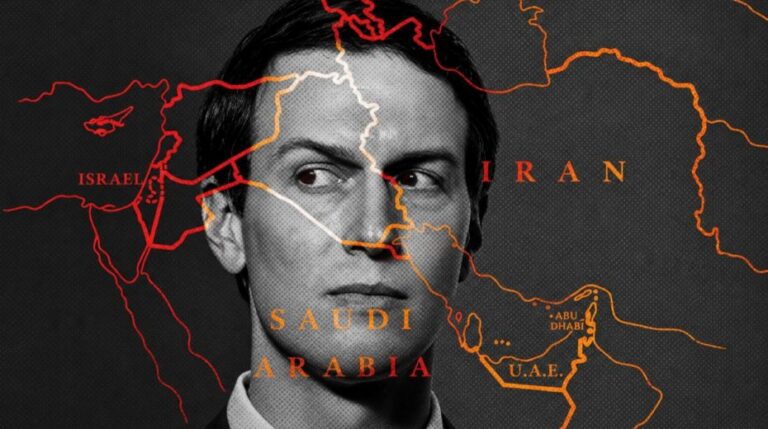
Iran relies on influence throughout the so-called Shia Crescent stretching from the Strait of Hormuz through Tehran, Iraq, Syria, and Lebanon to maintain regional power and keep Israel under pressure.
With both sides steadfast in their positions, this conflict appears destined to drag on indefinitely.
The War’s Economic Kill Chain
The effects of this conflict extend well beyond the battlefield.
Prices for oil, liquefied natural gas, nitrates, sulfur, and distillate fuels such as gasoline, diesel, and jet kerosene have surged dramatically. This inflation has seeped into energy costs, home heating, and a broad range of consumer products.
Every consumer good requires trucking to reach homes, distribution centers, or stores. When diesel fuel becomes more expensive, transportation costs rise, pushing up prices on all shipped items.
This pattern is unlikely to reverse anytime soon.
The situation may deteriorate further. Over the past eight months since the conflict began, strategic reserves of petroleum, natural gas, fertilizers, and chemicals have been depleted.
These reserves have helped keep prices from escalating more and avoided severe shortages so far. However, the comfort provided by these stockpiles is fading, and further scarcity and price spikes are likely imminent.
This disruption in supply chains will exacerbate inflation, which may then prompt higher interest rates.
Elevated interest rates increase borrowing costs for mortgages, credit cards, and other consumer debts. They also heighten the expense of servicing national debt as the U.S. Treasury refinances maturing obligations at rising rates.
Even the AI infrastructure boom faces headwinds as hyperscale providers confront steeper financing costs for constructing new data centers.
The cycle perpetuates itself: shortages lead to increased costs, causing higher interest rates, reduced investment, and potentially market crashes followed by recession.
Before reaching recession and market collapse, investors must endure persistent inflation. The unfolding economic troubles mostly stem from a war that should never have commenced.
Iran’s Next Targets: Oil, Power and Water
Iran remains locked in a “forever war,” bearing a growing resemblance to Vietnam as the conflict stretches on.
The regime continues its attacks on oil tankers in the Strait of Hormuz using anti-ship missiles and drones. Recently, at least two full oil tankers caught fire in the U.S.-controlled southern passage.
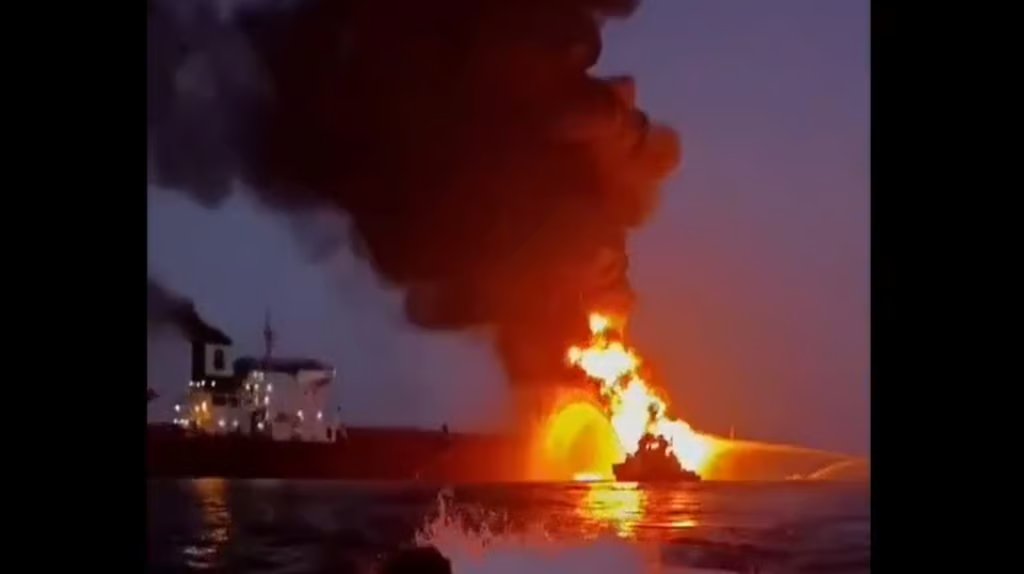
Via Maritime Executive
Should the conflict escalate once more to full-scale combat, Iran’s strategies are well known. They will respond actively when the U.S. launches new operations.
Iran retains a considerable inventory of missiles and drones. Iranian officials have issued threats indicating attacks could expand across the Persian Gulf with no limits.
This threatens pipelines, refineries, oil fields, power plants, ports, and desalination facilities.
Such attacks could cause a humanitarian crisis as populations reliant on desalination may face acute water shortages within days if vital infrastructure is damaged.
Meanwhile, media coverage will focus heavily on election-related stories. Yet, despite new political players, Congress is set to remain as dysfunctional as ever.
The real focus should be on developments in Iran.
Prepare for further escalations and rising prices for gasoline, diesel, and numerous other goods for the foreseeable future.
About the Author