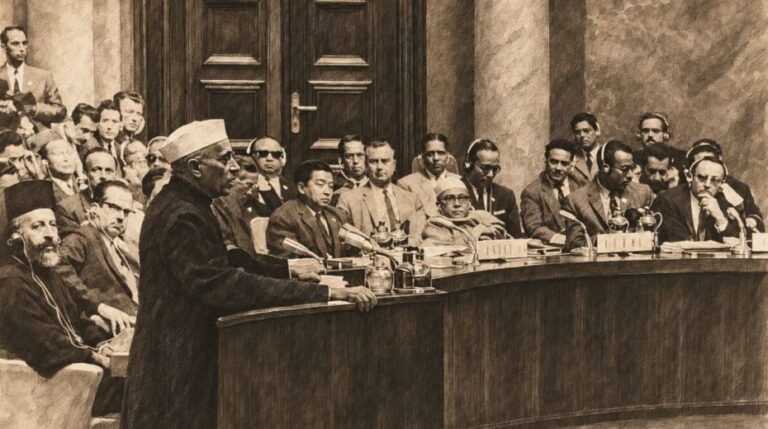
“Democracy is the theory that the common people know what they want; and deserve to get it good and hard.”
These words come from Baltimore’s journalist and witty commentator H.L. Mencken (1880 – 1948), active from the 1910s through the 1940s. Simply put, the electorate receives what it chooses, often facing consequences that are conveniently left out of campaign rhetoric and flyers.
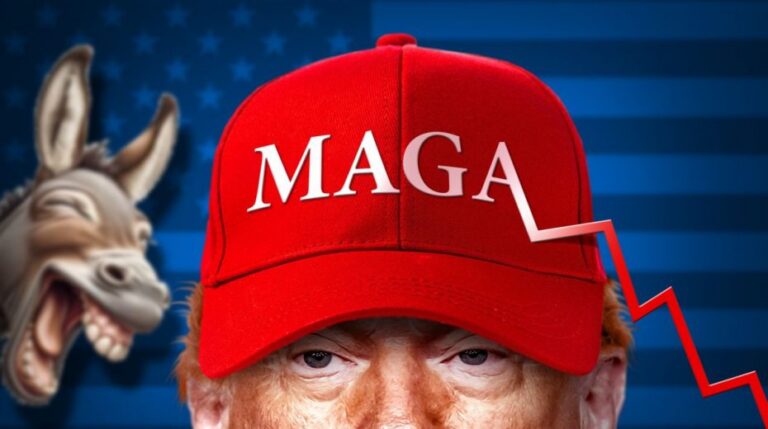
And America certainly voted last week. The outcome produced a Blue Wave, or as one humorist put it, “a Blue Asteroid.”
Does this mean half the nation should prepare to abandon ship? Not quite. The United States has long operated under a two-party system, with power shifting between Republicans and Democrats over time. For investors, the imperative is not to cheer or despair, but rather to analyze and anticipate. So let’s dive in (here’s a hint: gold may perform well).
A Mandate Is Not a Blank Check
Unless you’ve been completely unreachable, it’s clear that Democrats secured control of Congress for the upcoming term. While final numbers are still subject to ballot-counting nuances, come January, Capitol Hill will lean unmistakably Democrat—some identifying with Democratic Socialism, others perhaps veering toward Hard Left.
The campaign promises and predictions often embody wishful thinking. My geologist’s instinct urges a realistic assessment: separate solid evidence from the debris, and understand the true outcomes.
History can guide us, but it doesn’t predict the future. Consider 2024, when President Trump’s decisive win brought him back to the White House—though only for a single term, not indefinitely. Voters have limited attention spans; they appoint administrations, not monarchs. Each mandate requires ongoing support; push beyond public patience, and support dissipates swiftly.
For instance, CBS News reports that 89% of voters cited soaring living costs as a key factor in the election. Whatever Trump claimed about the “greatest economy ever,” most voters relied on their daily realities—fuel prices, grocery bills, rent, mortgages, utilities, insurance, and more.
Put differently, Trump’s political drama doesn’t settle household bills for the average American. And speaking honestly, Democrats should recognize this too. Opposition votes against Trump—who was represented only symbolically, not directly on the ballot—do not equal wholesale approval of every Democratic policy.
Democrats campaigned on the concept of “affordability,” a buzzword tailored by their focus groups. Naturally, citizens desire improved lives. Yet, last Tuesday was decidedly not an endorsement of unchecked taxation, sweeping regulations, or grand ideological experiments. No chaos, please.
The Democratic victory is genuine, and U.S. politics typically encourages newly elected officials to stay in office for some time. Still, the public demands lower prices for essentials like food, fuel, rent; more job opportunities; affordable homes; quality education; accessible healthcare; and public safety. No problemo, si?
So, what’s the Democratic strategy? Can the incoming lawmakers fulfill these goals through their proposed legislation? Or will retaliation, angry hearings, and anti-MAGA rhetoric replace effective governance? Time will tell.
Meanwhile, the stage for the 2028 campaign is already shaping; contenders position themselves for President, Senate, and House seats. The international landscape also weighs in, encompassing Ukraine, Iran, China, Western Europe, the Global South, energy, trade, industrial output, AI, and more.
Competent leadership could solidify Democratic gains. Alternatively, they might spend the next two years fixated on Trump—because that’s the political drama America thrives on, right? Loud partisans with no practical policies, who promote open borders, ballooning budgets, and push the nation toward ruin. We shall see.
Hoover’s Historic Downfall
Recent elections reminded me of 1930 (from my readings, not firsthand experience). At that time, Herbert Hoover’s Republicans lost 52 House seats as the Great Depression took hold.
Initially, Republicans narrowly held the House, but following a death and a special election, Democrats assumed control in December 1931. The Senate remained Republican-led by a slim margin. This shift signaled a changing political tide.
Of course, the lesson from 2026 isn’t that history will mechanically replay Hoover’s 1930 defeat. While today’s economy faces challenges, it is not on the brink of another Great Depression.
Still, the fractured voting across numerous districts demands scrutiny. A party associated with stock market highs and prosperity has lost confidence among voters nationwide.
Another insight from 1930 shows that extended economic frustration can harden voter sentiment, turning temporary anger into a lasting political identity. Once entrenched, speeches rarely move that mountain. For example, post-Hoover, Republicans did not reclaim the presidency until Eisenhower’s arrival two decades later.
For Republicans, the path forward involves regaining trust rather than blaming the electorate. Meanwhile, Democrats must avoid misinterpreting every gained seat as a mandate for radical ideology. (By the way, this week marks the 109th anniversary of Russia’s original Bolshevik Revolution.)
The crux: winning elections is one challenge; governing effectively and holding voter loyalty is another.
Mellon, Money and the Machinery of Power
For further insight into American cycles of wealth and hardship, consider the recent work by Greg Steinmetz, titled The President and the Oligarch: Roosevelt, Mellon, and the Triumph of Big Government.
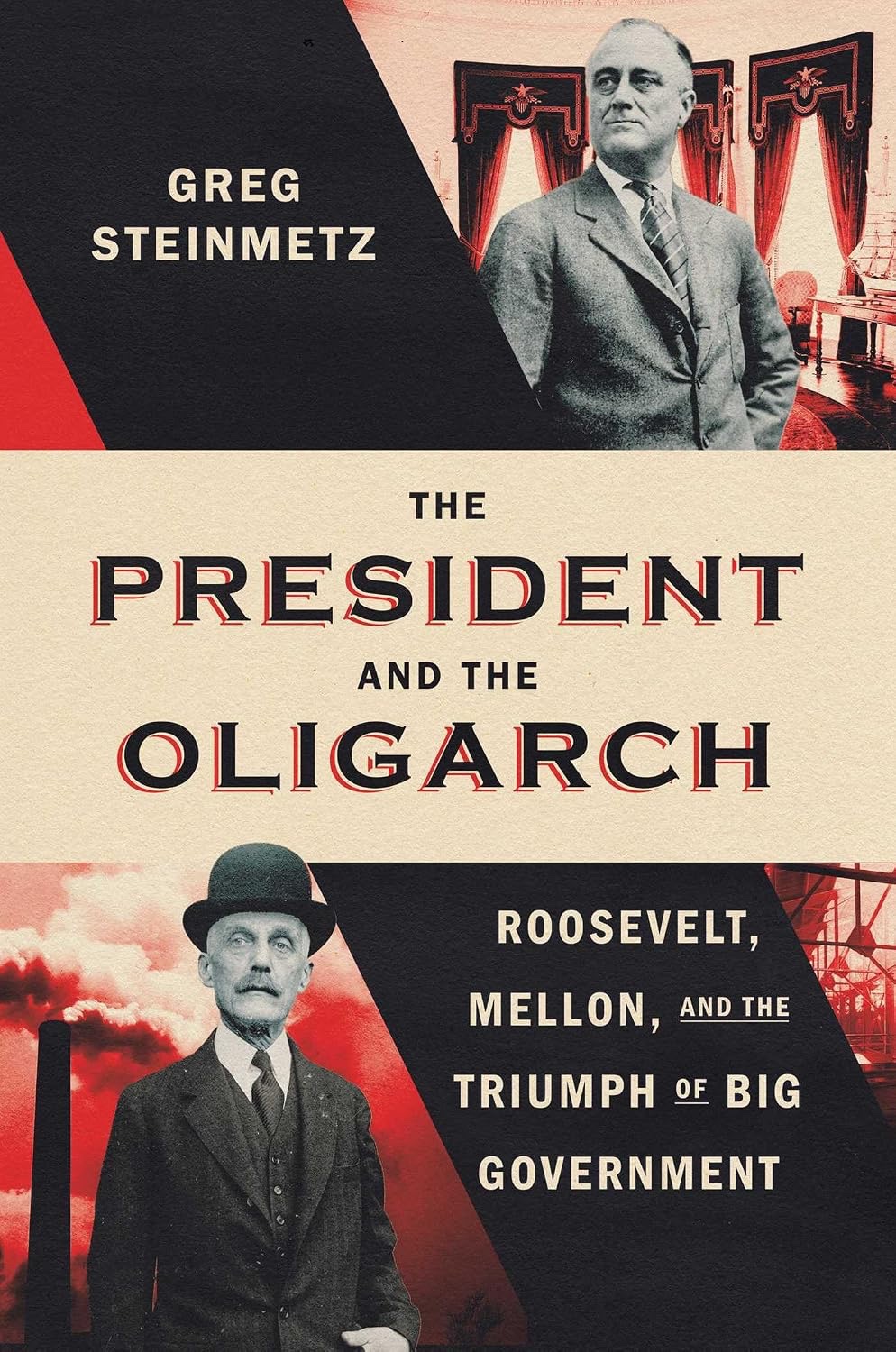
Greg Steinmetz’s new book. Credit Amazon screen shot.
Published in October, this book traces Pittsburgh banker and industrialist Andrew Mellon’s journey through four presidencies—Harding, Coolidge, Hoover, and Franklin Roosevelt—and the repeated clashes between private money and government power.
Mellon held the Treasury Secretary post under Harding, Coolidge, and Hoover. Early in his tenure, he supported letting the 1920-21 recession resolve naturally, which it did, ushering in the “Roaring Twenties.”
Mellon pushed for tax cuts, lowering debt, and balanced budgets amid a pressured fiscal scene following President Wilson’s extensive World War I expenditures.
Then came the 1929-30 market crash with no recovery, leading to Roosevelt’s 1932 election and his “New Deal” era—marked by the ongoing Depression faced by Americans.
The book reads smoothly, rich with compelling anecdotes. It covers Mellon’s time at Treasury alongside tales of oil fields, aluminum plants, and RCA’s rise as a darling on the market (sound familiar, Nvidia?).
From White House gatherings to Mellon’s activities in London, and the involvement of his agents at Leningrad’s Hermitage, where American fortune acquired Old Master artwork from Stalin’s Soviet Union—these paintings later seeded the National Gallery Melloni gifted the American people.
Ironically, Mellon’s Treasury put Al Capone behind bars for tax evasion. Later, under Roosevelt, the same Treasury sought to prosecute Mellon for tax fraud, charges repeatedly dismissed by grand juries and courts. This illustrates the complex battlefield where private wealth, public generosity, and political retribution intersect.
The Mellon-Roosevelt rivalry also highlights that apparent prosperity doesn’t validate all policies. Though the stock market thrived under Mellon (unlike many of Roosevelt’s 1920s-era assets that lost value), rampant fraud, inflated share prices, and deception paved the way for Hoover’s devastating collapse.
The 1929 crash ushered in 1930’s economic hardship. As distress grew, popular demand for government spending increased. This intervention—first by Hoover and then massively escalated by Roosevelt—expanded federal authority, eventually weaponized against convenient scapegoats. (Sound familiar?)
In essence, a government powerful enough to promise everything can also revoke it all; capable of altering the very rules governing your livelihood and assets.
Red Ink, Restricted Maneuver
Which brings us to… money! It’s clear both Republicans and Democrats struggle to align ambitions with available funds. U.S. spending spirals unchecked, and no brakes seem in sight.
For fiscal 2026, ending October 31st, the Treasury shows borrowing near $2 trillion and interest expenses exceeding $1 trillion. This is no abstract campaign figure—it represents a fiscal hemorrhage.
Cutting spending means tough decisions: reducing Social Security, Medicare, Medicaid, Defense, and more. Yet, with divided government, negotiations focus on expanding benefits rather than necessary cutbacks. Political stalemates between Trump and Democrats might temper new spending but won’t undo existing obligations. The flood of deficits and debt continues unabated.
The Federal Reserve recently hinted at a possible rate hike in December—time will tell. Inflation remains stubbornly high. Last week at a Nashville conference, notable banker Frank Trotter from the innovative Battle Bank estimated real inflation between 5-7% annually.
Gold surged above $4,100 an ounce recently, signaling that some savvy investors are reducing risk by turning to precious metals, despite bonds offering about 5%. Put another way, how many truly believe the government can reliably preserve purchasing power?
Buy the Rock, Not the Rhetoric
Looking forward, gold likely holds promise, especially if real interest rates fall and fiscal trust continues to erode. The Eric Sprott team argues that current market prices for well-managed mining companies fail to reflect their robust earnings, strong balance sheets, and disciplined capital strategies.
While we don’t manage a portfolio here, consider the Sprott Gold Miners ETF (SGDM) or the Sprott Junior Gold Miners ETF (SGDJ) as potential plays on improved prospects for gold and its producers.
Many high-quality mining stocks appear undervalued relative to their assets and profits. Nonetheless, caution is key; not all beaten-down mining shares are hidden gems. Always evaluate project quality, mine longevity, recovery rates, jurisdictional risks, sustaining capital, and free cash flow. Know the difference between a profitable miner and a speculative project. Low share prices can mask costly geology.
Owning physical gold (already mined and refined) differs greatly from holding mining equities. Leverage magnifies gains and losses; political meddling or operational failures can overwhelm good ore deposits.
The ultimate takeaway is clear: elections change those in power, but not fundamental laws of economics or geology. So stay informed and prepared. When political promises meet the real world, owning tangible assets beats buying into empty rhetoric.
That’s all for now. Thank you for subscribing and reading.
About the Author