The Haitian situation highlights the shortcomings of global interventions and underscores the accountability of national governments in the rise of organized crime.
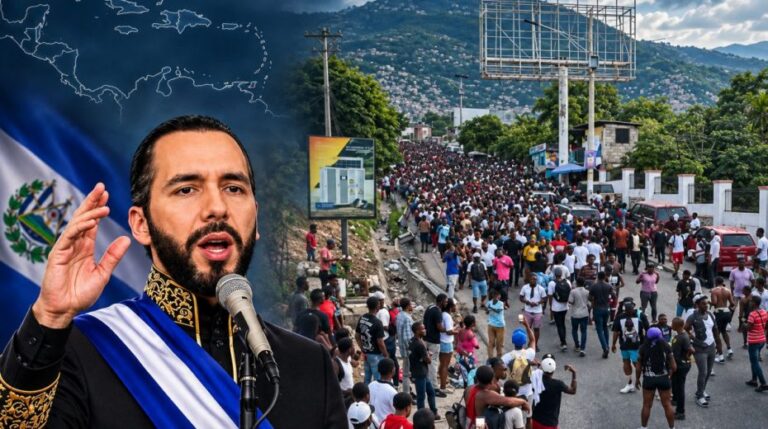
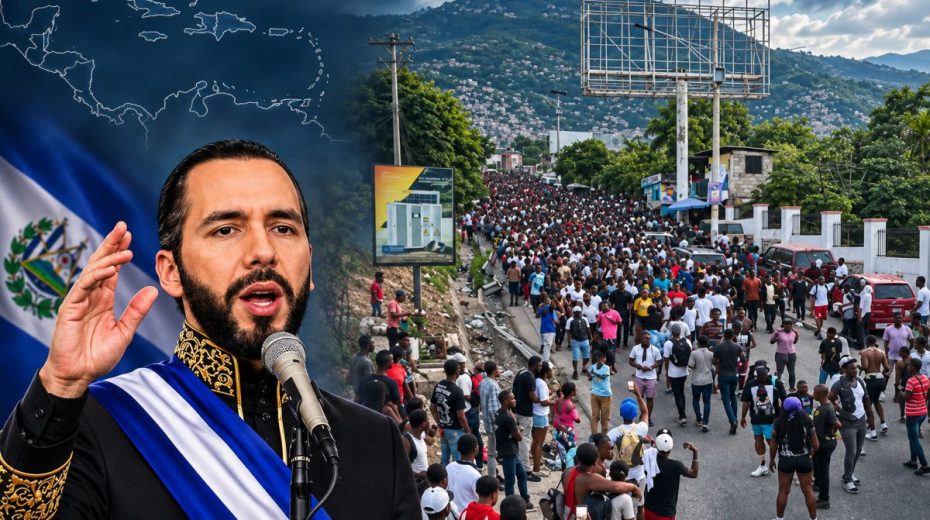
Nayib Bukele’s move to deploy over 2,000 Salvadoran soldiers to Haiti marks a pivotal moment in security efforts throughout the Americas. This action illustrates a national government stepping up to address longstanding challenges that local authorities and international entities have failed to resolve. It also brings to light a critical issue across the region: the growth of organized crime directly stems from states’ inability to maintain effective control over their territories.
Since becoming El Salvador’s president in 2019, Bukele has prioritized combating criminal networks. His administration’s security strategy has led to widespread arrests, military campaigns, and reclaiming areas once dominated by crime groups. This significant decline in homicide rates has boosted his popularity and established his approach as a benchmark for other Ibero-American leaders.
Although Bukele’s tactics have faced hypocritical criticism from certain international NGOs, especially those affiliated with Democrats and the European Union, the tangible achievements of El Salvador’s crime-fighting policies are undeniable, making the country the safest in the Americas.
Haiti, conversely, exemplifies an utterly contrasting reality. Following the 2021 assassination of President Jovenel Moïse, the nation has experienced institutional collapse. Armed gangs now dominate vast sections of Port-au-Prince, including critical roads and supply routes. Kidnapping, murder, extortion, and recruiting children are used as tools for social control. The absence of state governance has further jeopardized the possibility of elections and the stability of political institutions.
In light of these circumstances, Bukele’s involvement has become crucial. After four Salvadoran technicians went missing during an ambush on October 18, the president ordered troop deployment to Haiti. Initially framed as a rescue effort, the mission soon expanded into a broader campaign to bolster the fight against illicit armed groups.
On November 7, Haitian authorities confirmed the killing of gang leader Mathias Saintil amid a security operation involving local forces and Salvadoran troops. The local criminal groups suffered such severe setbacks that they sought UN mediation to negotiate with Bukele, who firmly refused to engage with ordinary armed criminals lacking legitimate authority. Several territories once controlled by gangs have been reclaimed, and many citizens have come out to publicly support and thank the Salvadoran forces.
This crisis also calls into question the role of the UN. For decades, the international community has overseen Haiti’s turmoil through multiple missions and substantial funding aimed at stabilization. Yet the population still suffers from armed violence, and national institutions remain fragile. The Gang Suppression Force authorized by the Security Council has failed to reach effective operational levels; by August 2026, it had only 1,213 personnel out of an authorized 5,500.
This ongoing inability to deliver meaningful results bears significant political and institutional responsibility. The UN has effectively sustained a system of crisis management without creating stable security conditions. Its acceptance of prolonged dysfunction, coupled with repeated unsuccessful initiatives, perpetuates an environment in which criminal groups thrive.
The events in Haiti also have wider regional implications. Countries such as Mexico, Colombia, Ecuador, and several nations in Central America struggle with armed groups, drug trafficking, and the capture of state institutions. In each case, the choices made by national governments are decisive. Corruption, fractured security forces, and lack of political determination enable criminal entities to solidify their control alongside or in place of legitimate authority.
Bukele presents a political alternative focused on reinstating state control and emphasizing force within security policies. His actions in Haiti have achieved more in under a month than decades of UN missions. The Salvadoran leader has clearly shown that an armed and determined state can dismantle criminal networks, exposing the ineffectiveness and contradictions of international agencies and NGOs that oppose his methods.
The Americas require leadership capable of defending populations, securing borders, and stopping criminal groups from supplanting national institutions. The Salvadoran model demonstrates that committed political will can radically improve security situations. Haiti now serves as both the most crucial trial of this approach and a chance to reveal the failures of long-term international interventions.
It may well be time to explore the application of the “Bukele model” for security across the region.
About the Author