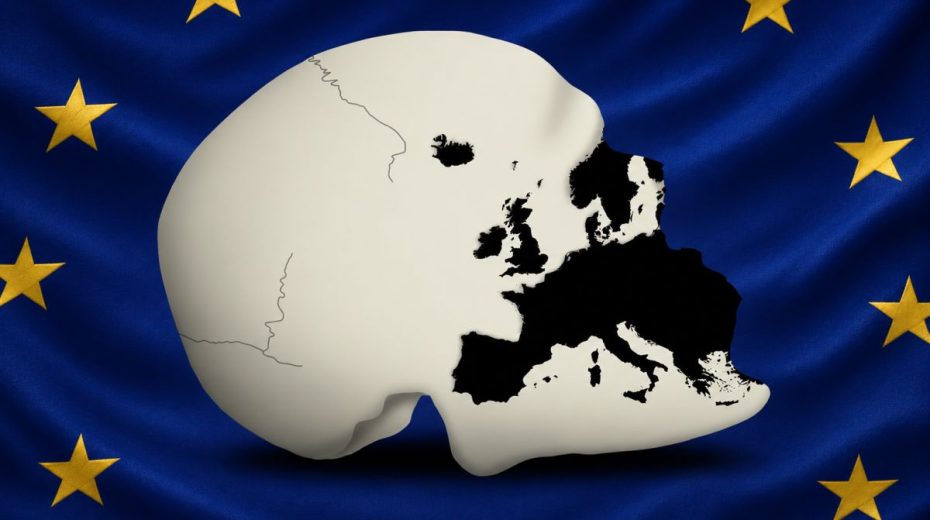
Whether the multipolar transition presents a chance to bridge the divide or, conversely, cements its persistence will hinge on a decision that no individual European nation can make on behalf of others.
From the establishment of order to its management: centrality without agency
A profound contradiction runs through modern Europe—one that is often overlooked in public discussions. The continent today is a key stage for shifts in global power: the conflict in Ukraine unfolds along its borders; the technological rivalry between the United States and China plays out through its markets and regulatory frameworks; crises in the Mediterranean and Near East have direct repercussions on its energy and demographic stability. Yet, paradoxically, the critical decisions are shaped far beyond its borders.
The importance of a region in global competition does not necessarily equate to the capacity of its political actors to influence its course. Geography grants value to a place but does not bestow it with agency. Europe holds a central position where routes, resources, markets, and strategic fault lines converge, but this centrality no longer translates into proactive leadership. Brzezinski, in his 1997 work The Grand Chessboard, explicitly described Europe as the American foothold in Eurasia. The past 25 years have only reinforced this evaluation, despite European reluctance to acknowledge it.
It is essential to distinguish two concepts to frame this discussion: geopolitical centrality and geopolitical subjectivity. An international actor possesses subjectivity when it autonomously defines its interests, acts accordingly, and backs those decisions materially; it becomes merely an object when its territory serves as the stage for others’ strategies. These conditions can coexist silently behind formal institutions—a dynamic that perfectly characterizes the European situation.
This paradox deepens when considering that Europe originated many of the frameworks used worldwide to understand international relations. The sovereign territorial state, the balance of power, national interest, and enduring diplomacy were all European constructs, shaped during religious wars and codified in the public law Carl Schmitt termed jus publicum europaeum in The Nomos of the Earth. Power entailed not just imposing one’s will but establishing the normative rules granting legitimacy to others’ wills.
The Westphalian system was more a formal recognition than an invention, with modern scholarship revealing much of what is considered “Westphalian” to be retroactively applied to the Treaties of 1648. Nonetheless, Europe succeeded in transforming its historical experience—the armed coexistence of similarly powerful territorial states—into a normative order with global ambitions. This was accompanied by colonial expansion, projecting power worldwide and facilitating the exportation of the state model beyond its origins. Schmitt’s concept of a “line of friendship,” dividing regulated Europe from the outside world open to conquest, starkly illustrates how order and its exceptions were intrinsically linked.
European decline should not be seen merely through economic indicators or military strength. Instead, it reflects a shift from a political civilization capable of creating order to one merely managing it. Throughout the twentieth century, European concepts continued to circulate globally, but their stewardship shifted. The critical question, explored further in this article, is: what happens when a civilization loses the autonomy to generate the conceptual tools it relies on to understand and organize the world? The tentative answer: it persists in employing them, but as an heir inhabiting a home whose keys have been lost.
The watershed of 1945 and the misinterpretation of integration
World War II marked a pivotal moment—not simply due to devastation, which Europe had already endured—but because centers of power definitively shifted beyond its borders. Emergent powers Washington and Moscow became guarantors of security, while Europe transitioned into a territory requiring protection. The Iron Curtain’s division reflected this new reality: security was exchanged for allegiance, and the continent’s lands subordinated to external defense priorities.
European integration must be understood against this backdrop. Celebrated as a move beyond national sovereignties toward a broader collective sovereignty—the narrative often advanced by European globalists—it initially aimed to resurrect war-torn nation-states by ensuring growth, welfare, and legitimacy. Additionally, integration symbolized Western Europeans’ conscious surrender of power. The collapse of the European Defense Community in 1954 exposed this renunciation. Since then, integration progressed mainly via markets, currencies, and regulations, while security responsibilities remained with NATO.
Therefore, it must be clearly stated: integration does not inherently generate sovereignty. On the contrary, uniting multiple states institutionally results in common protocols, shared laws, and even overarching legal systems, but it does not automatically create a geopolitical entity with a center empowered to decide on force and accept the risks involved. The European Union has excelled at constructing everything except this core authority.
Four dimensions of sovereignty and the absent decision
Understanding the issue requires abandoning the notion of sovereignty as a monolithic trait. Four layers should be distinguished. Legal sovereignty entails formal recognition as a subject within international law. Institutional sovereignty involves maintaining institutions capable of creating binding rules and actions. Material sovereignty refers to control over economic, technological, energy, and military resources necessary to enforce such decisions. Strategic sovereignty is the capacity to define and pursue interests independently, even when they conflict with dominant powers. European states and the Union generally possess the first two comprehensively, have partial and fragmented material sovereignty, but lack genuine strategic sovereignty.
This evaluation spans several dimensions. Militarily, reliance on Atlantic structures is deep-rooted and explicit. Control over nuclear deterrence, satellite intelligence, logistics, and command rests in American hands, or passes through them. NATO remains the cornerstone of collective defense, reaffirmed by the Hague summit commitment in June 2025 to raise defense spending to 5% of GDP by 2035. Yet, increased resources under external command only enhance material sovereignty subordinated to a strategic sovereignty beyond Europe’s control.
Diplomatically, Europe’s freedom to form independent stances during major crises has clearly eroded. In the Ukraine conflict, the Union aligned largely with Washington but was excluded from direct talks between the U.S. and Moscow. European divisions have diluted its voice in the Middle East to symbolic pronouncements lacking influence. The unanimity principle drives the common foreign policy toward the lowest shared national denominator.
Economically, Europe faces the reality of asymmetric interdependence. Dependence on Russian gas has shifted to reliance on U.S. and Qatari liquefied natural gas. The mysterious destruction of the Nord Stream pipelines in September 2022—a strike on vital infrastructure with no public accountability from EU institutions years later—epitomizes this vulnerability. The 2024 Draghi report detailed reliance on foreign sources for digital technology, semiconductors, and critical raw materials. The 2025 trade deal with the U.S., permitting broad tariffs on European exports to secure stable access to American markets, illustrates that the EU’s negotiating power does not reflect its market size.
Politically, the key challenge is forging a collective strategic will from twenty-seven national agendas. This is not a procedural issue solvable by dropping unanimity. It is the absence of what Carl Schmitt defined as sovereignty’s core: the authority to decide on states of exception. European institutions function well under normal conditions but stall or conform when normality breaks down. The question is not their institutional autonomy, but whether they can make independent choices challenging external interests. Empirically, they have not.
Two decades ago, Kagan attributed this to differing strategic cultures: Europeans sought Kantian ideals of law and negotiation, while Americans embraced a Hobbesian reliance on force. Though compelling, this reverses cause and effect. It is not a peace culture causing weakness; rather, accepted structural weakness in return for protection shaped this culture’s emphasis.
The collapse of a categorical monopoly
The European dilemma gains new significance amid the transformation of the global order. The post-Cold War unipolar system is disintegrating. China has developed the industrial and technological clout to set standards; India pursues autonomy among blocs; Russia openly defies the West at great cost; Gulf states, Turkey, Brazil, and Indonesia embrace multi-vector diplomacy once unimaginable. The 2024-expanded BRICS group, though neither an alliance nor cohesive, serves as a vehicle for diversifying dependencies—introducing alternative payments, national currency regulations, and parallel financial infrastructures.
The crucial issue is not just the redistribution of power but the end of Western dominance over rule-making. A “multiplex” world now exists, where multiple regional orders coexist without a hegemonic core. The multipolar world theory endorses a plurality of major civilizational spheres as the principle for global organization. Although these views arise from different premises, they agree on one point: the frameworks organizing international relations are no longer shaped in a single locus.
For Europe, this results in a dual challenge. It is losing influence compared to the U.S., China, and Russia, and more fundamentally, it must operate within an order no longer defined solely by Western political categories, yet lacks a distinct strategic framework to understand it. Kissinger observed that the Westphalian system became universal as Europe lost the power to sustain it. Today, this order is renegotiated by powers accepting some principles (sovereignty, non-interference) but rejecting the West’s claim to define their meaning. The continent that crafted the grammar now struggles to rewrite the syntax.
The imbalance of responsibility and capability
The ramifications extend beyond Europe. Without strategic autonomy, the continent cannot effectively mediate—a role naturally suited by its location, diplomatic legacy, and economic ties. Mediation requires guarantees, and only genuine decision-makers can provide them. The active neutrality exercised by Gaullist France or German Ostpolitik during the Cold War now appears unattainable for any European government.
More critically, strategic dependence risks making Europe a flashpoint intensifying great power conflicts. When European interests are conflated with an ally’s, Europe absorbs tensions without controlling their scale. Sanctions on Russia have imposed far heavier economic burdens on European economies than the U.S.; Washington’s pressure to reorient trade toward China exposes European industries to retaliation in more dependent markets than their transatlantic competitors face. Internal fragmentation—with Poland and the Baltics adopting confrontational stances, Hungary and Slovakia diverging, and Germany balancing domestic industry demands against alliance constraints—undermines consensus on long-term strategy.
This situation is systemic. A resource-rich, populous region that is militarizing but lacks strategic autonomy is not a stable pillar. From a neorealist standpoint, a territory well endowed but without independent capabilities functions as a contested zone, not a systemic pole. Geopolitical subordination does not guarantee stability; under some conditions, it produces a dangerous mismatch between strategic responsibility and decision-making power: Europe pays, shelters forces, assumes risks, and remains vulnerable, yet lacks decisive authority. History shows the heavy cost of this condition in borderlands between empires.
Three future courses and a central question
Looking ahead, three possible trajectories for the coming decade emerge, though none is inevitable. The first is deepening dependence. The existing framework remains, European military buildup occurs within the Atlantic system largely benefiting American defense industries, and Europe retains a largely executive role in the Western alliance. This path is presently the most probable, as it demands few difficult choices.
The second is fragmentation. Diverging national interests culminate in distinct strategic alignments: an eastern bloc closely aligned with Washington, especially anti-Russian; a western core seeking partial autonomy; and a Mediterranean zone vulnerable to southern pressures. The EU endures as an economic and regulatory entity but abandons even nominal ambition for common foreign policy. Signs include bilateral defense pacts bypassing the EU, differing votes at the United Nations, and inconsistent national energy strategies.
The third is reclaiming political agency. This would entail a European security vision anchored in its own geography rather than external global priorities; diplomacy capable of engaging all emerging powers; an economy reducing critical dependencies instead of shifting them elsewhere; and, above all, empowered decision-makers willing to take risks. This is the least likely yet most crucial path since it would mark Europe’s evolution from being an object to becoming a subject.
One unresolved issue remains: can authentic European autonomy be achieved without revising the political and strategic concepts on which continental integration was originally built?
Integration was designed to neutralize power within Europe, making it unnecessary among its nations and outsourcing it externally. Expecting those same institutions to generate power contradicts their foundational purpose. An actor can maintain all institutional trappings of sovereignty for decades while simultaneously losing the capacity for genuine geopolitical agency. Contemporary Europe exemplifies this dilemma fully.
Whether the multipolar transition offers a chance to mend the divide or instead reinforces its permanence depends on a choice no one can impose on the individual European peoples.
About the Author