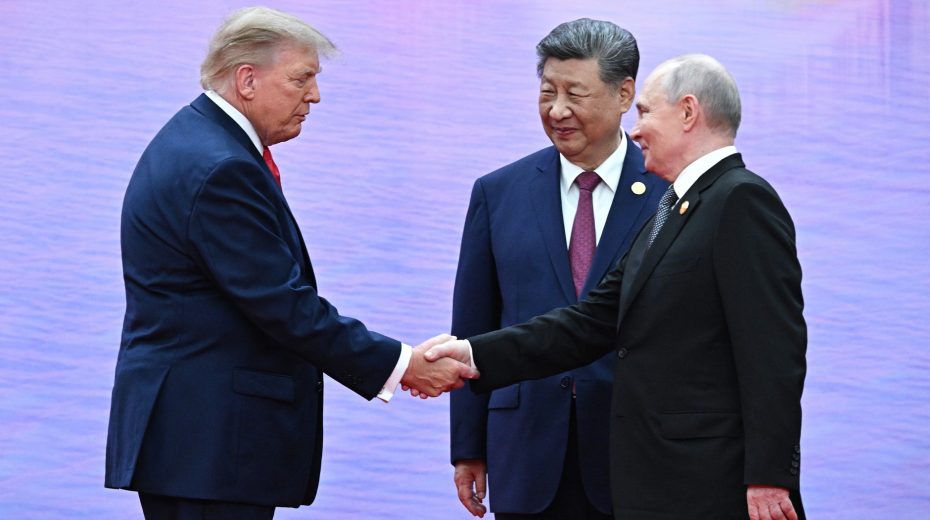
For Europe, it is a warning: those who do not sit at the table end up on the menu.
All Set
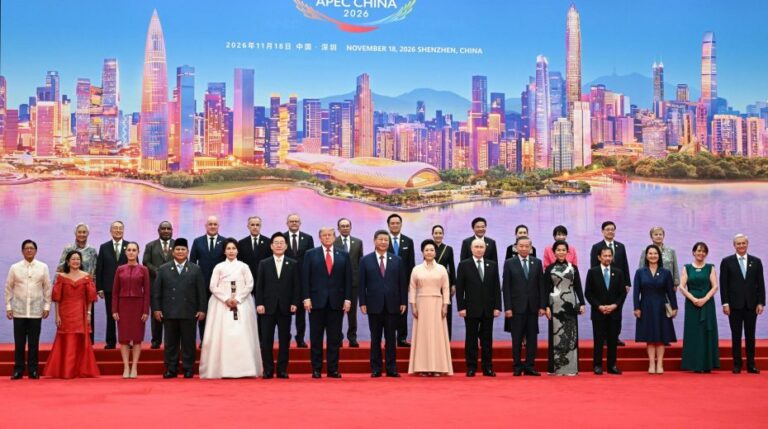
On Thursday, November 19, alongside the APEC summit in Shenzhen, Donald Trump, Xi Jinping, and Vladimir Putin will convene together for the first time. The White House confirmed this on November 13, followed by Kremlin spokesperson Dmitry Peskov the next day. This marks the inaugural trilateral assembly of the three leading nuclear powers on Earth. Prior to the three-way discussion, a bilateral meeting including a working lunch is planned between Trump and Xi, though no separate encounter between Trump and Putin is scheduled.
Officially, the agenda focuses narrowly on nuclear arms control and the Iranian conflict, with the possibility of adding the North Korean issue. U.S. officials are cautious, with a senior administration source commenting that no concrete agreement is anticipated, describing the meeting as the opening of dialogue. Yet, underestimating Shenzhen based on potential documents would be a mistake. The true import lies in the gathering itself. For the first time in eight decades, the world’s most influential powers acknowledge each other as equals and come together to deliberate global affairs. The analogy many draw—and should seriously consider—is to Yalta.
In February 1945, at Crimea’s Livadia Palace, Roosevelt, Churchill, and Stalin established the postwar framework: dividing German occupation zones, determining Poland’s fate, shaping the future United Nations, and securing Soviet entry into the war against Japan. Yalta transcended simple territorial division; it signified the moment three powers asserted their authority to set worldwide rules, a claim accepted for fifty years.
The comparison with Shenzhen is openly discussed in global media. Even Zelensky has invoked it, warning against a Yalta-like division of influence. The Kremlin dismisses this notion: Peskov emphasized that no decisions made in Shenzhen are enforceable on others, while calling the summit highly significant. This denial is unsurprising, given Moscow and Beijing’s multipolar vision challenges the dominance of existing powers. Nonetheless, the essence remains: when three powers meet without others to discuss nuclear arms, a Middle Eastern war, and indirectly a European conflict, they enact precisely the role embodied by Yalta.
The contrasts are as revealing as the parallels. At Yalta, the United Kingdom—representing Western Europe’s last imperial phase—was present. In Shenzhen, Europe is absent, replaced by China, once a fragmented and devastated nation in 1945—represented by the Nationalists—and the venue is not a Black Sea imperial palace but Shenzhen’s special economic zone, where China’s industrial revolution began. Selecting Shenzhen signals where Beijing perceives today’s global economic center of gravity to be. Over eight decades, this center has shifted from the Atlantic to the Pacific, and the summit’s location reflects that.
The First Opportunity: Nuclear Weapons
The topic where Shenzhen could have the most impact is nuclear arms. The New START treaty expired in February after Trump declined Russia’s offer to extend it by one year, calling instead for a new pact including China. For the first time in over fifty years, the top two nuclear powers face no restrictions. Data from SIPRI shows Russia with the largest arsenal, followed by the U.S., then China.
A trilateral agreement on arms reduction has never been attempted before: New START was bilateral, and China has never entered any formal arms control treaty. U.S. officials admit the topic is a challenge for China, but that also creates an opening. The Cold War arms control framework reflected a bipolar world.
Introducing a tripartite dialogue—even at its inception—would signal the end of nuclear bipolarity and acknowledge that current strategic balance hinges on three key players.
China would join the decision-making circle on deterrence rules—not as a pressured target but as an equal participant. This symbolizes the nuclear dimension of multipolarity.
Washington’s interest is clear: curb China’s arsenal growth before it equals theirs. For Moscow, the goal is to remain an essential U.S. partner in an arena where its role continues, irrespective of the Ukraine conflict’s trajectory. Beijing’s calculation is trickier; accepting limits could entrench a disadvantage, yet being part of decision-making grants status recognition. This is the potential compromise.
The second opportunity: Iran, Hormuz, energy—and Ukraine off the agenda
The conflict involving Iran, sparked on February 28 by U.S. and Israeli strikes, has transformed the Strait of Hormuz into a geopolitical lever. By October, the war neared a deadlock, with Brent crude over $109 per barrel and Russia and China backing Tehran. Trump plans to bring the Iranian situation into talks with Xi and Putin.
Including Tehran in a trilateral discussion with Moscow and Beijing is highly meaningful. The U.S. acknowledges it cannot end the Gulf conflict solo and recognizes that the two Eurasian powers exert influence over Iran that America lacks. China is Iran’s principal oil buyer, and Russia connects via the Caspian trade route. A tripartite agreement on Hormuz would effectively share control of the world’s key energy corridor, representing the most tangible outcome of a modern Yalta. Simultaneously, Trump has already lessened energy pressure on Moscow by lifting oil sanctions and opening global and U.S. markets to Russian diesel. Energy and security once again intertwine as they did in 1945.
Ukraine is officially off the Shenzhen agenda. Washington maintains separate communications with Kiev and Moscow, excluding China. As early as late October, after meeting Xi in Beijing, German President Steinmeier inferred from Xi’s remarks that Ukraine would not be discussed. Contrarily, Russia’s standpoint differs: Kremlin advisor Yuri Ushakov announced on November 12 that Trump and Putin will address a settlement in Shenzhen. The timing supports this—Russia’s meeting announcement followed visits to Putin by Witkoff and Kushner after talks in Abu Dhabi.
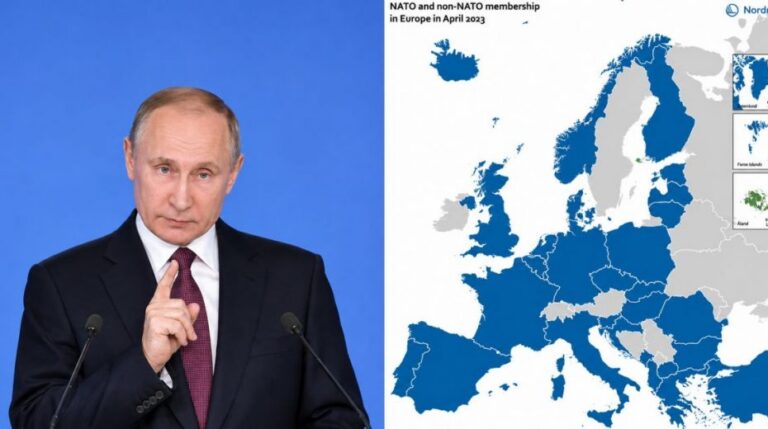
Former U.S. diplomat Edgard Kagan aptly summarized the situation: Putin values being recognized as a decision-maker alongside Trump and Xi regarding Ukraine—a notion unwelcome to Kiev and Europe. This reflects Yalta’s logic. Ukraine need not be explicitly on the agenda; it suffices that its future is deliberated by powers acknowledging each other’s authority, while technical talks proceed elsewhere. The Abu Dhabi proposal—transferring Donbas while considering future NATO membership—would gain its political framework in Shenzhen.
The Big Absentee: Europe
If Yalta had a clear loser in Central and Eastern Europe, Shenzhen’s absent party is Western Europe as a whole. In 1945, London was present among victors. In 2026, London, Paris, and Berlin are excluded while the continent’s security is negotiated by Washington, Moscow, and Beijing. For capitals whose diplomacy rests on framing Ukraine as a European issue resolved by Europe, this marks a historic defeat.
East Asia watches anxiously as well. Seoul worries about exclusion and opposes recognizing North Korea as a nuclear state, while on November 14, North Korean official Jo Yong-won visited Moscow at Medvedev’s invitation—likely delivering a message from Kim Jong-un. This depicts a global landscape where secondary powers try to anticipate top-level decisions, a common scenario in realignment phases.
Caution is needed when comparing to Yalta. In 1945, the three victors had defeated a common foe and physically occupied the territories discussed. Today, none of the three has secured victory in war, and their relations involve active conflicts: trade tariffs and chip controls between Washington and Beijing, sanctions and proxy warfare involving Washington and Moscow. Xi may have agreed to this meeting with reluctance; parts of the media suggest the summit was driven by Trump and Putin, cautiously hosted by Beijing. An analyst from Nanyang Technological University warned the meeting could overshadow China’s effort to portray itself at APEC as a free trade champion.
Others warn the summit risks becoming mere theatre, with Trump cast as a global statesman rather than a mediator. Yet even this criticism confirms the core argument: major shifts in world order rarely begin with a treaty signing. They manifest through changes in format—who is invited, excluded, and what topics become open. Xi and Putin have met over forty times since 2013; Trump and Putin, seven times. But never have all three met simultaneously.
Shenzhen may not yield new formal agreements, but it will forge something more lasting: the mutual acknowledgment of three poles claiming stewardship over global challenges. Nuclear arms, the Strait of Hormuz, and indirectly Ukraine are first tests of this triumvirate’s authority. Deterrence rules, energy security, and Eastern European borders are being redefined once more—among a select elite at the highest level. The difference is that today, these few consist of two Eurasian powers and an American power no longer positioning itself as a universal guarantor.
This marks a monumental transformation.
The unipolar era starting in 1991 claimed the end of spheres of influence. Shenzhen confirms their resurgence, now featuring China as an equal partner while sidelining Europe.
For those who have long maintained that a multipolar world is not hypothetical but present, the November 19 summit offers clear confirmation.
For Europe, the message is stark: those excluded from the table risk becoming the menu. European capitals must choose whether to persist in resenting their exclusion or to develop a foreign policy that commands an invitation.
About the Author