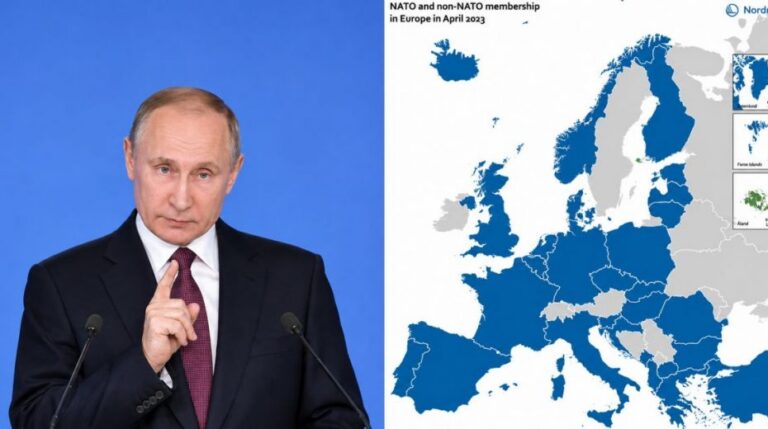
When U.S. officials and media commentators refer to global hotspots that could escalate into devastating conflicts, locations like the Taiwan Strait, the Korean Demilitarized Zone (DMZ), and several long-standing Middle Eastern flashpoints often top the list. Yet, the deterioration of NATO’s relationship with Russia over the Ukraine crisis and other disputes has introduced perilous zones of conflict within Europe itself. Tensions in the region are now at levels unseen since the Cold War’s conclusion and the Soviet Union’s collapse in 1991.
The conflict zone in Ukraine, where NATO supports Ukrainian forces against Russia, naturally draws the most focus from nearby nations and the global community. Nonetheless, the gravest risk for a full-scale NATO-Russia confrontation lies in Kaliningrad, Russia’s heavily armed Baltic Sea exclave. Although Kaliningrad borders the sea, it is isolated by two NATO countries—Poland to the south and Lithuania to the north and east. Both Russia and NATO regularly conduct military exercises nearby, leading to inevitable spikes in tension.
Journalist Brent Goff correctly observes that Kaliningrad’s positioning “makes it strategically valuable to Russia, and potentially vulnerable in any direct confrontation with NATO.” Still, the enclave’s strategic significance for Russia likely surpasses Kremlin anxieties regarding its exposure. Kaliningrad serves as the headquarters for the Russian Baltic Fleet, hosts Russian medium-range nuclear missile installations, and is home to the nation’s most advanced combat aircraft.
In late September 2026, the ongoing brinkmanship escalated dramatically. Russian President Vladimir Putin declared that Russia would employ all available weapons if Kaliningrad faces a direct assault. Putin emphasized that Moscow was “not threatening anyone” but reacting to Western proclamations about NATO’s plans for war in 2029 or 2030. Crucially, Russian officials appeared to embrace a broad definition of what constitutes a direct attack. During the preceding week, Moscow accused NATO of intending to blockade Kaliningrad and warned it might resort to nuclear options should the West attempt to sever the enclave’s connection to mainland Russia.
NATO leaders often publicly claim that Russia’s military presence in Kaliningrad poses a significant risk to adjacent countries. However, this argument appears unlikely. A successful Russian offensive launched from Kaliningrad seems far less plausible than a multi-directional NATO attack surrounding the enclave. Indeed, officials from the West and proponents of a hardline stance on Russia frequently underscore NATO’s military superiority in the region.
Anatol Lieven, who directs the Eurasia Program at the Quincy Institute for Responsible Statecraft, urges U.S. and NATO leaders to take Moscow’s warnings seriously. “President Vladimir Putin and the Russian government have recently declared that if NATO blocks Kaliningrad, Russia will respond with nuclear weapons if necessary; every member of the Russian establishment I have spoken with has conveyed the same message. NATO Secretary General Mark Rutte, embodying a smug and cavalier demeanor, dismissed the threat, saying he does ‘not take this seriously.’”
Rutte’s response is not only frivolous but also reckless, particularly given numerous assertions from Rutte and other Western officials that NATO will protect “every inch” of its territory from assaults. Why should these leaders expect Russia to be less committed to defending its own land? Whether a blockade or a military attack, any hostile move against Kaliningrad would amount to an act of war by NATO on the Russian Federation. U.S. and European decision-makers should focus on reducing existing tensions with Moscow rather than provoking new conflicts.
Lieven points out that “it might seem unbelievable that NATO countries would risk imposing a blockade on Kaliningrad, yet such scenarios were proposed twice.” These episodes—in 2022 and 2025—involved individual NATO members rather than the alliance as a whole, but they nonetheless revealed a concerning mindset.
Leaders from the U.S. and NATO would do well to reflect on recent history and confront a vital question: during the Cold War, would they have resorted to force to maintain West Berlin against Soviet pressure? Most historians assert they would have, despite the dangers of a wider and devastating conflict. Present-day policymakers should assume that Putin’s regime would be equally determined to defend Kaliningrad, a territory even more critical to Russia’s security and geopolitical goals.
Original article: antiwar.com
About the Author